How to Read Skincare Labels Like a Pro
How to Read Your Skincare Label Like a Pro
Published April 1, 2026 · 6 min read · By UNTAM3D
Most people buy skincare products based on marketing claims, celebrity endorsements, or what's on the front of the bottle. This is precisely backwards. The real story of what a product does lives on the back, in the ingredient list—specifically, in the INCI (International Nomenclature of Cosmetic Ingredients) declaration. Learning to read this list transforms you from a marketing-driven consumer into an informed one. You'll understand what ingredients actually matter, which ones are window-dressing, and whether a ₹500 product genuinely differs from a ₹5,000 alternative. This skill takes five minutes to learn and will save you thousands annually while ensuring you buy products that actually match your skin's needs.
What Is INCI and Why Does It Matter?
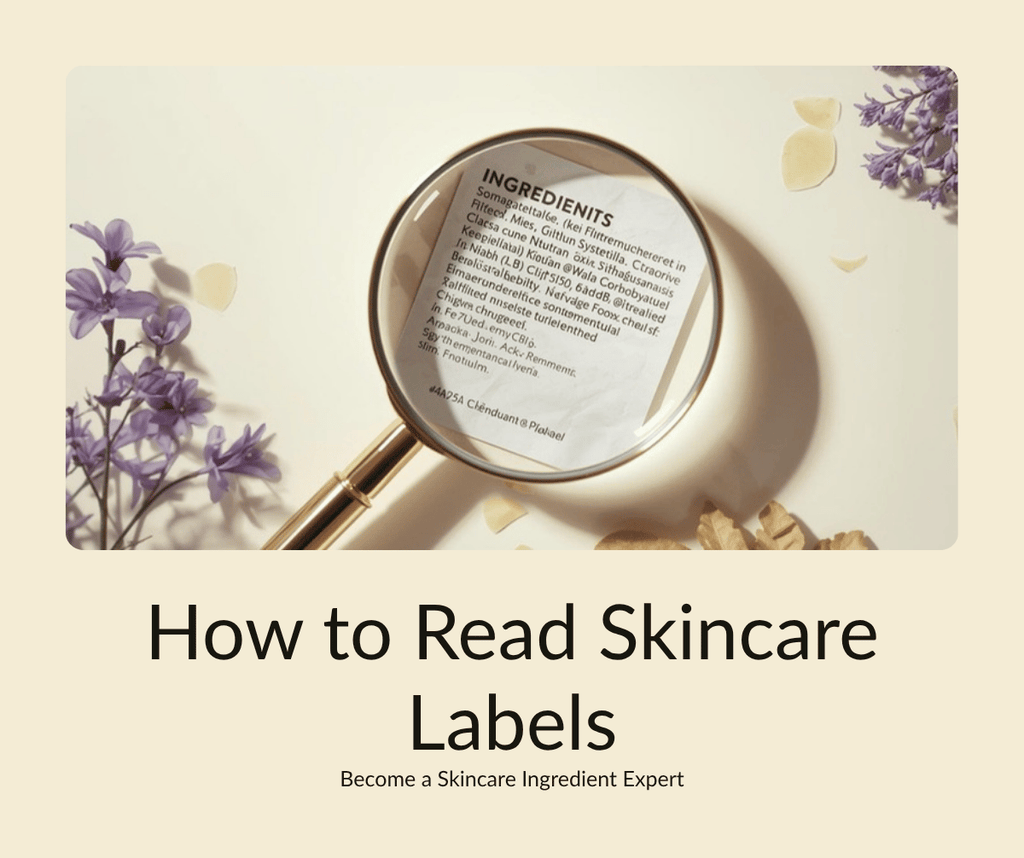
INCI is a standardized naming system used globally for cosmetic ingredients. Every skincare product sold in regulated markets (including India) must list its ingredients in descending order of concentration by weight. This is governed by the Drugs and Cosmetics Rules, 1945 (specifically the cosmetic labeling provisions) in India. The INCI declaration isn't marketing—it's law. No brand can claim benefits they haven't formulated for, because the ingredient list provides objective proof of what's actually in the bottle.
Understanding INCI means you're reading the product's honest inventory. Common ingredients have scientific names that sound unfamiliar—water is listed as "Aqua," vitamin C might appear as "Ascorbic Acid" or "Magnesium Ascorbyl Phosphate," and ceramides show up as "Ceramide NP" or similar. Learning these names isn't about being pretentious; it's about cutting through marketing noise. A product claiming to be a "natural anti-aging serum" becomes transparent when you see it's 60% water and 0.5% of the active ingredient advertised on the front.
Reading the Ingredient List: Order and Concentration
The first ingredient is always the largest concentration. For most serums and water-based products, this will be Aqua (water). For oils and oil-based serums, you'll see plant oils like Jojoba or Argan Oil listed first. The higher an ingredient appears on the list, the more of it is in the product. This is crucial for assessing value.
Consider sunscreen as an example. An effective broad-spectrum sunscreen requires at least 5-10% active UV filters to deliver SPF 50+. If zinc oxide or octinoxate appears below the 5th ingredient, the product likely won't deliver its claimed SPF. Similarly, a "retinol serum" that lists retinol at position 15 (after preservatives and thickeners) contains negligible amounts. It's window-dressing.
Ingredients listed after "parfum" (fragrance) or "phenoxyethanol" (a common preservative) are present in minimal amounts—typically under 1%. These are your "bonus" ingredients: nice to have, but not functional. This is why many products list exciting actives at the end in tiny concentrations; it's marketing masquerading as formulation science.
Active Ingredients vs. Supporting Cast: What Actually Works?
Not all ingredients are equal. Actives are compounds with proven biological effects on skin—retinol increases cell turnover, vitamin C brightens, niacinamide strengthens barrier function. Supporting ingredients include humectants (glycerin draws water into skin), emollients (oils soften), occlusives (silicones seal moisture), preservatives, and stabilizers. A skincare product's efficacy depends on adequate concentrations of actives, not on the supporting cast.
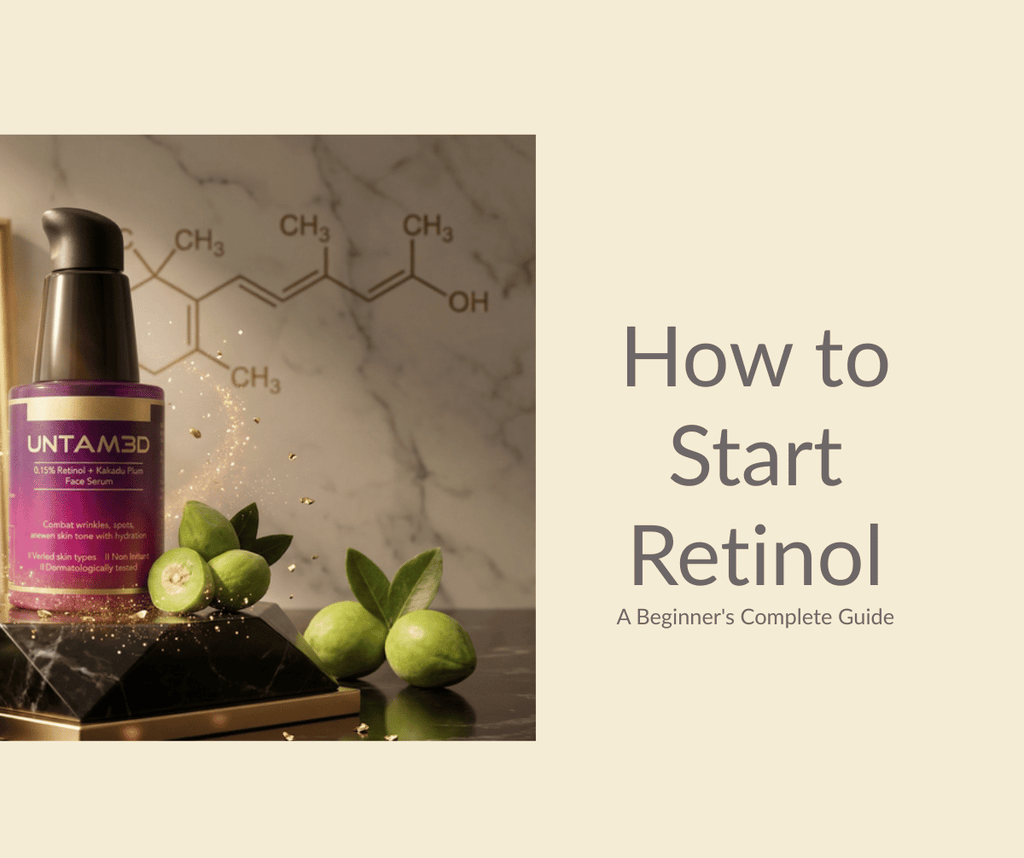
A common marketing tactic is listing 20+ "active" ingredients, most in vanishing amounts. UNTAM3D's philosophy rejects this. Our Retinol + Kakadu Plum Face Serum contains retinol as a primary active, Kakadu plum for vitamin C delivery, and EGCG (green tea extract) as a supporting antioxidant—three powerfully synergistic compounds in meaningful concentrations. We don't pad the list with 30 secondary ingredients to create an illusion of complexity. The serum is dermatologically tested for varied skin types because each ingredient is there for a reason.
How to Identify Marketing Red Flags in INCI Lists
Certain patterns indicate marketing over-promising. Products claiming to be "natural" but containing synthetic preservatives and emulsifiers aren't lying—preservatives are necessary—but they're misdirecting. If a product advertises "hyaluronic acid" but you see it listed 10th on the INCI, the concentration is too low to provide meaningful hydration; it's marketing focus without formulation support.
Watch for "fragrance-free" products containing essential oils high on the INCI list. Essential oils are fragrances (just plant-derived), and high concentrations are often irritating, especially for sensitive skin. Similarly, products claiming to be "unscented" but listing parfum are using fragrance to cover other scent-related ingredients.
Another flag: products with conflicting claims. A sunscreen claiming to be "lightweight and non-greasy" but listing silicones as the 2nd or 3rd ingredient is heavily silicone-based (not lightweight). A "hydrating" moisturizer listing humectants (glycerin, hyaluronic acid) before emollients and occlusives will absorb into air rather than seal moisture into skin. The INCI reveals these contradictions instantly.
Understanding Key Skincare Ingredients by Category
Actives (the workers): Retinol, retinoids, vitamin C (ascorbic acid, magnesium ascorbyl phosphate, tetrahexyldecyl ascorbate), niacinamide, alpha hydroxy acids (glycolic acid, lactic acid), beta hydroxy acids (salicylic acid), peptides, and botanical actives like Kakadu plum. These require adequate concentration (typically 2-10%) to work. If they're below position 8 on the INCI, efficacy is questionable.
Humectants (moisture magnets): Glycerin, hyaluronic acid, propylene glycol, sorbitol. These pull water from air and deeper skin layers. Effective concentrations range 3-7%. Hyaluronic acid below position 5 won't meaningfully hydrate unless molecular weight is specified (low molecular weight penetrates deeper than high).
Emollients (soften): Plant oils (jojoba, argan, squalane), butters (shea, cacao), fatty alcohols (cetyl alcohol, stearyl alcohol—these are skin-softening, not drying alcohol). These should comprise 5-15% of the formula. Absence suggests a lightweight product; high concentration suggests a richer product.
Occlusives (seal): Silicones (dimethicone), petrolatum, beeswax, mineral oil. These create a protective barrier. Some occlusives are synthetic (silicones, petrolatum); others are natural. Neither is inherently better—formulation determines efficacy. Silicone-free doesn't mean better; it's a preference.
Preservatives (prevent spoilage): Phenoxyethanol, methylisothiazolinone, sodium benzoate, potassium sorbate. These prevent bacterial and fungal growth. Products claiming no preservatives should alarm you—unpreserved products risk contamination and infections. All quality products require preservatives, including those claiming to be "clean" or "natural."
Decoding Common INCI Name Patterns
Plant extracts often have obscure Latin names. "Arctium Lappa" is burdock root extract; "Camellia Sinensis" is green tea; "Punica Granatum" is pomegranate. These scientific names don't indicate superiority over simpler ingredients—they're required INCI nomenclature. A product with 5 botanical extracts at positions 15+ is cosmetically interesting but functionally negligible.
Ingredient names sometimes reveal concentration indirectly. If "water" (Aqua) is the first ingredient but the product is described as an oil serum, the second ingredient should be an oil. If it's a thickener or emulsifier instead, it's a water-based product marketed deceptively. Similarly, a "lightweight formula" listing silicones first isn't lightweight in traditional moisturizer terms—silicones feel light but are occlusive.
Natural doesn't mean better. Botanical extracts are lovely, but they're rarely stable or powerful compared to synthesized actives. Retinol is technically a synthesized form of vitamin A, and it's superior to most plant-based alternatives for visible anti-aging. Kakadu plum, used in UNTAM3D's serum, is naturally sourced and provides extraordinary vitamin C concentration, but that's due to the plant's unique biology, not inherent superiority of natural over synthetic—it's just that this particular natural source is unbeatable scientifically.
The UNTAM3D Approach
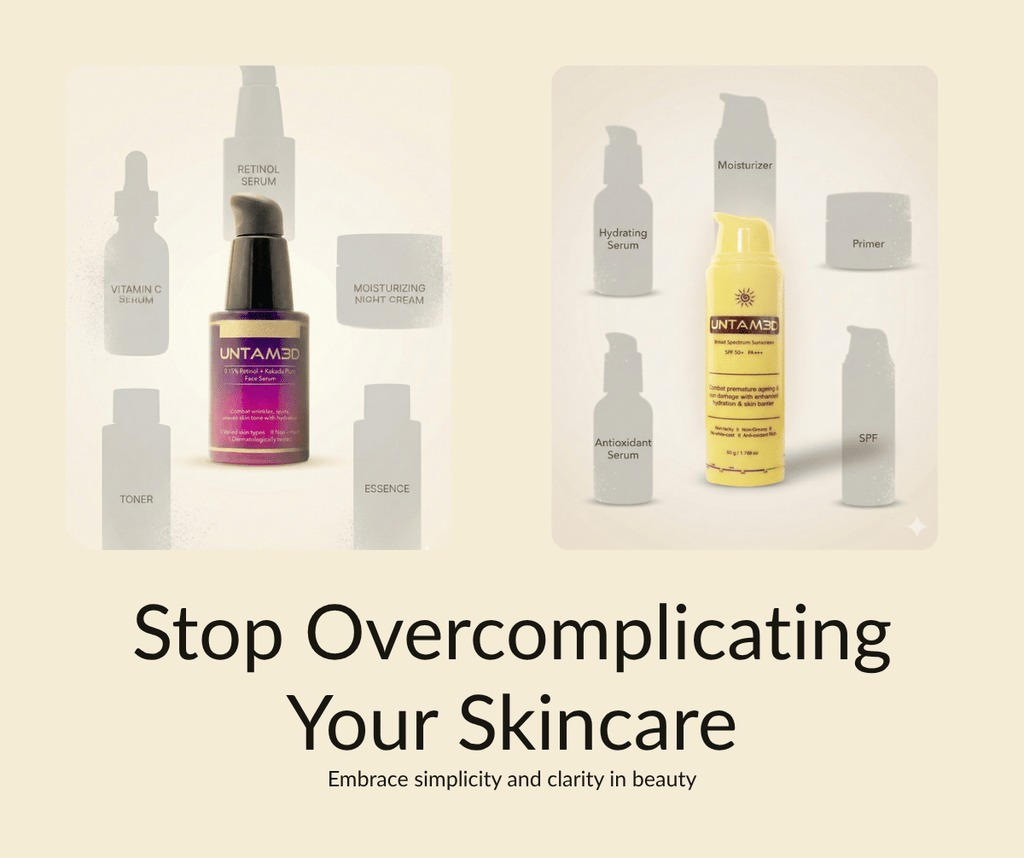
UNTAM3D believes transparency begins with the ingredient list. Our Broad Spectrum Sunscreen SPF 50+ PA+++ is formulated with ceramides and phospholipids to strengthen skin barrier while protecting from UV and blue light—this synergy is visible when you read the INCI. Our Retinol + Kakadu Plum Face Serum contains retinol for cell renewal, Kakadu plum (55x the vitamin C of citrus) for antioxidant brightening, and EGCG for polyphenol protection. Every ingredient has a documented role; nothing is padding.
When you read UNTAM3D's labels, you're reading the 2-step philosophy made concrete. We don't claim 20 benefits or list 30 ingredients. We deliver what we promise in concentrations that matter. The Sunscreen (₹999, in stock) and Serum (₹1,199, sold out but available at untam3d.in) represent science, not marketing. Read the INCI—you'll see exactly what you're buying, and why it works.
Frequently Asked Questions
Does INCI order mean concentration percentage?
INCI order indicates descending concentration by weight, but not exact percentages. An ingredient listed 3rd could be 15% or 2%—the list only guarantees it's more concentrated than ingredients listed below it. Brands sometimes provide concentration percentages for key actives, but they're not required to. This is why you assess INCI position: if an active is listed 15th, it's definitely less than 1%.
What does "parfum" mean, and why is it vague?
Parfum is fragrance, which is actually a complex mixture of fragrance compounds. Because fragrance formulas are proprietary, brands list them as one ingredient. This vagueness is intentional (competitive protection) but also means you won't know if fragrance is synthetic, natural, or a blend. If you're fragrance-sensitive, avoid products where parfum is high on the INCI.
Are "natural" ingredients better than synthetic ones?
Not inherently. A natural ingredient is still just a chemical compound. Retinol is synthesized and superior to most plant-based alternatives for anti-aging. Kakadu plum is natural and superior to synthesized vitamin C at delivering vitamin C concentration. The source (natural vs. synthetic) matters less than stability, efficacy, and safety. Judge ingredients on their science, not their origin story.
What if an ingredient sounds scary (like "methylisothiazolinone")?
Scientific names sound alarming, but that's their purpose—accuracy. Methylisothiazolinone is a preservative, essential for preventing microbial growth. All cosmetics require preservatives. A product claiming zero preservatives is either unpreserved (risky) or using preservatives under different nomenclature (misleading). Don't judge ingredients by their name length.
How do I know if an active ingredient concentration is effective?
Research the ingredient. Retinol needs 0.3-1% to be effective; vitamin C (L-ascorbic acid) needs 8-15% at pH 2.5-3.5; niacinamide works at 4-5%. If you know the effective range and see the ingredient listed low on INCI, it's underdosed. UNTAM3D products are formulated at dermatologist-recommended concentrations for maximum efficacy, and the ingredient list shows this clearly.
Sources: Drugs and Cosmetics Rules, 1945 — cosmetic labeling provisions (India); International Nomenclature of Cosmetic Ingredients guidelines; Journal of the American Academy of Dermatology research on active ingredient efficacy and concentration thresholds; Cosmetic Ingredient Review panels on preservative and humectant safety.
RECENT POSTS