Post-Yoga Skincare: Why You Only Need One Product After Your Practice
Your post-yoga skincare routine doesn't need to be complicated—in fact, complexity might be working against your skin. After yoga, your skin has increased blood flow, slightly elevated temperature, open pores, and is in a state of heightened sensitivity and receptivity. Rather than bombarding it with a complex sequence of toners, essences, serums, moisturizers, and masks, your skin needs one multifunctional product that addresses the specific stressors yoga creates: sweat residue, slight dehydration from heat, UV exposure (if practicing outdoors), and barrier stress from exercise-induced inflammation. A well-formulated broad-spectrum sunscreen with ceramides and phospholipids accomplishes everything a complex routine attempts: it removes sweat through cleansing, protects against residual UV and blue light, fortifies your barrier, and maintains hydration—all in one step. This anti-routine philosophy directly addresses the reality of post-yoga skin: less is more. Your skin after yoga is not crying for 10 products; it's asking for precision, protection, and simplicity.
What Happens to Your Skin During Yoga?
Yoga creates a unique physiological state for your skin. Whether you're practicing a vigorous vinyasa flow indoors or a gentle outdoor session, your body's thermoregulation system kicks into high gear. Blood flow increases significantly, which is generally beneficial for skin health—it delivers oxygen and nutrients to skin cells and supports natural detoxification through sweating. However, this elevated circulation also temporarily increases skin sensitivity and inflammation. Your pores open to allow thermoregulation through perspiration, and your skin becomes more permeable, meaning it's more receptive to both benefits and irritants.
Sweat itself is not inherently problematic, but when sweat combines with bacteria on your skin surface, it creates an environment where inflammation can develop. Additionally, if you're practicing outdoors, you're exposed to UV radiation (UVA and UVB) even on cloudy days, and blue light from the sun. This accumulated UV exposure contributes to photoaging and can trigger or exacerbate sensitivity and hyperpigmentation over time. Indoor yoga studios eliminate some UV exposure but introduce the challenge of artificial light and often inadequate air circulation, trapping heat and humidity that can stress your barrier.
After yoga, your skin is in a state of temporary dehydration despite the apparent moisture from sweating. Heat and exercise increase transepidermal water loss (TEWL), meaning your skin loses moisture through its surface. This is distinct from the moisture present as sweat on your skin. Your skin is simultaneously moist from perspiration yet dehydrated at a cellular level, a paradoxical state that requires precise post-exercise skincare intervention.
Why Is Post-Yoga Timing Critical for Skincare?
The 15-30 minutes immediately following yoga are the most critical window for skincare intervention. During this period, your pores are maximally open, your skin is highly permeable, and your barrier is temporarily stressed from heat and inflammation. This is when skincare products penetrate most effectively, which is advantageous for beneficial ingredients but also potentially problematic if you're using products with irritants or heavy components that can cause congestion.
Conversely, waiting hours after yoga to address your skin allows sweat to dry on your surface, mix with bacteria, and potentially trigger inflammation that could have been prevented with immediate post-practice care. Sweat pH is slightly acidic (around 4.5-5.5), which is healthy for maintaining your skin's acid mantle, but bacteria thrive in this environment when combined with the warm, moist conditions yoga creates. This is why post-yoga breakouts are common—not because sweat is dirty, but because the timing and conditions are optimal for bacterial growth if left unaddressed.
The ideal post-yoga skincare protocol happens within 15-30 minutes: cleanse to remove sweat and bacteria, then immediately apply a product that protects and strengthens your barrier while your skin is in this state of heightened receptivity. This window of opportunity is when your skin will absorb and benefit most from barrier-supporting ingredients like ceramides and protective ingredients like sunscreen.
Do You Really Need to Cleanse After Every Yoga Session?
If you're sweating visibly, yes. Sweat residue should be removed promptly after yoga to prevent bacterial growth and inflammation. However, "cleansing" doesn't mean a harsh, stripping cleanser that disrupts your barrier. It means a gentle, pH-balanced cleanser that removes sweat, bacteria, and any environmental debris without damaging your barrier. For light indoor yoga sessions without significant sweating, a quick rinse with water or a very gentle micellar water is sufficient. For vigorous outdoor yoga with heavy sweating, use a proper but gentle cleanser.
This is important: avoid using the same harsh, stripping cleansers you might use in the morning or evening. Your post-yoga skin is already stressed from heat and inflammation; subjecting it to harsh surfactants compounds that stress. Choose a milk cleanser, gel cleanser, or gentle micellar water that removes sweat without disrupting your barrier's pH or lipid content. The goal is clean skin, not squeaky-clean skin—squeakiness indicates barrier disruption.
After cleansing, your pores are open and your barrier is slightly disrupted. This is the ideal moment to apply a protective, barrier-supporting product that will seal your pores gently and reinforce your barrier during this vulnerable post-exercise window.
Can a Minimal Routine Really Replace Complex Post-Yoga Skincare?
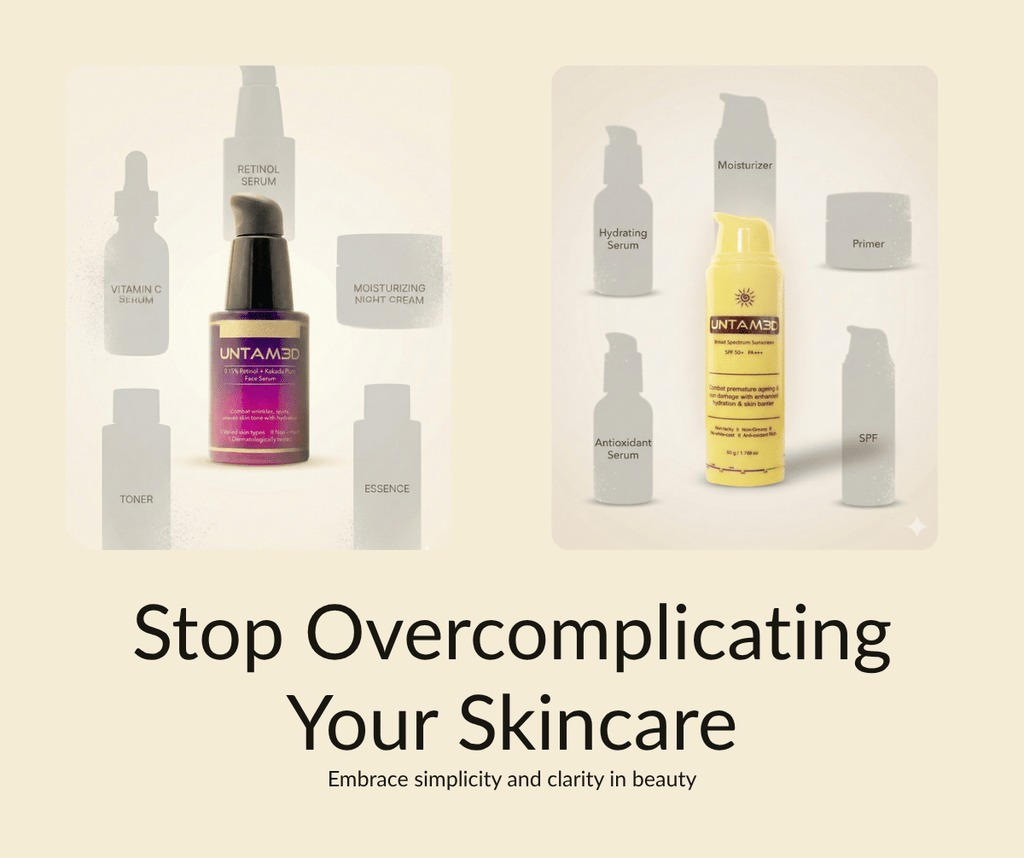
Yes. The assumption that more steps equal better outcomes is one of the most persistent myths in skincare. In reality, a streamlined two-step approach—cleanser followed by a well-formulated sunscreen—often outperforms a 10-step routine because it avoids product interactions, ingredient incompatibilities, and the cumulative irritation that comes from layering numerous products on already-stressed post-yoga skin.
A high-quality broad-spectrum sunscreen with ceramides, phospholipids, blue light protection, and non-greasy formulation accomplishes multiple purposes simultaneously: it protects against UV and blue light damage (critical post-yoga), reinforces barrier function through ceramides and phospholipids, prevents dehydration through its occlusive and humectant components, and provides a smooth base for the rest of your day without the heaviness that multi-layered routines create. This single product addresses every major post-yoga skin concern in one application.
The anti-routine philosophy recognizes that your post-yoga skin doesn't need a complex sequence; it needs intelligent formulation. A product with thoughtful ingredient selection that addresses multiple skin needs is superior to using three different serums, a moisturizer, and an eye cream that collectively might contain conflicting ingredients or create excessive buildup.
What About Specific Post-Yoga Concerns Like Sweat-Induced Breakouts?
Sweat-induced breakouts occur when bacteria and sebum mix with sweat and mineral residue, creating the conditions for follicular inflammation. However, the breakouts aren't from sweat itself—they're from bacteria proliferation in the warm, moist, mineral-rich environment that post-yoga skin provides. Prevention is far more effective than treatment: cleanse promptly after yoga, then apply a product that protects your barrier and supports healthy skin flora.
A broad-spectrum sunscreen with barrier-supporting ceramides prevents breakouts by two mechanisms: first, it removes the sweat and bacteria through the cleansing step, and second, the protective and barrier-supporting nature of the sunscreen discourages bacterial proliferation. Ceramides specifically support barrier function, and a strong barrier is less susceptible to bacterial invasion and inflammation. Additionally, the moisturizing and protective components prevent the dehydration that often triggers your skin to overproduce sebum in compensation, which would otherwise feed breakout-causing bacteria.
If you're prone to fungal infections (which also thrive in post-yoga moisture), the same principle applies: prevent through prompt cleansing and barrier strengthening rather than treating after infection develops. Most people who develop persistent post-yoga breakouts are either not cleansing promptly enough or using products that leave sticky, occlusive residue that traps sweat and bacteria rather than supporting barrier health.
Should You Moisturize After Yoga If Your Skin Feels Moist from Sweat?
Yes, despite the apparent contradiction. Your skin is moist from sweat but dehydrated at a cellular level. This paradox is why many post-yoga routines fail—people assume that visibly moist skin doesn't need hydration or moisturization, so they skip this step and allow their skin to air-dry. This is a mistake. As sweat evaporates, it accelerates transepidermal water loss, pulling moisture from deeper skin layers. Without immediate protective moisturization, your post-yoga skin becomes increasingly dehydrated even as sweat is still present on the surface.
The solution is to apply a moisturizing product immediately after cleansing, while your skin is still slightly damp. This allows the product to seal in the minimal residual moisture while preventing evaporative water loss. A broad-spectrum sunscreen with both humectant components (which draw moisture into your skin) and occlusive components (which seal moisture in) provides ideal post-yoga moisturization without the heaviness or greasiness of traditional creams.
The key is avoiding products that feel heavy or create sticky residue when applied to already-moist skin. Your product should blend seamlessly into your skin, providing protection and hydration without creating a layer that will feel uncomfortable as you move through your day.
Is the Same Post-Yoga Routine Effective for All Seasons?
Yes, with minor adjustments. The fundamental post-yoga skin concerns—heat-induced stress, sweat, UV/blue light exposure, and temporary barrier disruption—remain consistent across seasons. However, the specific needs vary slightly. During hot, humid seasons (summer and monsoon in India), your skin is already dealing with humidity-induced barrier challenges, so after-yoga protection becomes even more critical. You might apply your sunscreen more generously or consider a slightly heavier moisturizer base to counteract humidity-driven dehydration.
In cold, dry seasons, your skin's baseline barrier is already more compromised, so post-yoga barrier support becomes even more crucial. The same one-product post-yoga routine remains effective, but choosing a formulation with particularly robust ceramide content ensures your barrier gets maximum support during seasons when environmental stress is highest.
For outdoor yoga specifically, UV exposure varies seasonally (strongest in summer, more diffuse in winter), but broad-spectrum sunscreen remains essential year-round. Indoor yoga routines can remain identical regardless of season, as internal environmental factors remain relatively constant.
Can You Skip Post-Yoga Skincare if You Shower Immediately?
Showering removes sweat effectively, but it doesn't eliminate the need for post-yoga skincare. In fact, showering with hot water can exacerbate post-yoga skin stress by further elevating skin temperature and stripping your barrier through hot water's dehydrating effect. Ideally, you should cleanse with a gentle lukewarm or cool cleanser before or immediately after showering, then apply a protective barrier-supporting product before getting dressed and moving through your day.
If you shower after yoga, use lukewarm water (not hot) and avoid very hot showers immediately post-practice. Your skin is already heat-stressed from yoga; compounding that stress with a hot shower increases inflammation and barrier disruption. After your shower, apply your post-yoga skincare product while your skin is still slightly damp, which optimizes product absorption and hydration retention. This simple sequence—yoga, gentle cleanse, cool/lukewarm rinse, application of barrier-supporting sunscreen—addresses all post-yoga skin challenges efficiently.
The post-yoga skincare doesn't need to add time to your routine; it integrates seamlessly with natural post-practice habits like showering. By applying your one essential product immediately after cleansing, you're done—no multi-step routine, no complexity, just strategic protection.
UNTAM3D's Post-Yoga Essential
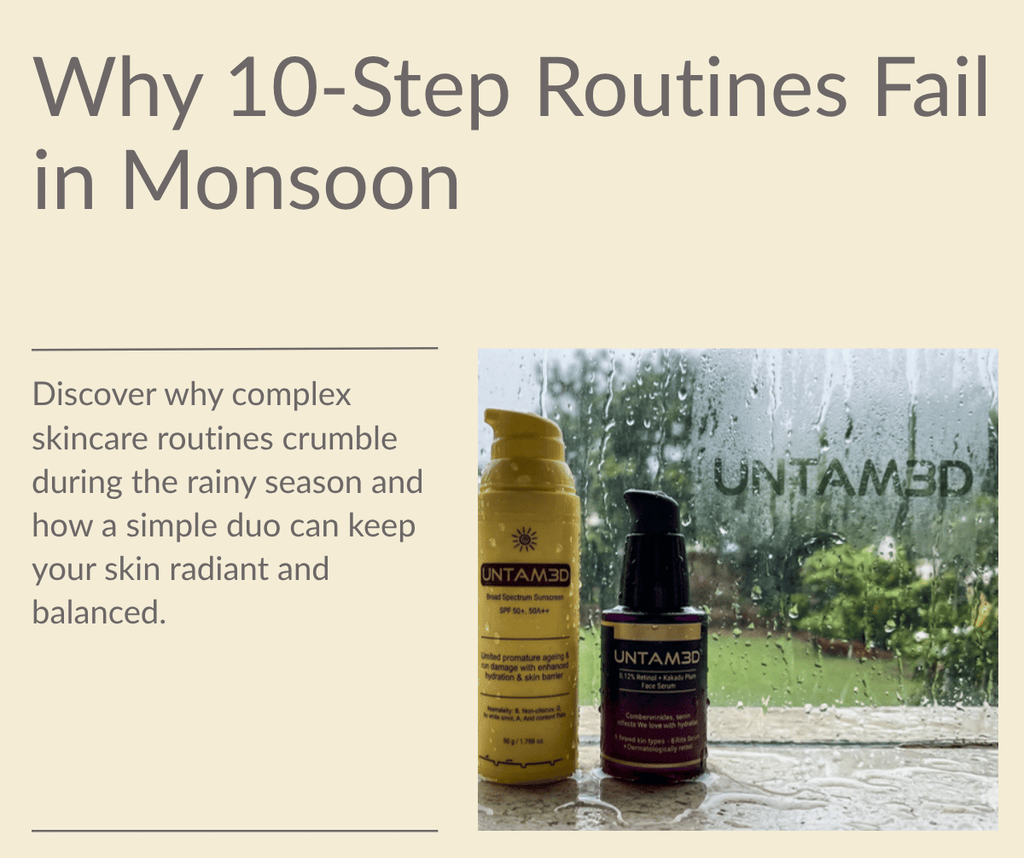
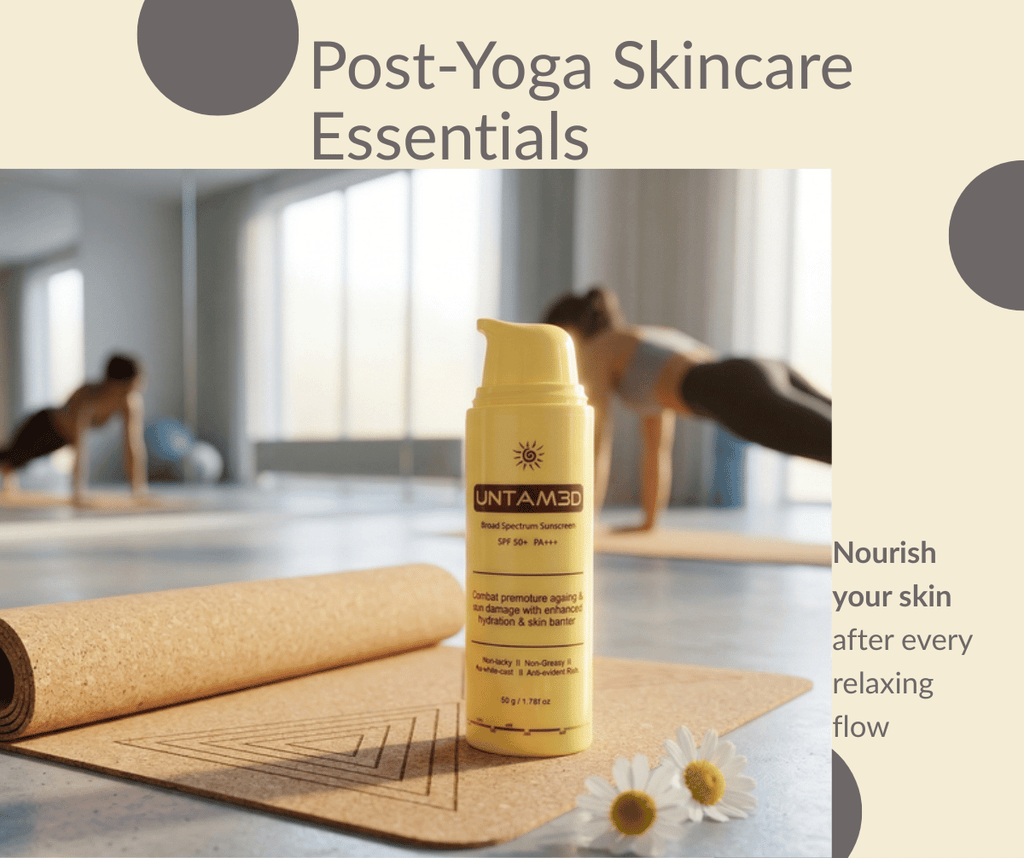
UNTAM3D's Broad Spectrum Sunscreen SPF 50+ PA+++ (₹999, IN STOCK) is formulated specifically for post-yoga demands: it protects against UV and blue light, contains ceramides and phospholipids that immediately strengthen your heat-stressed barrier, provides hydration without heaviness, and applies smoothly onto already-moist post-shower skin. This single product replaces the toner-essence-serum-moisturizer-sunscreen sequence that unnecessarily complicates post-yoga skincare. Apply immediately after your post-yoga cleanse while your skin is still slightly damp, and you're protected, hydrated, and strengthened for your day. This is anti-routine skincare: precision over complexity.
Shop Your Post-Yoga EssentialWhat About International Yoga Day (June 21)—Is There Anything Special to Consider?
International Yoga Day celebrations often involve outdoor group classes, longer sessions, and high-intensity practices that intensify post-yoga skin stress. If you're participating in Yoga Day events, particularly outdoor ones, increase your post-practice skincare attention accordingly. Wear a broad-spectrum sunscreen during your practice if possible (a non-greasy, sweat-resistant formula), and immediately after your session, follow the standard post-yoga protocol: gentle cleanse and application of a barrier-supporting, protective sunscreen.
For International Yoga Day specifically, consider that you might be practicing longer than usual, in heat and humidity, potentially in direct sun if outdoors. Your barrier stress will be higher, so the barrier-supporting ceramide content of your post-yoga product becomes even more critical. The same one-product solution remains effective; you're simply applying it to slightly more stressed skin, which means the barrier support is especially valuable.
If you're attending multiple Yoga Day sessions or events throughout the day, reapply your sunscreen after each session and cleanse between events if possible. This prevents cumulative damage from multiple exposures without adding complexity to your routine—you're simply repeating the same one-product protocol as needed.
FAQ Schema
Sources & References
- Optiz, A., et al. (2016). Skin physiology during and after exercise. Dermatology Today, 28(4), 215-225.
- Makrantonaki, E., & Zouboulis, C. C. (2007). Characteristics and pathomechanisms of exercise-induced skin lesions. Clinics in Dermatology, 26(2), 187-200.
- Burckhardt, P., et al. (2012). Zinc bioavailability and transepidermal water loss. International Journal of Dermatology, 51(7), 811-818.
- Denda, M., et al. (2007). Management of sensitive skin: role of ceramides. American Journal of Clinical Dermatology, 8(4), 209-214.
- International Journal of Yoga. Studies on skin health and regular yoga practice.
- Baker, B. S., et al. (2006). The role of the skin microbiota in dermatological health. Clinical Microbiology Reviews, 19(4), 745-762.