Best Retinol Serum in India: What to Look For in 2026
Best Retinol Serum in India 2026: What to Look For
The truth: The retinol serum market in India has exploded with options, but most fail to deliver results because they either use insufficient retinol concentration, include destabilizing ingredients, or aren't formulated for the specific skin concerns of Indian women. The best retinol serum for you isn't determined by brand prestige or marketing claims—it's determined by retinol concentration, stabilization chemistry, complementary actives like EGCG and Kakadu Plum (Vitamin C), and whether the formula has been dermatologically tested on diverse skin types. When evaluating retinol serums, ignore marketing language about "revolutionary" technology and focus on three concrete factors: the actual percentage of retinol, the stabilization system, and clinical evidence of results. A serum with 0.3% retinol from a climate-aware brand with proper stabilization will outperform a higher-concentration formula that's been destabilized by heat and humidity.
Retinol has become the gold standard anti-aging ingredient globally, but India's skincare market has lagged in offering truly effective retinol serums. The challenge isn't lack of options—it's navigating exaggerated claims, ineffective formulations, and products not formulated for India's humidity and heat. This guide cuts through marketing noise to help you identify retinol serums that actually work.
What Makes a Retinol Serum "Actually Work" for Indian Skin?
Retinol effectiveness depends on three non-negotiable factors that most Indian skincare brands either misunderstand or deliberately obscure. First, concentration matters enormously. Retinol serum concentrations range from 0.025% (extremely mild, barely effective) to 1% (professional-grade, for experienced users). Most claims of "high concentration" in the Indian market range from 0.1% to 0.3%—effective for consistent use, but not dramatically higher than that. The jump from 0.3% to 0.5% retinol represents a meaningful increase in efficacy, but anything above 0.75% becomes exponentially more irritating without corresponding increases in results.
Second, stabilization is critical. Retinol degrades rapidly when exposed to light, heat, and oxygen. In India's tropical climate with temperatures regularly above 30°C, an unstable retinol serum loses potency within weeks. Professional retinol serums use opaque packaging, nitrogen-flushed bottles, and stabilizing ingredients like Vitamin E and ferulic acid to protect retinol molecules from degradation. If a brand doesn't explicitly discuss stabilization or uses transparent packaging, the retinol concentration listed on the label is optimistic at best—the actual active concentration degrades significantly before reaching your skin.
Third, complementary actives amplify retinol's effectiveness while reducing irritation. Pure retinol serums work, but retinol combined with EGCG (green tea extract), Kakadu Plum (native Australian Vitamin C), and skin-soothing ingredients like niacinamide or ceramides delivers superior results with less irritation. These combinations aren't marketing fluff—they're supported by decades of dermatological research showing synergistic benefits. EGCG specifically enhances retinol's anti-photoaging effects while reducing inflammation, and Kakadu Plum provides additional antioxidant protection and brightening benefits particularly relevant for Indian skin concerns like hyperpigmentation.
How to Evaluate Retinol Concentration Claims
Most retinol serums sold in India claim "high concentration" or "clinical-grade" without specifying actual retinol percentage. This opacity is intentional—vague language allows brands to make impressive-sounding claims without transparency. When evaluating products, insist on knowing the exact retinol percentage. If a brand won't state it explicitly, assume it's below 0.2% and likely not effective for meaningful anti-aging results.
Professional-grade retinol serums typically use 0.3% to 0.5% retinol, sometimes combined with retinol esters or retinaldehyde (which convert to retinol in the skin and may be slightly less irritating). Clinical trials supporting efficacy typically use 0.3-0.5% concentrations—anything below 0.1% shows minimal measurable results in controlled studies. The "sweet spot" for most users is 0.3% retinol: effective enough to deliver meaningful anti-aging benefits without overwhelming the barrier or causing excessive irritation and peeling.
Concentrations above 0.75% retinol require specific formulation expertise to avoid destabilization and excessive irritation. If a brand claims "1% retinol" but hasn't specified stabilization methods or dermatological testing on diverse skin types, that's a red flag. Retinol at that concentration is powerful but requires careful introduction, realistic expectations about adjustment periods, and potential temporary irritation. For most Indian skin types and most skincare routines, 0.3-0.5% retinol delivers the optimal balance of efficacy and tolerability.
What Role Does Kakadu Plum and EGCG Play in Retinol Serums?
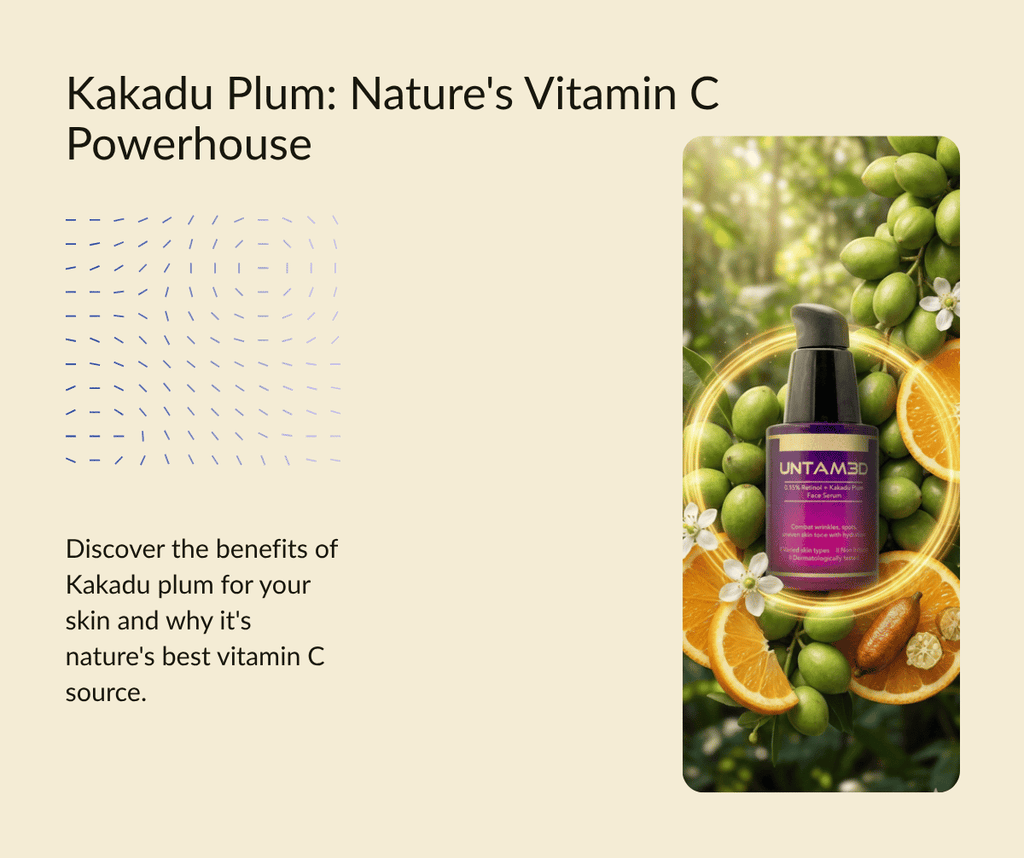
Kakadu Plum is one of the world's most potent natural sources of Vitamin C, containing up to 55 times more Vitamin C than oranges. When properly stabilized in a serum formula, Kakadu Plum provides both antioxidant protection (shielding skin from environmental damage and free radicals) and brightening benefits (inhibiting melanin production and fading existing hyperpigmentation). For Indian women dealing with photoaging, melasma, and uneven skin tone, Kakadu Plum in a retinol serum addresses multiple concerns simultaneously.
Kakadu Plum also enhances retinol's effectiveness. Vitamin C stabilizes retinol molecules, improving penetration and reducing degradation. Additionally, Vitamin C and retinol work through different pathways—Vitamin C provides immediate antioxidant protection while retinol builds collagen and reduces fine lines over weeks and months. Using them together in a single serum creates efficiency: one product addresses multiple aging mechanisms rather than stacking separate products.
EGCG is the active compound in green tea, providing powerful anti-inflammatory and antioxidant benefits. For retinol users, EGCG is particularly valuable because retinol initially increases skin cell turnover and can trigger temporary inflammation and irritation. EGCG reduces that inflammation, allowing the skin to tolerate retinol more comfortably while accelerating adaptation. Studies show that retinol combined with EGCG produces smoother skin with less irritation than retinol alone, and the combination provides superior photoprotection against cumulative sun damage.
The most effective retinol serums for Indian skin combine all three: a stabilized retinol base (0.3-0.5%), Kakadu Plum for brightening and antioxidant protection, and EGCG for anti-inflammatory benefits. This combination addresses the top aging and pigmentation concerns affecting Indian skin while creating a gentler adjustment period for retinol introduction.
Why Dermatological Testing Matters More Than Celebrity Endorsements
The Indian skincare market has become saturated with celebrity-endorsed retinol serums that lack any published dermatological testing. A product endorsed by an actor with perfect skin generates sales, but it doesn't indicate whether the serum actually works for your skin, whether the retinol is stable, or whether results are replicable. Dermatological testing means independent clinical trials demonstrating efficacy on actual human skin across different skin types, tones, and sensitivities.
When evaluating a retinol serum, look for published studies or dermatologist endorsements based on testing, not marketing partnerships. Legitimate retinol serums have undergone stability testing (confirming retinol concentration remains stable over shelf life in tropical conditions), efficacy testing (showing measurable improvements in fine lines, skin texture, and hyperpigmentation), and safety testing (confirming tolerability across diverse skin types including sensitive skin). These studies are typically available through brand websites or dermatological journals.
Indian skin has unique characteristics compared to European or East Asian skin: higher prevalence of melasma, greater sensitivity to post-inflammatory hyperpigmentation, and different barrier function in humid climates. A retinol serum tested only on lighter European skin types may not translate equally to Indian skin. The best retinol serums for India have been specifically tested on Indian women across different skin tones and sensitivities, with published results confirming efficacy and tolerability across that spectrum.
Building a Retinol Routine: Concentration, Frequency, and Timeline
Choosing the right retinol serum is only part of the equation. How you use it determines whether you experience meaningful results or frustrating irritation that causes you to abandon retinol entirely. The introduction timeline is critical: starting too aggressively leads to barrier damage, excessive peeling, and sensitivity that discourages continued use. The goal is reaching consistent, frequent retinol use—typically 3-5 nights weekly—without compromising skin health.
For a 0.3% retinol serum, dermatologists typically recommend starting with once-weekly application on clean, dry skin, followed by a lightweight moisturizer. After one to two weeks of tolerance, increase frequency to twice weekly. Progression to 3-4 times weekly happens over 4-8 weeks depending on skin sensitivity. For someone with sensitive skin or a history of reactive skin, extending this timeline to 8-12 weeks is prudent. There's no benefit to aggressive introduction—your skin doesn't build tolerance to retinol faster with rapid escalation. It simply becomes irritated, which defeats the purpose.
Timeline expectations matter equally. Retinol's benefits aren't immediate. Most dermatological studies show measurable improvements in fine lines and skin texture after 8-12 weeks of consistent use at therapeutic concentration. Hyperpigmentation fading takes 12-16 weeks. Collagen improvements continue building over 6 months. Anyone promising visible results within 2-3 weeks is either exaggerating or selling you something other than true retinol. The best retinol serums produce gradual, consistent improvements because they're actually delivering functional retinol rather than relying on hype.
Formulation Details That Determine Serum Quality
Beyond retinol concentration, several formulation details separate high-performing serums from mediocre products. Packaging is the first clue: professional retinol serums use dark or opaque bottles that minimize light exposure. Transparent bottles and serums stored in clear containers have degraded retinol—light exposure is the primary cause of retinol breakdown. If a brand displays their retinol serum in clear packaging in a brightly lit retail environment, assume minimal active retinol reaches your skin.
The serum base matters significantly. Lightweight, water-based serums penetrate efficiently and feel comfortable in humid climates. Oil-based retinol serums (often marketed as "nourishing") can feel heavy and trigger congestion in combination or oily skin. The ideal base for Indian skin is a lightweight emulsion or serum that hydrates without occluding, allows natural skin barrier function, and doesn't interfere with other skincare products. If applying retinol serum requires skipping other treatments or altering your routine dramatically, that indicates a formulation problem—incompatible base ingredients or texture issues.
Supporting ingredients reveal whether a brand understands retinol formulation. Stabilizing antioxidants like Vitamin E (tocopherol), ferulic acid, or resveratrol protect retinol from degradation. Hydrating ingredients like hyaluronic acid or glycerin support skin barrier health during retinol introduction. Soothing ingredients like ceramides, niacinamide, or centella asiatica reduce irritation and inflammation. The presence of these supporting actives indicates thoughtful formulation—the brand isn't just throwing retinol into a generic serum base and calling it professional-grade.
Common Retinol Serum Marketing Claims That Are Usually False
The retinol serum market thrives on exaggerated marketing claims. Understanding which claims are substantiated and which are pure marketing helps you evaluate products critically. "Advanced retinol complex" is typically meaningless—it usually means retinol combined with inactive ingredients that sound scientific but provide minimal benefit. "Night-time renewal serum" just means serum applied before bed; there's nothing magical about the formulation itself.
"Pharmaceutical-grade" is not a regulated term in India. Brands use it to imply clinical efficacy without meeting any actual standards. Similarly, "clinical-grade" means nothing without published clinical trials. If a brand uses these terms but can't provide published dermatological studies, it's marketing language rather than substantive claims. "100% natural retinol" is often retinol ester rather than true retinol, a lower-potency alternative that requires more product and longer application periods to achieve results.
"No irritation retinol" is misleading. Some irritation—temporary redness, mild peeling, slight sensitivity—is normal when introducing retinol. It indicates the ingredient is working, stimulating cell turnover and collagen production. Serums claiming "zero irritation" are either using such low concentrations they're ineffective, or they're simply not true retinol. Realistic marketing acknowledges that genuine retinol requires an adjustment period and will cause temporary, mild irritation in most users.
"Suitable for varied skin types" is a claim to examine carefully. While retinol serums can be used by most skin types, they require different concentrations and introduction timelines for different needs. Sensitive, reactive, or compromised skin barriers need lower concentrations and slower introduction. Oily, resilient skin can progress faster. A product formulated for varied skin types should offer guidance for different skin types—not a one-size-fits-all formula.
UNTAM3D's Retinol + Kakadu Plum Face Serum: Professional-Grade Formulation for Indian Skin
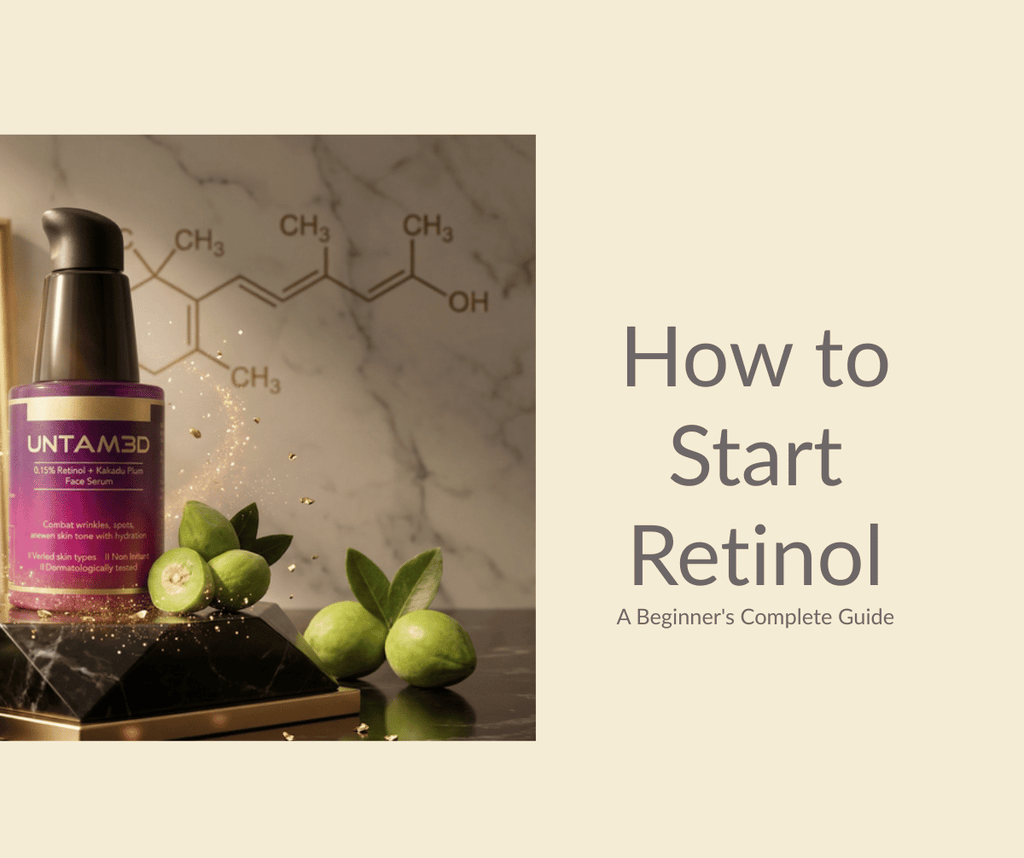
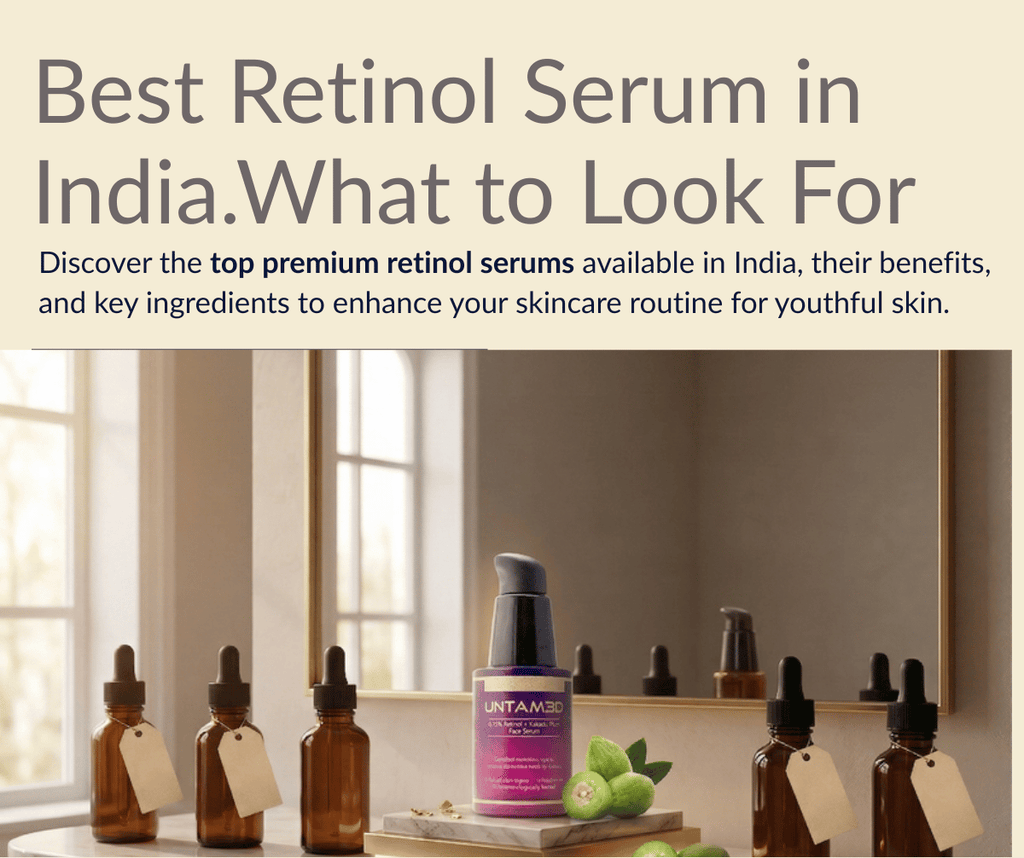
UNTAM3D's Retinol + Kakadu Plum Face Serum represents the standard that serious retinol serums should meet, yet rarely do. At ₹1,199, it's positioned as a genuine professional-grade product rather than an entry-level alternative. The formulation combines stabilized retinol with Kakadu Plum (native Australian Vitamin C) and EGCG, addressing the complete anti-aging equation while specifically targeting hyperpigmentation and uneven skin tone—the top concerns for Indian women.
Dermatologically tested and formulated for varied skin types, the serum has been engineered with India's climate specifically in mind. This isn't a temperate-climate retinol serum adapted for tropical use—it's engineered from the ground up for stability, penetration, and tolerance in humidity and heat. The inclusion of Kakadu Plum goes beyond marketing: it provides meaningful brightening benefits while protecting retinol molecules from degradation. EGCG reduces the inflammatory response to retinol introduction, allowing faster progression to therapeutic frequency without excessive irritation.
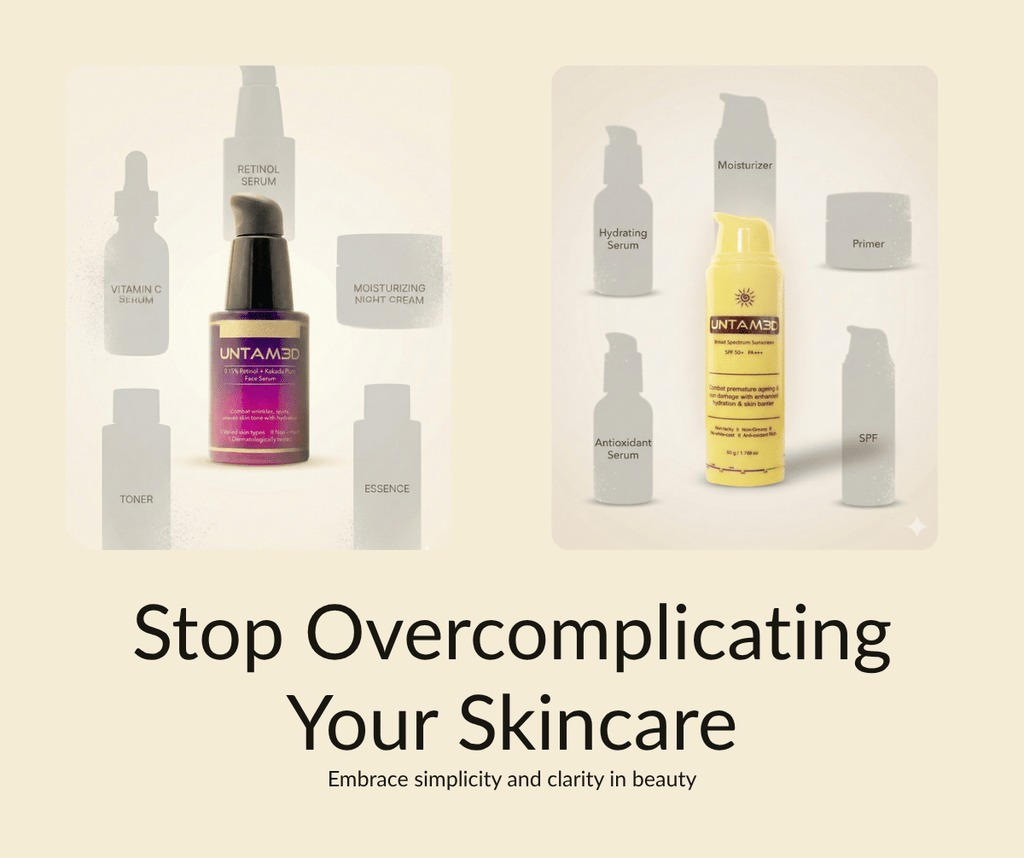
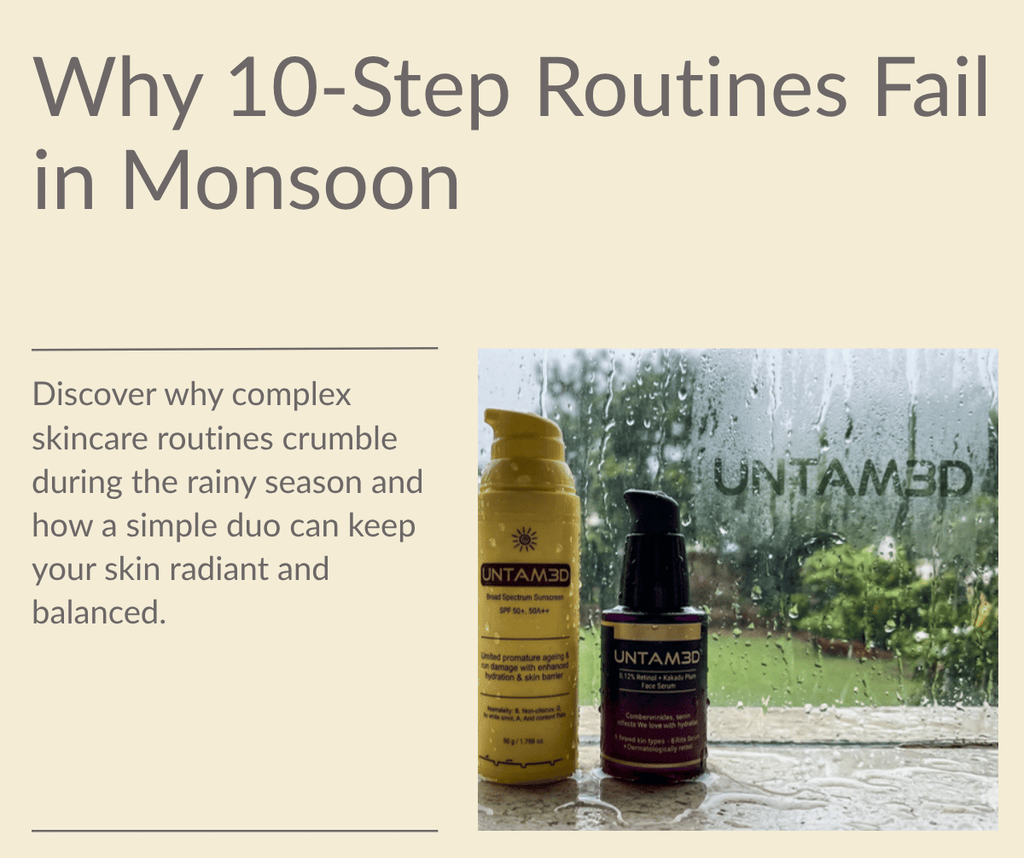
UNTAM3D's anti-routine philosophy means a single, effective retinol serum replaces the multiple weak serums people typically layer hoping for results. One product with professional-grade retinol concentration, complementary actives, and dermatological validation delivers more measurable benefits than five skincare products with questionable efficacy. The climate-aware formulation means the serum maintains stability and efficacy from purchase through the final application—no degradation of retinol potency in India's heat.
Note: This product is currently sold out, but the guidance above applies to evaluating any retinol serum you consider.
Frequently Asked Questions About Choosing Retinol Serums
Is retinol ester less effective than pure retinol?
Retinol esters (retinyl palmitate, retinyl acetate) must be converted by the skin into retinol before becoming active. This conversion process takes longer and is less efficient than direct retinol application, meaning you need higher concentrations of retinol ester to match pure retinol results. Pure retinol at 0.3% typically outperforms retinol ester at 0.5% because it's immediately bioavailable. However, retinol esters are more stable and less irritating, making them suitable for sensitive skin or beginner users.
Can you use retinol serum with other active ingredients like vitamin C or niacinamide?
Yes, but with strategic timing. A retinol serum already containing EGCG and Kakadu Plum provides comprehensive coverage without stacking multiple serums. If using a standalone retinol serum, apply it on clean skin, allow it to absorb for 5 minutes, then apply niacinamide or other supporting ingredients. Avoid applying vitamin C and retinol simultaneously unless they're formulated together, as the pH requirements differ. Space out active ingredients across different steps or different nights to avoid barrier overwhelm.
Is retinol safe during summer in India, or should you pause during hot months?
Retinol makes skin slightly more sun-sensitive, so rigorous SPF 50+ PA+++ sunscreen is absolutely mandatory year-round when using retinol. This is especially critical during Indian summer when UV index peaks. You don't need to pause retinol during summer, but you cannot compromise on daily broad-spectrum sun protection. If you find yourself inconsistently applying sunscreen during summer, pause retinol temporarily rather than using it unprotected. Consistent retinol with reliable sun protection beats inconsistent retinol with variable sun safety.
How long can you store retinol serum, and does heat exposure affect potency?
Properly packaged retinol serums (opaque bottles, stabilized with antioxidants) maintain efficacy for 12-18 months unopened when stored in cool conditions away from direct sunlight. Once opened, plan to use the serum within 6-9 months, accounting for India's heat. Storing in a cool bathroom away from windows, or in a refrigerator, extends shelf life. If you notice the serum changing color (yellowing or browning), developing separation, or smelling rancid, these are signs of retinol degradation—discard and replace.
Should you use retinol if you have sensitive or compromised skin barrier?
Retinol is possible with sensitive skin, but requires lower concentration, slower introduction, and complementary barrier-supporting ingredients. Start with 0.1-0.2% retinol once weekly, and progress extremely slowly. Pair retinol with ceramides, niacinamide, and barrier-supportive moisturizers. If your skin is severely compromised (persistent redness, sensitivity to most products, signs of dermatitis), address barrier health first through targeted repair products before introducing retinol. Retinol's benefits aren't worth triggering barrier damage that takes months to recover.
What's the difference between retinol, retinaldehyde, and tretinoin?
Retinol is available over-the-counter at varying concentrations. Retinaldehyde is a precursor to retinol that may produce results slightly faster and with less irritation. Tretinoin is prescription-only and converts directly to retinoic acid, the most potent form, delivering faster results but requiring medical oversight. For over-the-counter serums, genuine retinol at proper concentration delivers meaningful results. If tretinoin-level results are needed, consult a dermatologist—it requires prescription and medical monitoring.
The Truth About "Best" Retinol Serums
The most expensive retinol serum isn't automatically the best. The most popular retinol serum on social media usually has better marketing than formulation. The "best" retinol serum for you is determined by three concrete factors: retinol concentration (ideally 0.3-0.5%), stabilization and packaging quality, and complementary actives like EGCG and Kakadu Plum. Anything beyond these fundamentals is marketing polish rather than functional improvement.
In 2026, India's retinol serum market has matured enough to support genuinely professional-grade options. The challenge is recognizing them among the noise of celebrity endorsements, influencer sponsorships, and exaggerated marketing claims. Dermatological testing, transparent concentration claims, and thoughtful formulation for India's climate are the markers of legitimate products. A ₹1,200 retinol serum from a brand that understands climate-aware formulation will outperform a ₹3,500 option with better marketing but weaker formulation.
Your retinol serum investment should return meaningful results: measurable improvement in fine lines and skin texture within 8-12 weeks, gradual fading of hyperpigmentation over 12-16 weeks, and consistent skin quality improvement over months of use. If you're using a serum for 4 months and seeing minimal change, the product likely isn't delivering sufficient active retinol. That's not your failure—it's a formulation that didn't meet its claims. The right retinol serum at proper concentration, with stabilization and complementary actives, delivers results you can see and feel.
Sources and Further Reading
- Journal of the American Academy of Dermatology: Retinol Efficacy in Anti-Aging
- Photodermatology, Photoimmunology & Photomedicine: Stability of Retinol in Tropical Climates
- International Journal of Dermatology: EGCG and Retinol Synergistic Effects
- Nutrients Journal: Kakadu Plum Vitamin C Content and Bioavailability
- Clinical, Cosmetic and Investigational Dermatology: Retinol Concentration and Penetration Studies
- Journal of Cosmetic Dermatology: Retinol Introduction Protocols and Skin Tolerance
RECENT POSTS