Monsoon Is Coming: How to Prep Your Skin Barrier
Your skin barrier is your first line of defense against environmental stressors—and monsoon season is one of the harshest tests it will face. High humidity, fluctuating temperatures, and increased moisture in the air create the perfect storm for barrier breakdown, leading to sensitivity, breakouts, and compromised skin health. Preparing your skin barrier before monsoon arrives means shifting to products that stabilize moisture without over-occlusion, focusing on ceramides and strengthening lipids that reinforce your skin's protective function. The key is not adding complexity but streamlining your routine to address barrier health specifically. A climate-aware approach means recognizing that your skin's needs shift seasonally and responding with precision rather than accumulating more products. By understanding how humidity affects your barrier and choosing targeted ingredients like ceramides and phospholipids, you can protect your skin throughout the rainy season without the confusion of a 10-step routine.
What Happens to Your Skin Barrier During Monsoon?
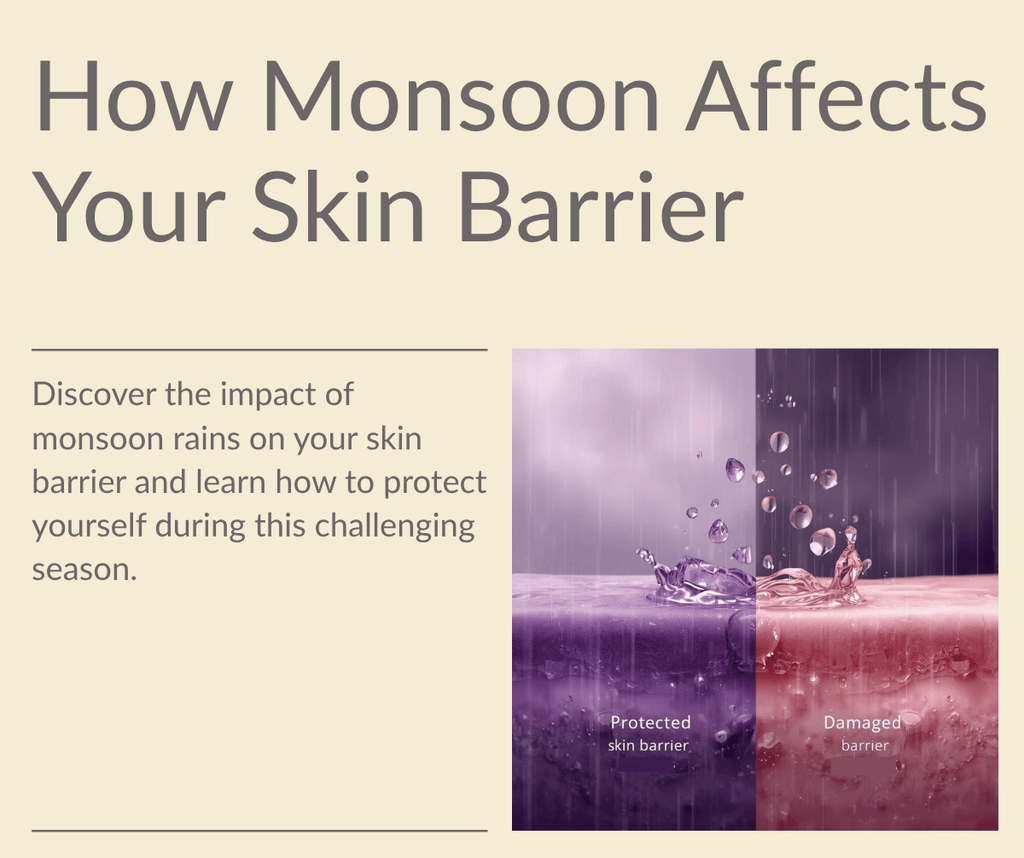
The monsoon brings more than just rain—it brings a dramatic shift in atmospheric moisture and temperature fluctuations that directly impact your skin barrier. Your skin barrier is composed of lipids (ceramides, cholesterol, and fatty acids) that create a protective seal, maintaining hydration and blocking irritants. When humidity spikes and temperatures become unpredictable, two competing forces act on your barrier: external moisture makes your skin feel hydrated, but it simultaneously prevents your skin from naturally regulating its own moisture levels. This disrupts the barrier's equilibrium.
Additionally, the increased water activity on your skin during monsoon weakens the "glue" between skin cells, making your barrier more permeable. This is why monsoon typically triggers increased sensitivity, reactive skin, and often unexpected breakouts despite the apparent abundance of moisture. Your barrier isn't just compromised—it's confused. The skin attempts to overcompensate by producing more sebum, leading to the classic "oily yet dehydrated" state that many people experience during rainy seasons across India.
Fungi and bacteria also thrive in humid conditions, which is why dermatologists often observe a spike in fungal infections and inflammatory skin conditions during monsoon. If your barrier is weakened, these microorganisms have easier access to deeper skin layers, triggering inflammation and exacerbating existing conditions like acne or eczema.
How Do Ceramides Protect Your Barrier Specifically?
Ceramides are the critical infrastructure of your skin barrier. They are the most abundant lipid class in your barrier's lipid composition and act as the mortar between skin cells, creating impermeability and structure. During monsoon, when external factors are constantly challenging your barrier's integrity, ceramides become non-negotiable. Unlike humectants (which draw moisture from the environment), ceramides actually seal moisture inside your skin and prevent transepidermal water loss (TEWL), regardless of how humid it is outside.
The science is straightforward: ceramides rebuild the intercellular lipid matrix that monsoon disrupts. By using a sunscreen formulated with ceramides before monsoon season, you're not just protecting against UV damage—you're fortifying your barrier structure proactively. Ceramides work synergistically with other barrier-supporting lipids like phospholipids, which your skin naturally depends on. This combination is far more effective than relying on occlusive moisturizers that can trap heat and bacteria during humid weather.
What makes ceramides exceptional during monsoon is that they function effectively regardless of humidity levels. Other barrier-supporting strategies (like rich creams or occlusive oils) can feel uncomfortable in monsoon's heat and moisture, but ceramides integrate into your barrier structure without creating a heavy or suffocating feeling on the skin.
Should Your Routine Change Before Monsoon Arrives?
Yes, and the earlier you make the transition, the better protected you'll be. Ideally, you should begin shifting your routine about 2-3 weeks before monsoon arrives in your region. This gives your barrier time to adjust to new products before the environmental stressor hits. The change doesn't need to be dramatic—in fact, complexity is the enemy of barrier health. Instead of adding more products, you should evaluate what you're already using and replace heavy, occlusive moisturizers with barrier-supporting essentials.
If you're currently using a moisturizer designed for dry seasons, it's likely too heavy for monsoon. Switch to a lightweight moisturizer or focus your moisture support through a barrier-strengthening sunscreen instead. Your sunscreen becomes even more critical during monsoon because it serves dual purposes: UV protection (which intensifies during rainy season due to UVA penetration through clouds) and barrier fortification through ceramides and phospholipids.
Assess your current products for potential irritants that might exacerbate sensitivity as your barrier weakens: strong actives, high-percentage acids, or fragrance can push your barrier past its breaking point. This is not the time to introduce new retinoids or exfoliating acids. If you're already using these, consider reducing frequency or simplifying your routine to just essentials until your barrier has strengthened.
What Ingredients Should You Prioritize Besides Ceramides?
Phospholipids are equally important as ceramides during monsoon. They're a major component of cell membranes and support barrier function by maintaining cellular integrity. Unlike ceramides, phospholipids are less discussed in skincare marketing, but they deserve equal attention. Products that contain both ceramides and phospholipids offer comprehensive barrier support.
Niacinamide is another monsoon essential. It's a B vitamin that reduces sebum production, minimizes pore appearance, and strengthens barrier function without adding occlusion. During monsoon, when your skin is already dealing with excess moisture and oil, niacinamide helps regulate sebum without drying your barrier further. It's also calming and reduces inflammation, which is invaluable if your barrier is reactive.
Avoid over-relying on humectants like hyaluronic acid during peak monsoon. While humectants draw moisture from the environment, in ultra-humid conditions, they can pull excess water into your skin, making it feel bloated and uncomfortable. Save heavy humectant serums for the dry season. During monsoon, your barrier needs lipid support more than it needs additional moisture.
Blue light protection is an often-overlooked benefit that matters during monsoon. Increased cloud cover doesn't eliminate blue light exposure (which comes from screens, not just the sun). UV protection with a sunscreen that offers blue light shielding through ingredients like iron oxides provides additional barrier protection without extra steps.
Is a Simple Two-Step Routine Enough During Monsoon?
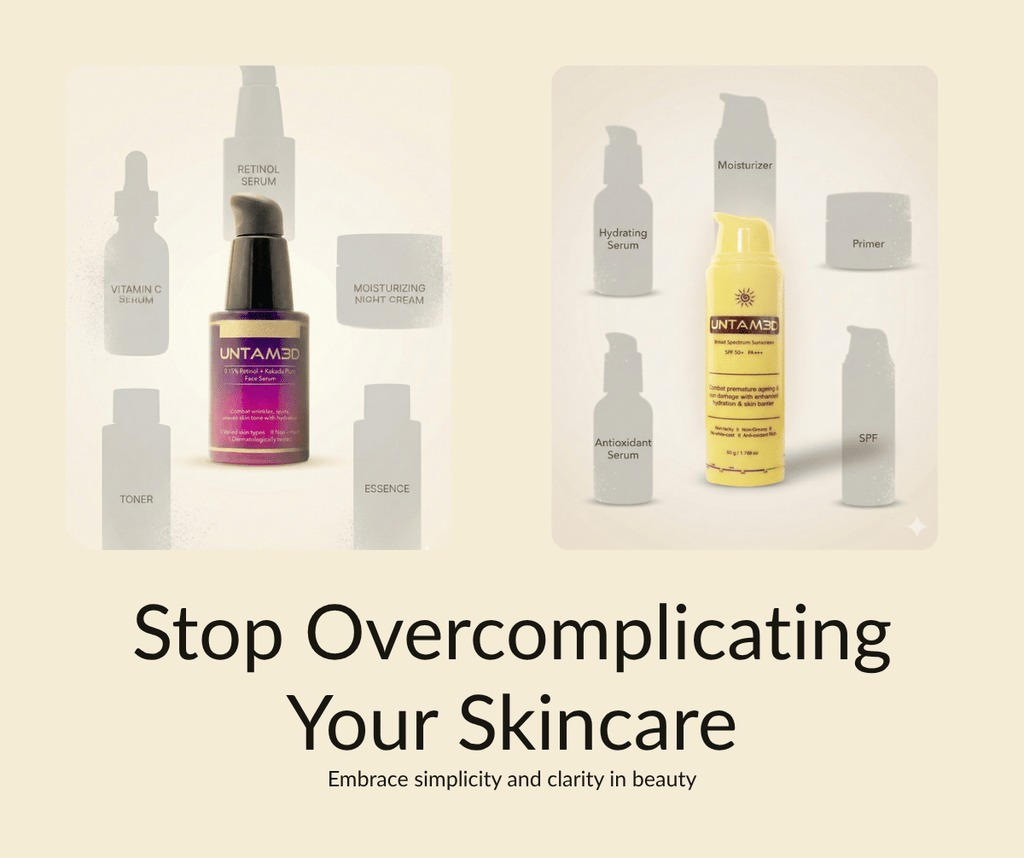
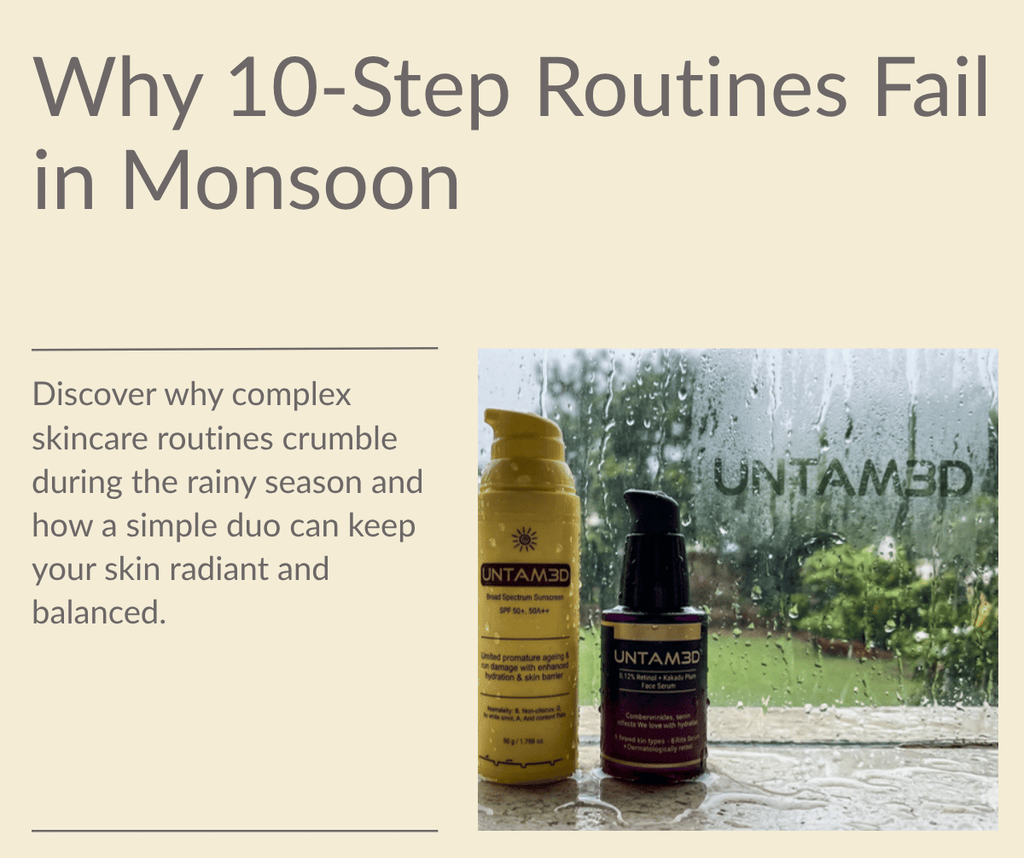
Absolutely. In fact, simplicity is the best philosophy during monsoon. A two-step routine of cleansing and barrier-supporting sunscreen with ceramides is more effective than a complex 10-step routine that stresses your barrier with multiple products and ingredients. The UNTAM3D philosophy of anti-routine complexity directly addresses monsoon season needs—you need precision, not accumulation.
Your cleanse should be gentle and non-stripping. Use a mild cleanser that removes excess oil and bacteria without disrupting your skin's pH or lipid layer. Follow with a ceramide-rich, phospholipid-infused sunscreen applied generously. This combination addresses both monsoon's humidity-driven breakouts (through cleansing) and barrier vulnerability (through ceramide fortification). If your skin feels particularly dehydrated despite the humidity, add a lightweight hydrating toner before sunscreen, but avoid thick creams or oils that will feel uncomfortable in monsoon heat.
This minimalist approach might feel counterintuitive when your skin is stressed, but it's actually the most effective strategy. Fewer products mean fewer potential irritants, fewer incompatibilities between ingredients, and less burden on an already-compromised barrier.
UNTAM3D's Answer to Monsoon Barrier Prep
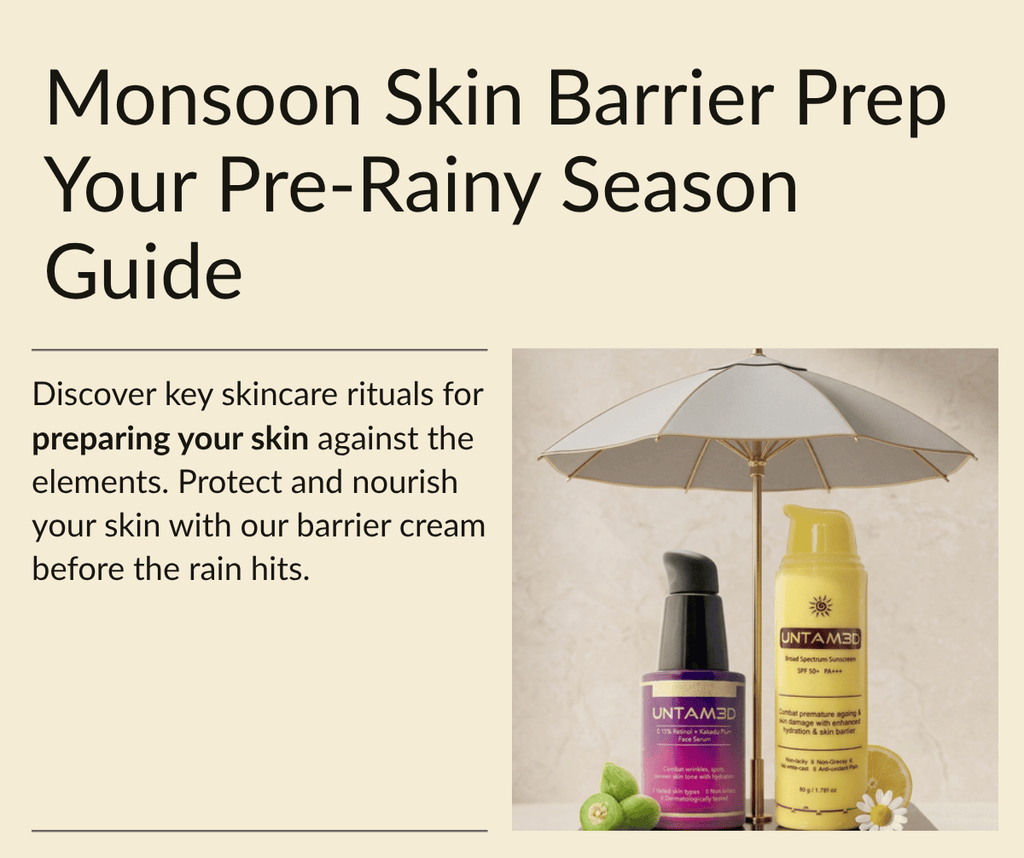
UNTAM3D's Broad Spectrum Sunscreen SPF 50+ PA+++ (₹999, IN STOCK) is specifically formulated for India's climate, including monsoon challenges. Infused with ceramides and phospholipids, it doesn't just protect against UV and blue light—it actively strengthens your barrier structure while providing non-greasy, broad-spectrum protection that performs in high humidity. The anti-routine philosophy means you're not adding extra steps; you're choosing a multifunctional essential that addresses monsoon stressors in one step.
Apply every morning as part of your two-step barrier-focused routine. Its ceramide-phospholipid blend means your barrier strengthens while you're protected, making it your most important monsoon prep investment.
Shop UNTAM3D SunscreenHow Long Does It Take to Strengthen Your Barrier Before Monsoon?
Most people see visible improvements in barrier function within 2-3 weeks of consistent use of ceramide-based products. However, full barrier restoration can take 4-6 weeks depending on how compromised it was initially. This is why starting monsoon prep 2-3 weeks in advance is critical—you want your barrier at its strongest when the season's environmental stressors peak.
You'll notice improvements in several ways: reduced sensitivity, less reactive inflammation, decreased breakouts, and a more balanced skin tone. Your skin may feel less "tight" despite the humidity because your barrier is properly sealed. If you're currently experiencing active barrier compromise (burning, stinging, excessive sensitivity), you might need 6-8 weeks of dedicated barrier support before monsoon arrives, which argues for starting prep even earlier.
Can You Repair a Barrier During Monsoon If You're Already Struggling?
Yes, but it's harder because monsoon's environmental factors actively work against barrier repair. If you're already experiencing compromised barrier symptoms during monsoon—sensitivity, reactive skin, persistent breakouts—you need to be even more aggressive about barrier support. This means simplifying your routine to absolute essentials, using only ceramide-rich products, and being extremely cautious about any new ingredients.
If possible, minimize sun exposure during the worst weeks of your region's monsoon (typically the first 2-3 weeks when humidity spikes most dramatically) to reduce the irritation load on your barrier. This is the only time barrier compromise might justify reducing sunscreen use, but this is a temporary measure only when your barrier is severely reactive. Generally, sunscreen remains essential even in monsoon.
Don't wait until monsoon arrives to act. Prevention is infinitely easier than repair when you're battling environmental stressors simultaneously.
Should You Stop Using Active Ingredients Before Monsoon?
If your barrier is already strong and healthy, you don't necessarily need to stop using retinoids or other actives during monsoon. However, you should reduce frequency. If you're using a retinoid 3 times per week, drop to twice weekly. If you're using it nightly, reduce to every other night. The same applies to exfoliating acids or vitamin C serums. These actives are beneficial, but monsoon is not the time to introduce new ones or increase frequency.
If your barrier is already showing signs of compromise as monsoon approaches, pause active ingredients entirely until your barrier has recovered. A compromised barrier cannot handle the cellular turnover that retinoids accelerate or the pH disruption that acids create. Wait until monsoon has passed and your barrier is stable before reintroducing them.
The key is honest assessment: Is your barrier currently strong? If yes, maintain your routine with reduced frequency. If no, simplify ruthlessly.
FAQ Schema
Sources & References
- Draelos, Z. D. (2016). The science behind skin barrier maintenance. Dermatologic Surgery, 42(S3), S165-S172.
- Bouwstra, J. A., & Ponec, M. (2006). The skin barrier in healthy and diseased state. Biochimica et Biophysica Acta, 1758(12), 2080-2095.
- Fluhr, J. W., et al. (2015). Sebaceous gland lipids modulate local immune response in acne vulgaris. Dermatology, 231(2), 119-126.
- Humbert, P., et al. (2013). Ceramide-dominant photoprotection: A clinical assessment. Archives of Dermatological Research, 305(6), 505-512.
- Indian Meteorological Department reports on seasonal humidity and skin barrier function during monsoon season.