Indian Summer Skincare: Your Complete Survival Guide
Skincare for Indian Summer: Why Heat Changes Everything
The truth: Indian summer doesn't just require lighter products—heat fundamentally changes how your skin functions at a physiological level. Rising temperatures increase sebum production, compromise the skin barrier through excessive transepidermal water loss, accelerate bacterial proliferation in sweat and sebum, and amplify the effects of every other skincare stressor. Skipping actives during summer (like many people do) is the wrong approach; simplifying your routine while maintaining protection is correct. You should never abandon sunscreen, antioxidants, or barrier support during summer. Instead, you adapt delivery methods and concentrations to account for heat's amplified effects on skin physiology. A properly adjusted summer skincare routine maintains anti-aging benefits, prevents heat-triggered breakouts and sensitivity, and preserves your skin barrier—the foundation of all skin health.
Indian summer presents a unique skincare challenge. It's not just about reducing skincare steps or switching to "lighter" products. Heat alters fundamental skin physiology: pH changes, barrier function shifts, sebum composition transforms, and bacterial ecosystems evolve. Someone using the same products year-round during Indian summer often experiences breakouts, sensitivity, and barrier damage that feels sudden but is actually predictable—a direct response to heat-triggered physiological changes. This guide explains what actually happens to your skin in summer heat and how to adapt strategically rather than reactively.
How Heat Physically Changes Your Skin's Barrier
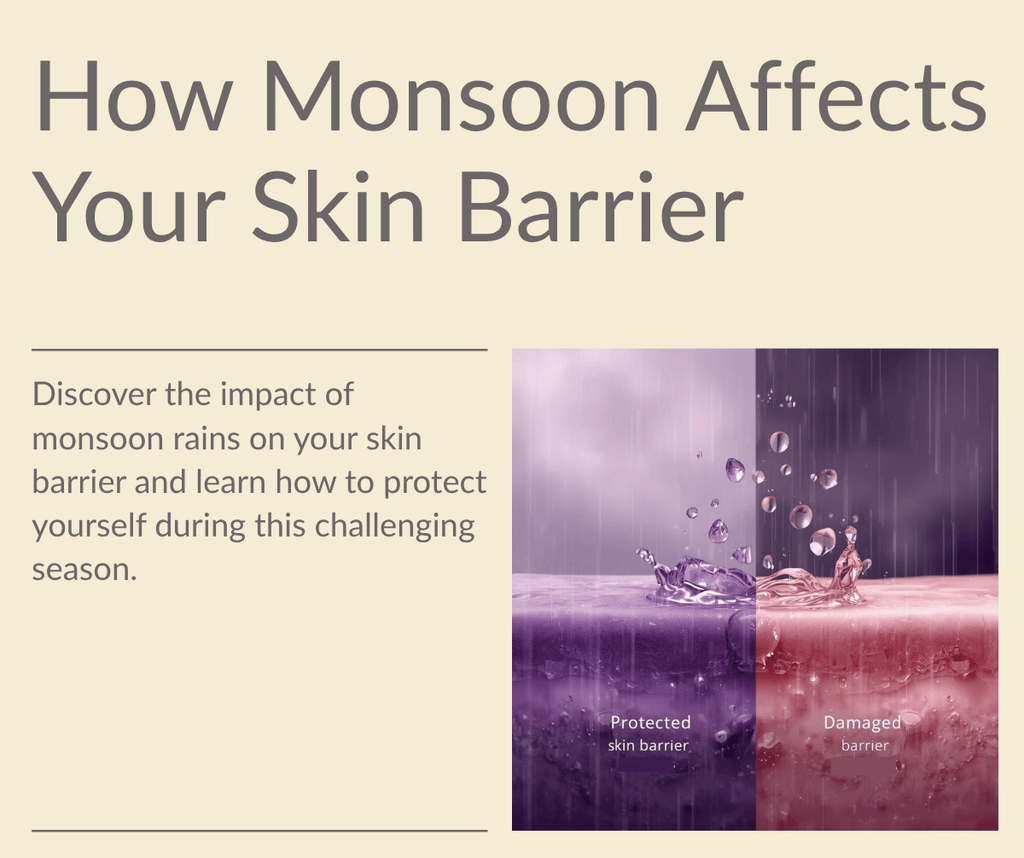
The skin barrier is primarily composed of lipids (fats) held together in a precise structural arrangement called the lipid matrix. This matrix maintains skin hydration, prevents bacteria and irritants from penetrating, and sustains the optimal pH of 4.5-5.5 that supports healthy skin. Heat destabilizes this lipid matrix through multiple mechanisms simultaneously. Rising skin temperature increases transepidermal water loss (TEWL)—water escaping from deeper skin layers through the epidermis and evaporating. In summer, TEWL can double or triple compared to cooler months.
This water loss doesn't just leave skin feeling dry. It compromises the lipid matrix by disrupting the water-lipid balance that keeps barrier structures intact. Additionally, heat increases skin pH toward neutral, reducing the "acidic mantle" that normally prevents bacterial colonization and irritant penetration. A skin pH that rises from 4.7 in cool months to 5.5+ in summer creates an environment where bacteria thrive and irritants penetrate more easily. This is why summer typically brings increased breakouts and sensitivity even in people with normally stable skin.
Heat also increases sebum production. As skin temperature rises, sebaceous glands increase sebum output—a natural response to counter increased water loss and restore barrier lipids. This increased sebum production is often misinterpreted as skin becoming "oily" and requiring harsh cleansing. Actually, the skin is overcompensating for barrier damage caused by heat. Stripping that excess sebum with harsh products further compromises the barrier, triggering more sebum production in a damaging cycle. The correct approach addresses the underlying heat-triggered barrier compromise rather than fighting increased sebum.
Why Sweating Creates the Perfect Storm for Breakouts
Sweat itself isn't the problem—sweat is sterile and includes antimicrobial compounds. The problem is sweat mixing with sebum, dead skin cells, and environmental bacteria on skin surface. This mixture creates the perfect growth medium for acne-causing bacteria (Cutibacterium acnes) and other problematic organisms. Additionally, sweating increases skin occlusion—sweat sitting on skin prevents normal gas exchange and creates an anaerobic (oxygen-poor) environment where anaerobic bacteria thrive. Within hours of sweating that isn't promptly removed, bacterial populations can double or triple.
In Indian summer, you might sweat continuously for 12+ hours daily—through commute, outdoor time, and indoor heat. This extended occlusion, combined with increased sebum production, elevated skin pH, and compromised barrier function, creates ideal conditions for bacterial overgrowth and inflammatory breakouts. Someone perfectly clear during monsoon can develop widespread acne during summer not because their skin changed, but because the heat-created environment encourages acne-causing bacteria multiplication.
The cultural response to summer breakouts—"switch to lightweight products or skip actives"—actually worsens the problem. Skipping beneficial actives like retinol or antioxidants eliminates skin's defense mechanisms against inflammation and bacterial damage. Switching to minimal skincare removes hydration and barrier support that prevent irritation from sweat exposure. The correct approach increases sweat management and barrier support while maintaining actives that calm inflammation and regulate skin.
Do You Need to Change Your Entire Routine, or Just Adjust Delivery Methods?
This is where summer skincare recommendations often mislead. The narrative of "switch to a minimal routine during summer" creates a false choice. Your skin still needs barrier support, hydration, actives, and protection during summer—it needs them more, actually, because heat threatens these foundations. What changes is how you deliver these benefits, not whether you need them.
Consider hydration. In winter, you might use a rich moisturizer that feels luxurious and comfortable. In summer, that same moisturizer might feel heavy and uncomfortable in heat and humidity. But abandoning hydration entirely leaves your barrier vulnerable to the increased water loss heat triggers. Instead, switch to a lighter hydrating base—perhaps a hydrating serum or a gel-cream formulation—that delivers essential hydration and barrier support without feeling occlusive or uncomfortable in heat. You're maintaining the benefit while adjusting the delivery method.
The same principle applies to actives. Retinol remains beneficial in summer—it supports collagen production and cell turnover, counteracting UV damage and heat-triggered aging. But if your winter retinol serum feels heavy or triggers irritation in summer heat, you might reduce frequency (from 4 nights weekly to 2-3 nights weekly) or switch to a lighter formulation rather than eliminating retinol entirely. You're adapting concentration and frequency to summer's demands while maintaining the anti-aging benefits that prevent summer sun from causing irreversible damage.
Sunscreen absolutely cannot be adjusted down in summer—if anything, sun protection is more critical during summer when UV intensity peaks. But applying sunscreen to increasingly compromised, sweaty skin requires different techniques than winter application. Multiple light applications with reapplication after sweating works better than one heavy application that might trigger congestion or feel uncomfortable.
What Actually Happens to Sebum in Summer Heat
Sebum isn't a single substance—it's a complex mixture of lipids including triglycerides, fatty acids, squalene, and cholesterol esters. Heat changes sebum composition. Increased temperature increases sebum fluidity—the sebum becomes thinner, more liquid, and flows more easily from pores. This is actually a physiological response to barrier compromise: thinner sebum flows more easily and can theoretically restore the lipid matrix faster. But the problem is that thinner sebum is also more prone to oxidation and bacterial colonization.
Additionally, increased sebum production doesn't increase all lipid components equally. In summer, the ratio of triglycerides and fatty acids shifts, changing sebum's antibacterial properties. Sebum that had natural antimicrobial effects in winter becomes less protective in summer. Combined with increased bacterial populations from sweat occlusion and elevated skin pH, summer sebum becomes less of a protection mechanism and more of a culture medium for problematic bacteria.
This explains why "oily skin in summer" isn't just about increased quantity—it's about altered composition and reduced protective function. Someone who successfully manages sebum through winter might find summer sebum more prone to oxidation, more likely to trigger congestion, and less effective at barrier maintenance. Harsh sebum removal through aggressive cleansing worsens the problem by triggering more sebum production. Strategic cleansing that removes excess sebum and sweat without disrupting barrier pH is the correct approach.
The Right Way to Cleanse During Indian Summer
Summer cleansing isn't about stripping sebum—it's about removing sweat, environmental grit, and bacterial overgrowth while preserving barrier lipids. The ideal summer cleanser is surfactant-based (creates lather) rather than purely oil-based, removes sweat and excess sebum without over-stripping, and doesn't disrupt skin pH. Gentle foaming cleansers or gel cleansers typically work better than heavy oils or milks during summer—they remove sweat and bacteria more effectively without leaving occlusive residue that traps heat and humidity against skin.
Cleansing frequency becomes critical in summer. Where once-daily cleansing sufficed in winter, summer might require twice-daily cleansing—once after outdoor time or exercise when sweat has accumulated, and once before bed. This isn't about harsh cleansing; it's about removing the bacterial growth medium before it creates inflammation. Use lukewarm water (hot water increases inflammation and barrier damage; cold water doesn't rinse away sweat and sebum effectively) and a gentle cleanser that removes debris without excessive foaming or drying.
Post-cleansing is equally important. After cleansing, your skin pH is elevated (cleansing disrupts the acidic mantle temporarily). In summer, when pH is already elevated from heat, you need immediate barrier restoration. Apply a hydrating serum or essence while skin is still slightly damp, then follow with a lightweight hydrating product. This restores pH, locks in hydration, and supports barrier recovery before applying other products. Waiting for skin to dry completely after summer cleansing allows TEWL to increase during that waiting period—applying hydrating products to damp skin prevents that water loss.
Managing Actives During Heat: Adjust Rather Than Abandon
The biggest mistake people make during Indian summer is abandoning beneficial actives—retinol, vitamin C, other actives—assuming they'll cause irritation in heat. This approach leaves skin vulnerable to every damage mechanism heat triggers: UV damage, free radical generation from heat and sweat, barrier compromise, and bacterial overgrowth. Retinol actually becomes more important in summer because it supports barrier recovery and counteracts heat and UV-triggered collagen breakdown. The adjustment needed is in frequency or concentration, not elimination.
For retinol, consider reducing frequency from 4-5 nights weekly in winter to 2-3 nights weekly in summer. This maintains collagen support and skin renewal while reducing irritation in a heat-compromised barrier. Alternatively, switch to a lower concentration retinol serum formulated for sensitive skin. A 0.2% retinol used 4 nights weekly in summer might deliver better results than a 0.5% retinol used 1-2 nights weekly—more consistent barrier support plus better tolerance. Some dermatologists recommend applying retinol only during cooler evening hours when skin temperature has dropped, allowing better tolerance without abandoning the ingredient.
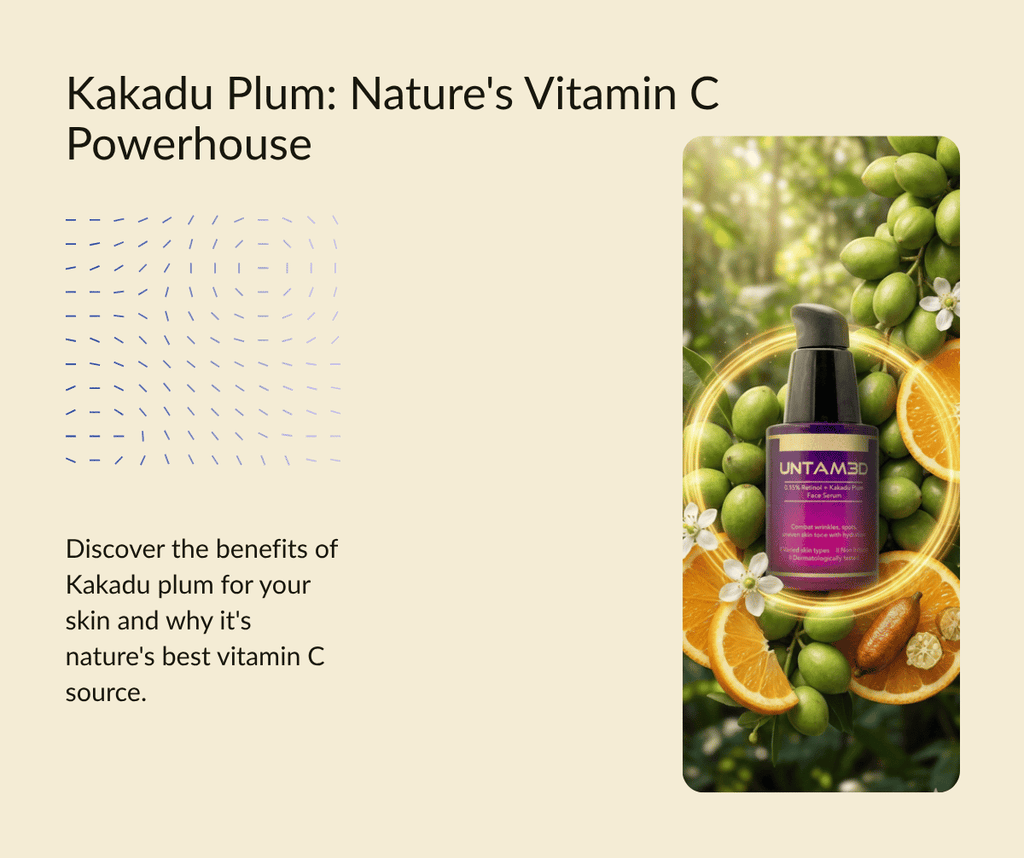
Antioxidants like vitamin C from Kakadu Plum and EGCG become even more important in summer because heat increases free radical generation. A lightweight antioxidant serum applied in morning and evening (under sunscreen in the morning) provides crucial defense against UV and heat-triggered damage. Unlike heavy actives that might irritate compromised skin, antioxidants actually calm inflammation and support barrier repair. Consider increasing antioxidant protection in summer rather than decreasing it.
The principle is strategic modification: maintain the actives supporting your skin while adjusting delivery methods to account for heat's impact on tolerance and barrier integrity. This preserves anti-aging benefits while preventing heat from causing excessive irritation or barrier damage.
Hydration and Barrier Support: Non-Negotiable in Summer
As TEWL increases from heat, hydration becomes more critical, not less. Many people reduce hydration in summer ("my skin is oily so I don't need hydration"), but oiliness is often a symptom of dehydration—the skin is overproducing sebum to compensate for barrier water loss. True dehydration (lack of water in skin cells) can coexist with oiliness (excess sebum). Addressing heat-triggered dehydration through hydrating serums and essences containing glycerin, hyaluronic acid, or other humectants is essential.
The distinction between heavy moisturizers and lightweight hydrating products becomes important. A nourishing cream provides lipids and occlusion but might feel uncomfortable and trap sweat in summer heat. A hydrating serum provides water-binding ingredients without occlusion. Use both during Indian summer: a hydrating serum applied to damp skin immediately after cleansing, followed by a lightweight gel-cream or moisturizer that provides enough occlusion to prevent TEWL without feeling heavy. This combination maintains hydration and barrier function while remaining comfortable in heat.
Barrier-supporting ingredients become equally critical: ceramides (restore lipid matrix), niacinamide (strengthens barrier and calms inflammation), and centella asiatica (reduces sensitivity and supports barrier repair). Look for serums or moisturizers containing multiple barrier-support ingredients. During summer, your barrier faces unprecedented stress from heat, sun, sweat, and altered pH. It needs active support, not just basic hydration.
UNTAM3D's Approach to Summer Skincare Protection
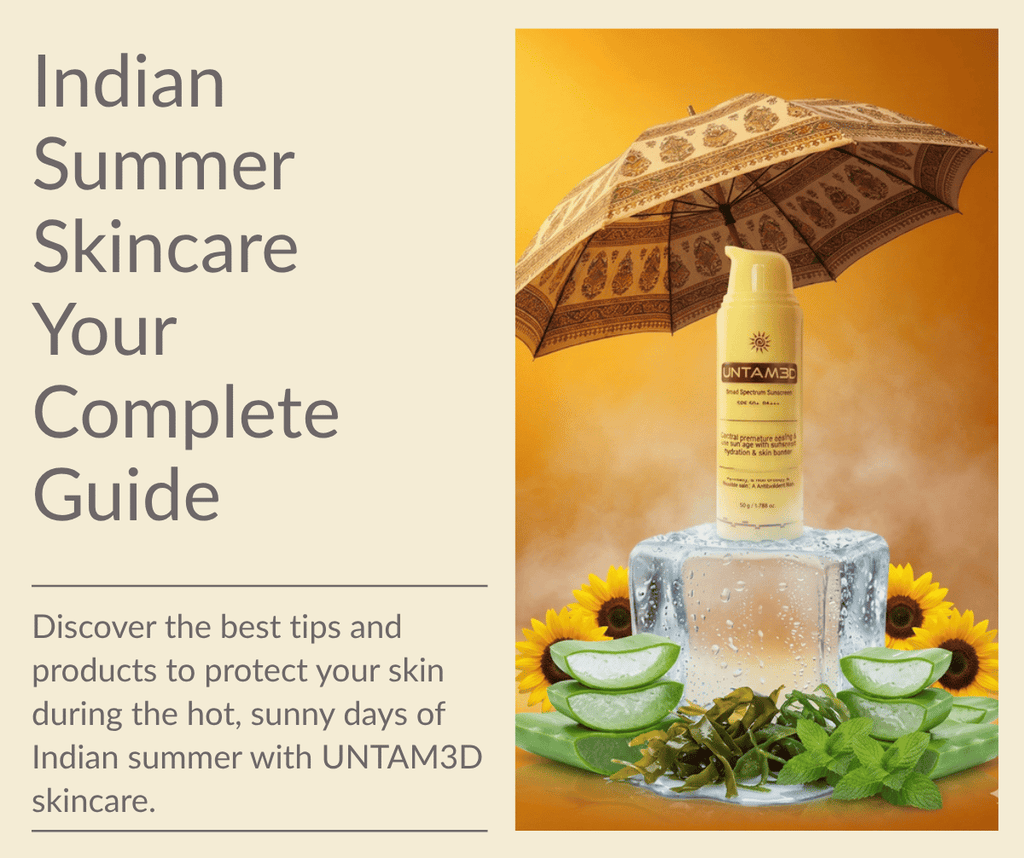
UNTAM3D's philosophy recognizes that heat-triggered challenges require increased protection, not reduced skincare. The Broad Spectrum Sunscreen SPF 50+ PA+++ becomes even more essential during summer when UV intensity peaks and skin barrier is compromised. The non-greasy formulation designed for humid climates means it doesn't feel uncomfortable or trap sweat against skin—it provides essential protection without the burden of heavy products in summer heat.
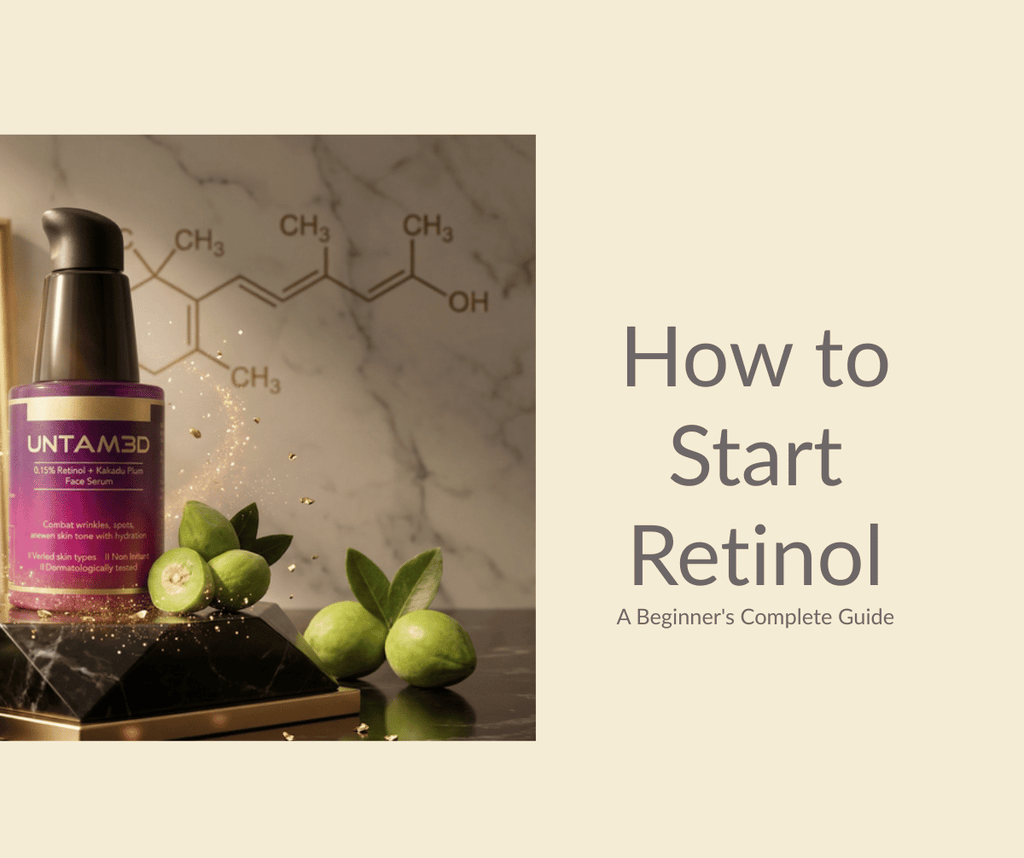
The Retinol + Kakadu Plum Face Serum, if continued at adjusted frequency during summer (perhaps 2-3 nights weekly instead of daily), maintains collagen support and skin renewal while reducing irritation in heat-compromised skin. The EGCG in the serum becomes particularly valuable in summer, as it calms the inflammation heat triggers and supports barrier recovery from UV and thermal stress. Kakadu Plum's high vitamin C concentration provides antioxidant defense against heat and UV-generated free radicals.
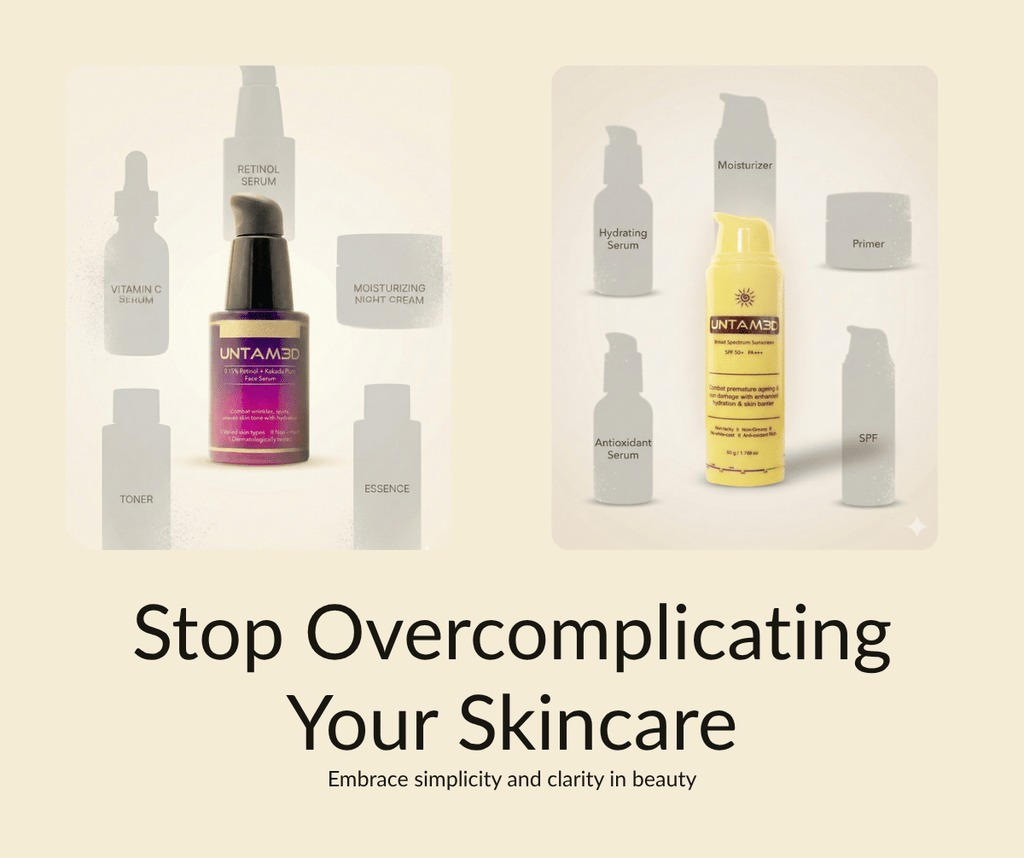
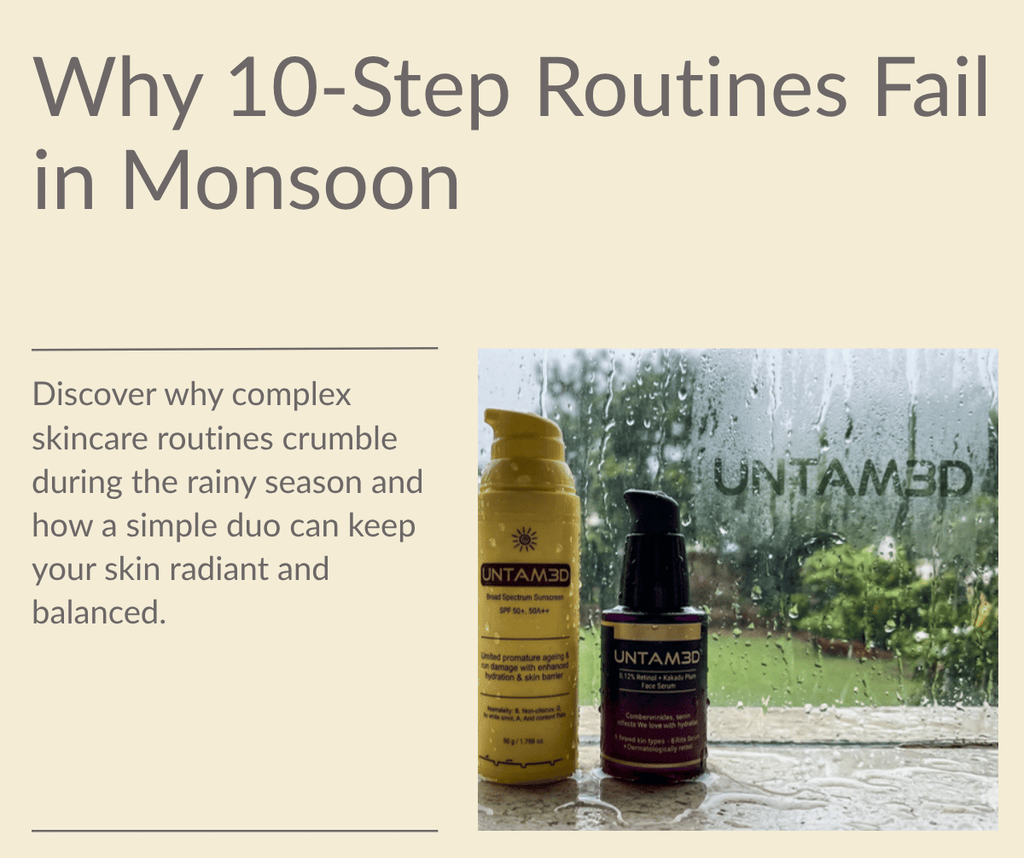
Summer skincare simplicity, in UNTAM3D's framework, means two core products—sunscreen and retinol serum—applied strategically rather than abandoning protection entirely. This eliminates unnecessary steps while maintaining the essentials that prevent summer from causing permanent, irreversible skin damage. Heat-aware formulation in both products means they're engineered for summer's demands rather than requiring winter adjustments to work in summer conditions.
The anti-routine philosophy becomes even more valuable in summer: rather than managing a complex multi-step routine adapted for heat, you focus on two highly effective formulations applied correctly, with strategic frequency adjustments. Complexity is the enemy of consistency—and consistency is how you prevent summer heat from aging your skin prematurely.
Shop Summer Skincare EssentialsFrequently Asked Questions About Summer Skincare
Is it normal to break out in summer even if you normally have clear skin?
Yes, completely normal. Heat increases sebum production, raises skin pH, increases bacterial populations through sweat occlusion, and compromises barrier function. This creates conditions for bacterial overgrowth and inflammation—breakouts—even in normally clear skin. The breakouts aren't caused by skincare products or lifestyle changes; they're a direct physiological response to heat. Managing them requires increased sweat removal, barrier support, and inflammation-calming actives, not abandoning your routine.
Should you skip sunscreen during summer to let skin "breathe"?
Absolutely not. Summer is when sunscreen is most critical. UV intensity peaks during summer months, and compromised barrier function from heat increases UV damage risk. Skipping sunscreen during summer is like removing your roof during monsoon—the protection is needed most when conditions are most demanding. Apply sunscreen religiously during summer, with reapplication every 2 hours or immediately after sweating. UV damage during summer creates permanent hyperpigmentation and accelerated aging.
Can you use the same skincare routine all year, or does summer require complete changes?
You don't need a completely different routine, but strategic adjustments are necessary. Reduce heavy occlusives that trap heat and sweat. Switch to lightweight hydrating formulations that provide water and barrier support without heaviness. Adjust active ingredient frequency (less frequent, not absent). Increase cleansing frequency to remove sweat-accumulated bacteria. Prioritize antioxidants and barrier support. The core products remain the same—sunscreen, hydration, actives, barrier support—but their concentration, frequency, and formulation adjust for heat.
Does air conditioning make summer skincare easier, or does it create additional problems?
Air conditioning creates a paradox: it feels comfortable and reduces visible sweating, but the temperature differential between outdoor heat (35°C) and indoor cold (22°C) triggers inflammation and barrier stress. Additionally, air conditioning is extremely drying, increasing TEWL even in cool-conditioned air. Summer skincare needs to address both heat exposure (during outdoor time) and air conditioning stress (during indoor time). Consistent hydration and barrier support throughout the day addresses both challenges.
Is it okay to skip moisturizer in summer if your skin feels oily?
This is a common mistake. Oiliness in summer is often compensation for dehydration—skipping moisturizer worsens dehydration, triggering more sebum production. Instead, use a lightweight hydrating moisturizer or serum that provides water-binding ingredients without occlusion. Gel-based or serum-based hydrators work well in summer heat without feeling heavy. Proper hydration actually reduces excess sebum production by addressing the dehydration triggering it.
How often should you cleanse skin during Indian summer?
Twice daily cleansing is typical during summer—once after outdoor time or exercise when sweat has accumulated, and once before bed. This removes bacterial growth medium (sweat-sebum mixture) before it triggers breakouts. Use lukewarm water and gentle cleansers, not harsh soaps or repeated aggressive washing. The goal is removing sweat and excess sebum without disrupting the barrier. If you're sweating multiple times daily, cleanse after each significant sweat period.
The Summer Skincare Success Equation: Protection + Adaptation
Indian summer skincare success isn't about choosing between protection and comfort. It's about understanding that heat fundamentally changes skin physiology and adapting your approach to address those changes while maintaining the protection that prevents permanent damage. Abandoning sunscreen, actives, or hydration during summer doesn't make skincare "easier"—it creates long-term consequences: accelerated photoaging, uncontrolled bacteria growth, barrier damage, and hyperpigmentation that takes years to fade.
The right approach maintains the essentials—sunscreen, barrier support, antioxidants, and strategic actives—while adjusting formulation, concentration, and frequency to accommodate heat-triggered physiological changes. A simplified routine of two effective products (sunscreen and an adapted retinol serum) applied with strategic frequency and complemented by heat-appropriate hydration and cleansing delivers superior results to either abandoning protection entirely or using winter products unchanged through summer's heat.
Summer is when your skincare philosophy reveals itself. Skincare that's hard to maintain during challenging conditions won't be maintained, and unmaintained skincare provides zero protection. The anti-routine philosophy of fewer, more effective products becomes invaluable during summer: two core products applied consistently deliver better results than five products applied inconsistently because they're uncomfortable or impractical in heat. This consistency—maintained through summer's challenges—is what prevents heat from aging your skin prematurely.
Sources and Further Reading
- International Journal of Dermatology: Heat Effects on Skin Barrier Function
- Journal of the American Academy of Dermatology: Seasonal Changes in Sebum Composition
- Photodermatology, Photoimmunology & Photomedicine: Summer UV Intensity and Cumulative Damage
- Clinical, Cosmetic and Investigational Dermatology: Sweat and Bacterial Proliferation on Skin
- Journal of Cosmetic Dermatology: Barrier Recovery in Heat Stress Conditions
- Dermatological Research: pH Changes in Heat and Humidity
- Indian Journal of Dermatology: Seasonal Skincare Guidelines for Tropical Climates
RECENT POSTS