Earth Day: What 'Clean Ingredients' Actually Means
Clean Ingredients for You and the Planet: An Earth Day Skincare Guide
Published April 1, 2026 · 7 min read · By UNTAM3D
"Clean skincare" has become marketing shorthand for almost everything—a term simultaneously meaningful and meaningless. The phrase invokes purity, safety, and environmental consciousness, yet lacks regulatory definition, making it ammunition for both legitimate brands and opportunistic greenwashing. Earth Day (April 22) provides opportunity to move past semantics and examine what "clean" actually means: ingredients that deliver efficacy without compromising your skin's health or planetary systems. Clean skincare isn't about excluding entire ingredient categories arbitrarily; it's about understanding ingredient safety, environmental impact, and sourcing practices with sufficient depth to make informed choices. UNTAM3D was founded as a climate-aware skincare brand specifically because skincare's environmental cost is rarely calculated. Manufacturing, packaging, transportation, and disposal of skincare products generate cumulative ecological impact that extends far beyond the individual user. Clean ingredients are part of this equation, but only one part—alongside responsible formulation, sustainable sourcing, and ethical manufacturing.
What Does "Clean" Actually Mean in Skincare?
Clean skincare lacks official definition, which creates interpretive freedom. Some define clean by exclusion (no parabens, sulfates, silicones); others by inclusion (organic, natural, plant-derived). Neither definition is inherently more accurate. A paraben-free moisturizer with synthetic preservatives isn't inherently cleaner than a paraben-preserved formula. A plant-derived ingredient isn't automatically safer than a synthetic equivalent. Meaningful "clean" requires understanding specific ingredients: their safety profiles, stability, environmental impact, and efficacy for their intended function.
This nuance matters because skincare effectiveness and safety depend on chemistry, not terminology. Preservatives exist because contaminated skincare causes infections; eliminating them without replacement isn't "cleaner," it's riskier. Synthetic emollients like silicones don't damage skin; they stabilize formulations and provide sensory benefits. The relevant questions aren't "is this natural?" or "is this synthetic?" but rather "is this ingredient safe at the concentration used?" and "does it deliver its intended function?" and "what's its environmental impact from sourcing through disposal?"
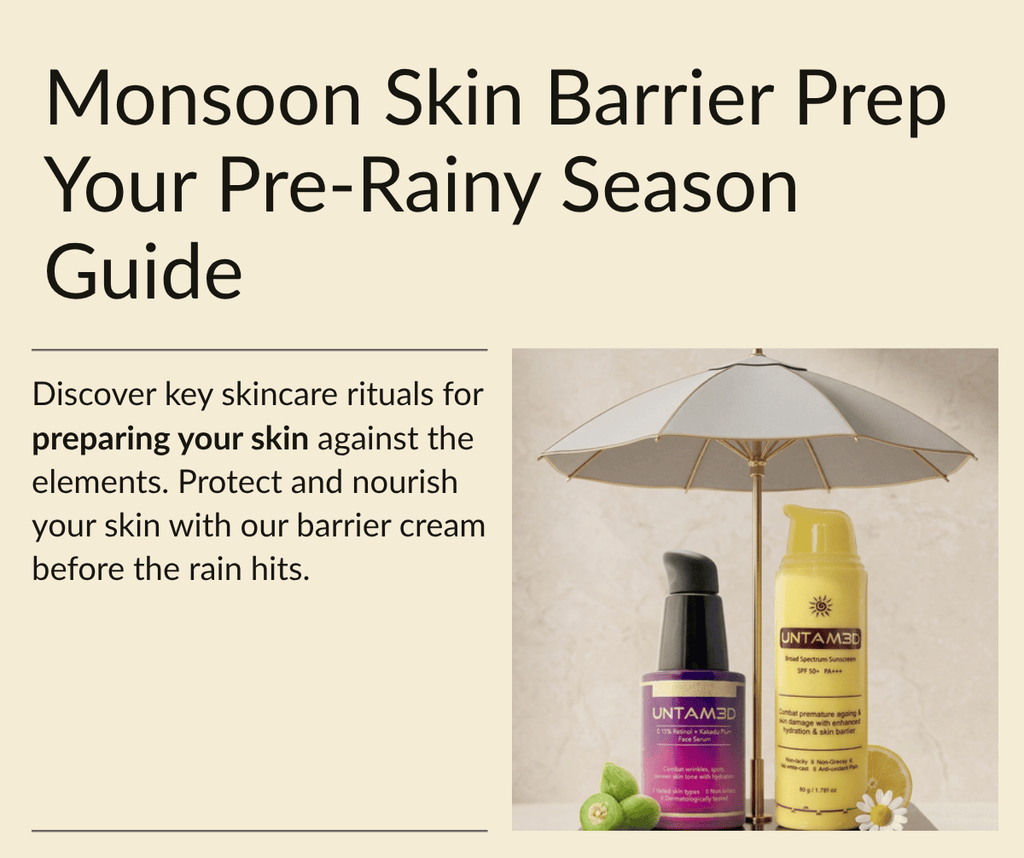
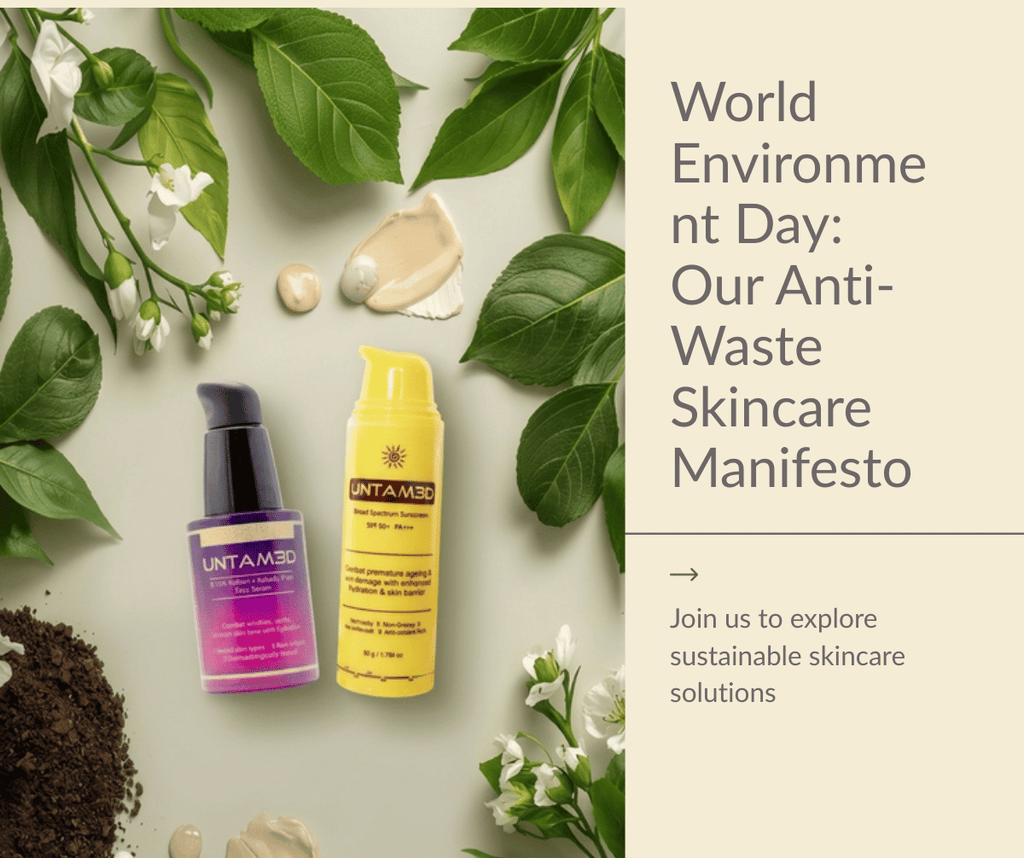
UNTAM3D's approach defines clean through evidence: ingredients with established safety profiles, meaningful efficacy, and responsible sourcing practices. This produces formulations like the Retinol + Kakadu Plum Serum (where Kakadu Plum represents Indigenous Australian knowledge applied sustainably) and the Broad Spectrum Sunscreen SPF 50+ (where mineral and synthetic actives are selected for performance and safety rather than arbitrary natural/synthetic classification).
How to Evaluate Ingredient Safety: Moving Beyond "Chemicals Are Bad"
A fundamental misunderstanding undermines clean skincare discussions: the belief that synthetic ingredients are inherently dangerous while natural ingredients are inherently safe. This inverts toxicology. Toxicity depends on dose, not origin. Water (completely natural) becomes toxic at excessive intake. Arsenic (completely natural) is carcinogenic at microscopic doses. Conversely, many synthetic ingredients are safer than their natural counterparts.
Evaluating ingredient safety requires consulting safety databases: the Cosmetics Ingredient Review (CIR) panel, which comprehensively assesses skincare ingredient safety; the Scientific Committee on Consumer Safety (SCCS), which sets safety standards for Europe; or the FDA, which maintains ingredient restrictions and safety guidance. These bodies examine peer-reviewed research on ingredient concentration, penetration potential, systemic absorption, and toxicity thresholds. An ingredient deemed safe at 5% concentration may be unsafe at 10%. An ingredient safe for topical use may be unsafe for ingestion. Context determines safety.
For specific ingredients in UNTAM3D's products: the retinol in our serum has decades of clinical research establishing safety and efficacy at dermatologically recommended concentrations. Kakadu Plum's Vitamin C has documented antioxidant and collagen-stimulating properties. The sunscreen actives (whether mineral or synthetic) undergo rigorous safety review before regulatory approval for topical use.
Understanding Ingredient Sourcing and Environmental Impact
Clean skincare must address environmental impact, not just personal safety. Ingredient sourcing matters. Palm oil, widely used in cosmetics, often involves deforestation and habitat destruction. Mica mining creates labor and environmental concerns. Endangered plant species are harvested unsustainably for skincare ingredients. Water-intensive crops (like many botanicals) strain regional water supplies. True clean skincare accounts for these impacts.
UNTAM3D selected Kakadu Plum partly because it represents sustainable sourcing aligned with Indigenous Australian communities and practices. This differs from extracting rare plants through destructive harvesting. Similarly, sourcing decisions—whether synthetic or natural—should prioritize sustainability: do the sourcing practices restore or deplete ecosystems? Do they support or exploit communities? Greenwashing often obscures these questions with vague "natural" or "clean" claims that avoid specificity.
Manufacturing impact extends beyond ingredient sourcing. Water use in formulation, energy consumption in production, and waste management during manufacturing create environmental costs that individual ingredients don't capture. UNTAM3D's climate-aware positioning acknowledges these realities: skincare brands can reduce environmental impact through manufacturing efficiency, sustainable sourcing, and responsible packaging, but cannot eliminate it entirely while delivering effective products.
The Role of Preservatives and Stability in Clean Formulation
Preservatives exemplify clean skincare's complexity. A formula without preservatives may feature harmful bacterial or fungal contamination—a genuine safety risk, particularly in warm, humid climates like India's. Eliminating preservatives without replacement isn't "cleaner"; it's negligent. The relevant question becomes: what preservative system provides safety and stability with minimal toxicological concern?
Natural preservatives (essential oils, plant extracts) sound appealing but often provide inadequate antimicrobial protection, requiring higher concentrations that may irritate skin. Synthetic preservatives (parabens, phenoxyethanol, methylisothiazolinone) have established safety profiles at concentrations used in cosmetics, according to multiple regulatory agencies. The choice isn't natural versus clean; it's effective antimicrobial protection versus safety concerns.
Stability—often overlooked in clean skincare discussions—directly impacts efficacy and safety. A serum with retinol and vitamin C requires stabilization to prevent oxidation; unstable formulations lose efficacy within weeks. Stabilizing agents (synthetic or natural) are necessary for these potent actives to deliver their intended benefits. This is why UNTAM3D's Retinol + Kakadu Plum Serum includes stabilizing components: ensuring you receive the efficacy you paid for, rather than degraded actives.
Anti-Routine Philosophy Aligns with Environmental Values
UNTAM3D's core philosophy—"better skin doesn't mean more steps"—addresses skincare's environmental impact directly. A 10-step routine means 10 products manufactured, packaged, transported, and eventually discarded. That's 10 times the resource consumption, waste generation, and manufacturing impact of a 2-step approach. If two effective products (like UNTAM3D's sunscreen and retinol serum) deliver superior results to 10 mediocre products, the environmental case for simplicity is compelling.
This connects to clean skincare's legitimate purpose: using evidence-backed ingredients purposefully rather than accumulating products. Minimizing product count while maximizing efficacy means fewer resources consumed, less waste generated, smaller environmental footprint. It's simultaneously good for skin (less irritation from excessive layering) and the planet.
The UNTAM3D Approach
UNTAM3D was founded as a climate-aware skincare brand because the environmental cost of skincare deserves consideration alongside personal efficacy. Our products reflect this commitment: evidence-backed ingredients selected for safety and efficacy, sustainable sourcing practices (exemplified by Kakadu Plum partnership), and formulation philosophy that prioritizes efficacy per product rather than product accumulation.
This Earth Day, consider what clean skincare actually means for you. Does it align with ingredients proven safe? Does it account for environmental impact from sourcing through disposal? Does it prioritize efficacy or arbitrary natural classification? UNTAM3D's approach answers these questions through science and transparency. Better skin doesn't mean more steps—and it doesn't mean supporting unsustainable practices. Explore UNTAM3D's climate-aware skincare approach this Earth Day.
Frequently Asked Questions
Q: Are parabens in skincare actually dangerous?
A: Parabens at concentrations used in cosmetics (typically 0.3-0.8%) have not demonstrated systemic toxicity or endocrine disruption in standard safety assessments conducted by multiple regulatory agencies. The concern originated from animal studies using doses far exceeding cosmetic application. Individual choice about paraben avoidance is valid, but it's not based on toxicological danger at permitted concentrations.
Q: Is "natural" skincare automatically cleaner than synthetic?
A: No. Safety depends on dose and individual ingredient properties, not origin. Some natural ingredients (certain essential oils) are irritating at cosmetic concentrations. Some synthetic ingredients are safer than natural equivalents. Clean skincare should be evaluated ingredient-by-ingredient, not categorized by origin.
Q: How can I identify actual greenwashing in skincare marketing?
A: Greenwashing typically uses vague terms ("clean," "natural," "pure") without supporting evidence or specific ingredient information. Legitimate brands provide safety documentation, explain ingredient sourcing, and cite regulatory approval or safety assessments. Look for specificity and transparency rather than feel-good language.
Q: Does minimalist skincare (fewer products) really produce better results?
A: Yes, provided the products selected are evidence-backed and suitable for your skin. A targeted 2-step routine (sun protection + active treatment) outperforms unfocused 10-step routines. Quality and intentionality matter more than quantity.
Q: What should I look for to evaluate ingredient safety independently?
A: Consult the Cosmetics Ingredient Review (CIR) database, SCCS safety assessments, or dermatological literature on specific ingredients. These sources provide concentration-dependent safety information rather than marketing claims. If an ingredient appears in multiple peer-reviewed safety assessments, its safety profile is likely established.
Q: How do I know if a brand's sourcing practices are genuinely sustainable?
A: Request transparency: Where are ingredients sourced? What certifications or partnerships support sustainability claims? Do communities benefit from sourcing? Genuine sustainability involves specificity and verifiable partnerships, not vague "sustainably sourced" claims without supporting documentation.
Sources: Cosmetics Ingredient Review (CIR) panel safety assessments; SCCS (Scientific Committee on Consumer Safety) guidance; FDA cosmetic ingredient safety determinations; Dermatological research on preservative efficacy and safety; Environmental impact studies on cosmetic ingredient sourcing; Climate impact research on skincare manufacturing and packaging.
RECENT POSTS