What Does Retinol Actually Do to Your Skin?
What Does Retinol Actually Do? The Complete Science Explained
Published April 1, 2026 · 9 min read · By UNTAM3D
Retinol is among skincare's most evidence-backed ingredients, yet also among the most misunderstood. The molecule generates fervent discussion—from devoted advocates claiming it transforms skin to skeptics dismissing it as overhyped. Both perspectives miss the actual science. Retinol doesn't perform miracles; it performs specific, measurable work at the cellular level that compounds into visible benefits over time. Understanding what retinol actually does requires moving past marketing claims to examine the biochemistry. At its core, retinol works by binding to retinoid receptors in skin cells, triggering gene expression changes that accelerate cell turnover, stimulate collagen production, and normalize sebaceous gland function. These aren't simultaneous processes—they unfold across weeks and months, with different benefits appearing on different timelines. Retinol is effective precisely because it's specific: it addresses fundamental skin aging processes rather than superficially masking them.
The confusion around retinol stems partly from terminology. "Retinol" specifically refers to one form within the broader retinoid family—a family that includes retinal, retinyl esters, and retinoic acid. Each form has different potency and requires different conversion steps before reaching the cellular target. UNTAM3D's Retinol + Kakadu Plum Face Serum combines retinol with Kakadu Plum (a concentrate source of Vitamin C) and green tea extract, creating a formulation that addresses multiple aging pathways simultaneously. Understanding why requires understanding retinol's mechanism first.
How Does Retinol Work at the Cellular Level?
Retinol's journey through skin begins with absorption. The molecule penetrates the stratum corneum and travels deeper into viable epidermis, where the actual work occurs. Here, retinol encounters retinol dehydrogenase and retinaldehyde dehydrogenase—enzymes that convert retinol to retinal, and then to retinoic acid. This conversion is crucial: retinoic acid is the active form that binds to retinoid receptors (RAR and RXR) within cell nuclei.
Once retinoic acid binds to these receptors, it functions as a transcription factor—essentially a molecular switch that turns specific genes on and off. This gene expression change cascades through multiple cellular processes. Keratinocytes (the predominant cell type in the epidermis) respond by accelerating their turnover cycle, moving through differentiation more rapidly and reaching the surface faster. Simultaneously, retinoic acid upregulates genes involved in collagen synthesis, signaling fibroblasts deeper in the dermis to increase Type I and Type III collagen production—the structural proteins that maintain skin firmness and elasticity.
The process is elegant in its specificity. Retinol doesn't randomly affect all skin cells equally; it selectively influences gene expression in cells with appropriate receptors, minimizing off-target effects. This is why retinol can be tolerated by most skin types when introduced gradually, and why its benefits are measurable rather than anecdotal. Studies measuring skin biopsies before and after retinoid use consistently show objective increases in dermal collagen content, thicker viable epidermis, and normalized sebaceous gland function.
What Visible Benefits Does Retinol Actually Deliver?
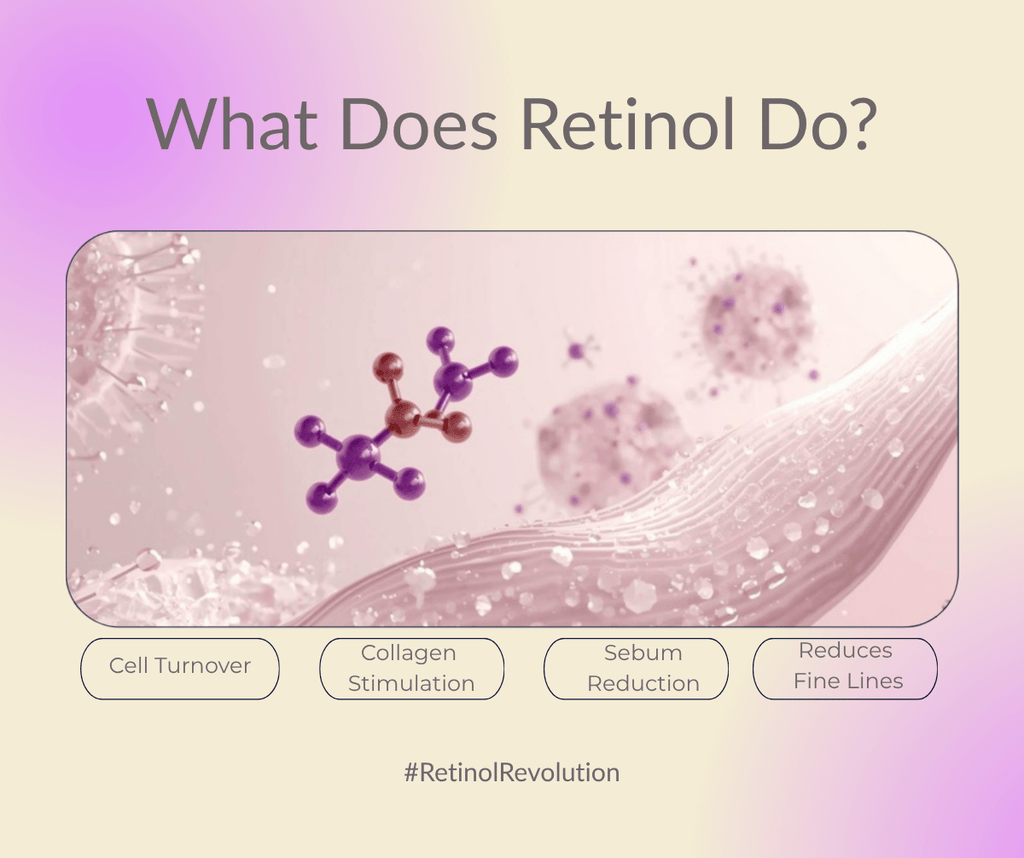
Retinol's reputation for effectiveness rests on four primary benefits, each supported by clinical evidence. The first is accelerated cell turnover. By shortening the epidermal turnover cycle from approximately 28 days to 14-21 days, retinol reveals fresher, less photodamaged skin at the surface. This manifests as improved texture, brighter appearance, and reduced post-inflammatory hyperpigmentation—benefits that become visible within 4-12 weeks of consistent use.
The second benefit is collagen stimulation. Retinoic acid increases expression of genes encoding collagen production, with fibroblasts responding by synthesizing new collagen fibers. Clinical studies demonstrate measurable increases in skin thickness and improvements in fine line appearance after 8-12 weeks of retinoid use. This isn't superficial plumping; it's structural skin thickening that persists even after discontinuing the ingredient.
The third benefit is sebaceous gland normalization. Prescription-strength retinoids can significantly reduce sebum production in clinical studies, through multiple mechanisms including reduced sebocyte proliferation and altered lipid composition. Over-the-counter retinol at lower concentrations (like the 0.15% in UNTAM3D's serum) produces a more gradual, moderate sebum-regulating effect. This makes retinol particularly valuable for oily and acne-prone skin, where excess sebum contributes to breakouts. The benefit typically emerges after 8-12 weeks of consistent use.
The fourth benefit is attenuation of photoaging—slowing visible manifestations of sun damage. By accelerating removal of damaged corneocytes, stimulating collagen, and influencing skin cell differentiation patterns, retinol reduces the appearance of fine lines, uneven tone, and roughness. This benefit compounds over months and years, making retinol a legitimate long-term anti-aging investment.
Understanding the Retinization Period and Timeline Expectations
Beginning retinol use triggers an adjustment period called "retinization." During this phase, skin adapts to increased cellular turnover and remodeling. The first 2-4 weeks often bring increased dryness, mild flaking, and sometimes mild irritation or temporary breakouts—not because retinol is harmful, but because accelerated cell turnover brings subsurface impurities to the surface faster than normal. This period is temporary and typically resolves within 4-6 weeks as skin barrier function stabilizes and adaptation completes.
Subsequent benefits emerge on different timelines. Texture improvement and brighter appearance typically appear around week 4-8. Collagen-related benefits—visible improvements in fine lines and skin firmness—generally emerge around week 8-12. Sebum normalization (for those using retinol for acne or oiliness) follows similar 8-12 week timeline. Complete benefits from structural remodeling may take 12-24 weeks to fully manifest.
This timeline underscores retinol's legitimate status as a serious anti-aging ingredient rather than a quick-fix treatment. Results require patience, consistency, and appropriate formulation. Discontinuing retinol before the 8-week mark typically means missing visible benefits. Many people abandon retinol during the retinization period, interpreting temporary dryness as ineffectiveness rather than adaptation.
Why Combination Formulations Enhance Retinol Efficacy
UNTAM3D's formulation pairs retinol with Kakadu Plum (native Australian fruit containing exceptionally high Vitamin C concentration) and EGCG from green tea. This isn't arbitrary layering; it's strategic complementarity. Kakadu Plum's Vitamin C provides multiple functions: it stabilizes the retinol (preventing oxidation that reduces efficacy), provides independent antioxidant defense against oxidative stress from accelerated turnover, and stimulates collagen synthesis through independent mechanisms. The combination creates synergistic benefits exceeding what retinol alone achieves.
Green tea's EGCG contributes anti-inflammatory properties, reducing potential irritation during the retinization period while providing antioxidant defense. The combination addresses a fundamental challenge: retinol's efficacy is maximized when introduced gradually to minimize irritation, yet concentration is necessary for measurable benefit. Strategic complementary ingredients allow effective retinol concentrations to be tolerated because inflammation and irritation are simultaneously addressed.
This approach exemplifies UNTAM3D's philosophy: combine science-backed ingredients purposefully rather than accumulate random actives. Each component in UNTAM3D's Retinol + Kakadu Plum serum addresses specific mechanisms, creating an integrated system more effective than component parts alone.
Retinol and Skin Barrier Function: The Critical Nuance
A common misconception holds that retinol damages skin barrier function. The reality is nuanced. Retinol temporarily increases transepidermal water loss during the retinization period—a normal response to accelerated turnover. This isn't barrier damage; it's a temporary shift in barrier dynamics that resolves as skin adapts. Supporting this adaptation with appropriate moisturization and avoiding additional irritants (vitamin C instability, high-concentration actives, fragrance) allows barrier function to stabilize and actually strengthen.
Clinical studies show that after the retinization period, properly introduced retinoid use improves barrier function markers, including increased ceramide content and improved hydration retention. The temporary dryness is adaptation, not damage. Understanding this distinction determines whether you persist through retinization to reach meaningful benefits or abandon the ingredient prematurely.
The UNTAM3D Approach
UNTAM3D's Retinol + Kakadu Plum Face Serum (₹1,199) is formulated for efficacy without compromise. Dermatologically tested and suitable for varied skin types, this serum combines retinol with Kakadu Plum Vitamin C and green tea EGCG—a combination that addresses multiple aging pathways while managing the retinization adjustment period. Rather than overwhelming skin with excessive actives, this serum focuses on what actually works: targeted ingredients at meaningful concentrations, with strategic complementarity that amplifies benefits.
Understanding what retinol actually does—specific cellular work that compounds into visible benefits over weeks and months—contextualizes why UNTAM3D prioritizes this ingredient. It's not about trend-chasing or marketing claims; it's about delivering an ingredient with extensive clinical evidence of effectiveness. Discover UNTAM3D's Retinol + Kakadu Plum Serum and understand retinol's genuine potential for your skin.
Frequently Asked Questions
Q: Will retinol make my skin worse before it gets better?
A: During retinization (first 2-4 weeks), you may experience increased dryness, mild flaking, and sometimes temporary breakouts or irritation. This is normal adaptation, not worsening. Providing adequate moisturization and avoiding additional irritants allows this period to resolve within 4-6 weeks, after which benefits emerge.
Q: Can I use retinol if I have sensitive skin?
A: UNTAM3D's serum is formulated for varied skin types. If you have sensitive skin, introduce it cautiously: start with the lowest frequency (1-2x weekly), gradually increase as tolerance builds. The complementary ingredients (Kakadu Plum, green tea) help mitigate irritation potential while supporting adaptation.
Q: How long before I see measurable retinol benefits?
A: Texture improvements typically appear by week 4-8. Collagen-related benefits (fine line reduction, firmness improvement) generally emerge around week 8-12. Full structural benefits may take 12-24 weeks. Consistency is critical—benefits require ongoing use.
Q: Can I combine retinol with other actives like vitamin C or niacinamide?
A: UNTAM3D's formulation already includes Kakadu Plum (Vitamin C) and green tea extract alongside retinol, maximizing efficacy through strategic combination. Avoid layering additional high-concentration actives during the retinization period; focus on stabilization and adaptation first.
Q: Does retinol cause sun sensitivity?
A: Retinol increases cell turnover, bringing newer, more sun-sensitive cells to the surface. This creates temporary increased sun sensitivity during the retinization period. Consistent SPF 50+ PA+++ use is essential with any retinoid. This isn't unique sensitivity; it's proper protection for accelerated cellular renewal.
Q: How do I know if retinol is actually working on my skin?
A: Beyond visual improvements in texture and fine lines, objective measures include reduced pore appearance, more even skin tone, improved skin firmness on palpation, and normalized sebum production (if initially oily). Photographic comparison before and after 12 weeks typically shows measurable differences.
Sources: Retinoid receptor biochemistry and gene expression studies; Clinical trials on retinoid efficacy for photoaging, collagen synthesis, and sebum reduction; Dermatological research on retinization adaptation period; Studies on complementary ingredient synergy (Vitamin C + Retinol, Green tea EGCG + Retinoids); Journal of Cosmetic Dermatology and Journal of the American Academy of Dermatology.
RECENT POSTS