SPF 50 vs SPF 30: What Indian Skin Actually Needs
SPF 50 vs SPF 30: What Indian Skin Actually Needs
The core question resolved: What is SPF PA+++ meaning? SPF measures how effectively sunscreen blocks UVB rays (the rays causing visible burning and surface damage), while PA rating measures UVA protection depth. PA+++ indicates maximum UVA protection—critical because UVA rays penetrate deeply, trigger melanin production, and cause collagen breakdown. For Indian skin specifically, where tropical climate intensity and melasma prevalence make both metrics critical, the difference between SPF 30 and SPF 50 isn't merely mathematical. It represents a protective buffer that accounts for real-world application patterns, India's intense UV environment, and the specific hyperpigmentation risks that define Indian dermatology. When dermatologists across India recommend SPF 50+ PA+++, they're accounting for these realities, not merely following international guidelines. Understanding why this specific combination matters requires breaking down what these numbers actually mean, how they differ from each other, and why SPF alone tells only half the story.
India receives 300+ sunny days annually with UV index levels that regularly exceed 11 during summer months. Yet conversations about sunscreen protection often oversimplify the differences between SPF 30 and SPF 50, treating the 20-point gap as negligible. This misconception has led millions of people to believe they're adequately protected with lower SPF, when in reality, India's climate requires understanding both SPF numbers and PA ratings to make informed choices. Let's break down what these ratings mean, why the difference matters, and what Indian skin specifically requires.
Understanding SPF: The Percentage Game That Isn't Linear
SPF (Sun Protection Factor) measures how effectively a sunscreen filters UVB rays—the ultraviolet radiation responsible for visible sunburns and the majority of skin cancer risk. The SPF number doesn't indicate how much time you can stay in the sun; it indicates what fraction of UVB rays penetrate the sunscreen layer.
SPF 30 filters approximately 97% of UVB rays, allowing roughly 3% to penetrate. SPF 50 filters approximately 98.3% of UVB rays, allowing roughly 1.7% to penetrate. Reading this, most people conclude the difference is minimal—a mere 1.3 percentage points. But this linear thinking misses the exponential impact of that remaining radiation. That extra 1.3% of blocked UVB radiation matters significantly when you're in India's intense tropical climate with year-round high UV index values.
Consider application reality. Dermatological testing of SPF ratings uses a standardized amount: 2mg per square centimeter of skin. Studies consistently show the average person applies approximately half this amount. When you apply less sunscreen than was used in SPF testing, actual protection diminishes. Applied at half the recommended amount, SPF 30 may perform closer to SPF 15 in real-world conditions. SPF 50, applied at half-strength, still delivers approximately SPF 25-30 equivalent protection. This buffer is why dermatologists across India recommend SPF 50+ rather than SPF 30—it's not overly cautious, it's accounting for predictable application gaps.
What Does PA Rating Mean and Why Is It Equally Critical?
If SPF measures UVB protection, PA rating measures UVA protection. This distinction is crucial for understanding Indian skin needs specifically.
UVA rays (ultra-violet A radiation) penetrate deeper into skin than UVB rays, reaching the dermis where collagen and elastin reside. UVA doesn't cause dramatic sunburns; instead, it causes gradual collagen breakdown, loss of elasticity, formation of fine lines, and critically, melanin production that manifests as dark spots and uneven tone. For a person in India, where melasma and post-inflammatory hyperpigmentation are extraordinarily common, UVA protection is arguably more important than UVB protection.
PA rating uses a plus-based scale indicating UVA protection depth:
- PA+: Some UVA protection (blocks 2-10% of UVA rays)
- PA++: Moderate UVA protection (blocks 10-50% of UVA rays)
- PA+++: Strong UVA protection (blocks 50-90% of UVA rays)
- PA++++: Maximum UVA protection (blocks 90%+ of UVA rays)
The Japanese cosmetic industry developed this PA rating system because UVA-driven photoaging became a critical concern in high-UV climates similar to India's. PA+++ provides strong protection blocking up to 90% of UVA rays—substantial defense against melanin production and photodamage. PA++++ offers maximum protection, but most dermatologists consider PA+++ the practical gold standard for daily wear.
The critical insight: A sunscreen with SPF 50 but only PA+ rating leaves you vulnerable to deep-penetrating UVA damage. You're blocking surface-level UVB burning while allowing age-accelerating and melanin-triggering UVA rays to penetrate unimpeded. Conversely, SPF 30 with PA+++ is better for Indian skin than SPF 50 with PA++. The combination matters more than any single number.
SPF 30 vs SPF 50: The Real-World Difference for Indian Skin
| Factor | SPF 30 | SPF 50+ | Impact for Indian Skin |
|---|---|---|---|
| UVB Blocking | 97% | 98-99% | 1-2% difference compounds daily in tropical climate |
| Real-World Protection* | ~SPF 15 | ~SPF 25-30 | Buffer accounts for typical under-application |
| At Half Application | ~SPF 15 | ~SPF 25-30 | SPF 50 maintains efficacy despite imperfect use |
| Cost Difference | Typically ₹600-800 | Typically ₹800-1,200 | ₹200 difference is negligible for protection gained |
| Recommended PA Rating | PA++, ideally PA+++ | PA+++, ideally PA++++ | PA+++ non-negotiable for melasma prevention |
| Reapplication Frequency | Every 2 hours | Every 2-3 hours | SPF 50 allows slightly longer intervals, not dramatically |
*Real-world protection estimates based on typical application patterns of 0.5-1mg per square cm rather than standardized 2mg per square cm.
The practical difference emerges when you account for India's climate realities. SPF 30 PA++ might be adequate in temperate zones with moderate UV index. In India, where UV index regularly exceeds 10 and reaches 15+ during peak summer, where humidity and heat increase photodamage risk, and where melasma affects an estimated 30-40% of women, SPF 50+ PA+++ becomes the baseline rather than an excess precaution.
Moreover, Indians traveling abroad often report that lower SPF sunscreens seem adequate in Europe or North America—largely because their UV environments have lower intensity. Returning to India and using the same SPF 30 sunscreen creates insufficient protection in a dramatically different photodamage context. The switch to SPF 50+ PA+++ isn't about being overly cautious; it's about matching protection to climate intensity.
The Cumulative Damage Argument: Daily Exposure Over Decades
The difference between SPF 30 and SPF 50 seems negligible on any single day. But photoaging and melasma development are cumulative processes. Over a 40-year lifespan, the difference between 97% and 98.3% daily UVB blockage compounds significantly.
Consider a typical scenario: An Indian woman aged 25 commits to daily sunscreen. If she uses SPF 30, that extra 3% of UVB rays penetrate daily. That's 1,095% cumulative excess UVB exposure over one year. Over 40 years, that's 43,800% cumulative excess UVB exposure—compounding with the ongoing UVA penetration that SPF doesn't measure at all. These accumulations manifest as visible photoaging (fine lines, loss of elasticity), hyperpigmentation, and melasma that become apparent in her 40s and 50s.
The same woman using SPF 50+ PA+++ from age 25 would have substantially less cumulative photodamage. At age 45, dermatologists could visibly distinguish between "SPF 30 skincare" and "SPF 50+ PA+++ skincare" by examining skin texture, pigmentation evenness, and fine line depth. This isn't theoretical—it's standard dermatological observation in practice.
Indian dermatologists often reference this cumulative logic when recommending SPF 50+ PA+++. The investment in higher protection now prevents expensive and invasive treatments later—melasma treatment (through laser, chemical peels, or topical depigmentation) costs significantly more than sunscreen, and results are less reliable than prevention through consistent sun protection.
Mineral vs Chemical Sunscreen: Does Active Type Affect SPF vs PA Performance?
Sunscreen actives fall into two categories: mineral (physical blockers like zinc oxide and titanium dioxide) and chemical (absorbers like avobenzone and octinoxate). Both can achieve SPF 50+ PA+++ ratings, but the formulation approach differs.
Mineral sunscreens naturally block both UVB and UVA, but achieving high SPF ratings requires substantial concentrations of oxides (typically 15-20% by weight), which creates opaque, heavy textures with white cast. This heaviness can actually reduce application rates—people apply less because they perceive the formulation as burdensome, ironically undermining the protection they sought.
Chemical sunscreens integrate into lighter formulations while achieving comparable protection ratings. For Indian skin, where texture comfort increases application consistency, chemical-based SPF 50+ PA+++ sunscreens often deliver better real-world protection than mineral alternatives because people apply adequate amounts without the texture resistance that reduces mineral sunscreen use.
The active type matters less than the actual SPF and PA rating achieved. A properly formulated chemical sunscreen delivering SPF 50+ PA+++ outperforms a mineral sunscreen rated identically if people skip or minimize the mineral version due to texture dissatisfaction. In India's humid climate, lightweight formulation directly correlates with consistent application and actual protection delivered.
Special Considerations for Indian Skin: Why PA+++ is Non-Negotiable
Indian skin's unique photodamage profile makes PA+++ particularly critical. Three factors converge:
First, melasma prevalence: An estimated 30-40% of Indian women develop melasma—chronic hyperpigmentation triggered by sun exposure, hormonal factors, and genetic predisposition. Melasma is notoriously treatment-resistant and prone to recurrence. UVA rays, which penetrate deeply and trigger melanin production, are the primary environmental driver of melasma. Preventing melasma through PA+++ protection is more reliable than attempting to treat established melasma. This shifts the risk-benefit calculation decisively toward SPF 50+ PA+++ as baseline rather than excess.
Second, post-inflammatory hyperpigmentation risk: Inflammation from acne, eczema, or other triggers often leaves post-inflammatory pigmentation in Indian skin. UVA exposure significantly worsens and prolongs this hyperpigmentation. People with acne-prone or eczema-prone skin benefit disproportionately from strong UVA protection (PA+++) because it prevents UV-triggered worsening of existing inflammation-related pigmentation.
Third, deeper skin tone considerations: While darker skin tones have higher baseline melanin (providing natural SPF 10-13 equivalent), this doesn't eliminate photodamage risk. Instead, photodamage in darker skin manifests differently—less obvious wrinkling initially, but accelerated collagen breakdown visible as loss of elasticity and uneven tone. UVA protection (PA+++) becomes even more critical for dark skin because the long-term photoaging consequences of UVA exposure appear more suddenly, seemingly from nowhere, unless carefully prevented.
These factors explain why Indian dermatologists consistently recommend SPF 50+ PA+++, not SPF 30 with even higher PA rating. The combination is the point—maximum protection against both UVB and UVA in India's intense photodamage environment.
Application and Reapplication: Does Higher SPF Change the Rules?
A common misconception: higher SPF means longer protection and less frequent reapplication. This is false. SPF rating doesn't determine how long protection lasts; application amount and environmental factors determine durability.
Sunscreen wears away through friction (clothing, rubbing), sweating, water exposure, and natural skin cell turnover. Whether you're using SPF 30 or SPF 50, this wear occurs at the same rate. Reapplication recommendations remain identical: every 2-3 hours for most people in India's climate, or immediately after swimming or significant sweating.
Higher SPF doesn't reduce reapplication frequency. It provides better protection at the time of application—meaning when you apply SPF 50, you get better initial protection than SPF 30, but once that sunscreen degrades, you need reapplication equally for both. This is why dermatologists don't recommend "apply SPF 50 once and forget" strategies. Consistency in reapplication matters as much as the SPF number itself.
For Indian climates specifically, reapplication every 2 hours during peak sun exposure (10am-4pm) is standard guidance. Using SPF 50+ PA+++ doesn't eliminate this requirement; it ensures that even with imperfect reapplication, your protection remains adequate.
Cost-Benefit Analysis: Is SPF 50+ Worth the Investment?
Quality SPF 50+ PA+++ sunscreen in India typically costs ₹800-₹1,200 for a 50ml bottle. SPF 30 alternatives might cost ₹600-₹800. The difference—roughly ₹200-₹400 per bottle—seems marginal until you consider annual investment and cost of treatment for photoaging or melasma.
Melasma treatment through dermatologists costs ₹2,000-₹5,000+ per session, often requiring 6-12 sessions spaced weeks apart. Advanced photoaging treatment through laser or chemical peels costs ₹5,000-₹15,000+ per session. A year of consistently using SPF 50+ PA+++ costs approximately ₹1,000-₹1,500 (3 bottles). The cost prevention ratio is dramatically in sunscreen's favor.
Beyond monetary cost, melasma and severe photoaging are difficult to treat and prone to recurrence even after treatment. Prevention through SPF 50+ PA+++ from young age is exponentially more cost-effective and reliably more successful than attempting to reverse damage later. The financial calculation isn't whether SPF 50 is expensive—it's that skipping SPF 50 for marginally cheaper SPF 30 is the most expensive long-term skincare decision possible.
The UNTAM3D Position: Engineered for India, Optimized for Real-World Use
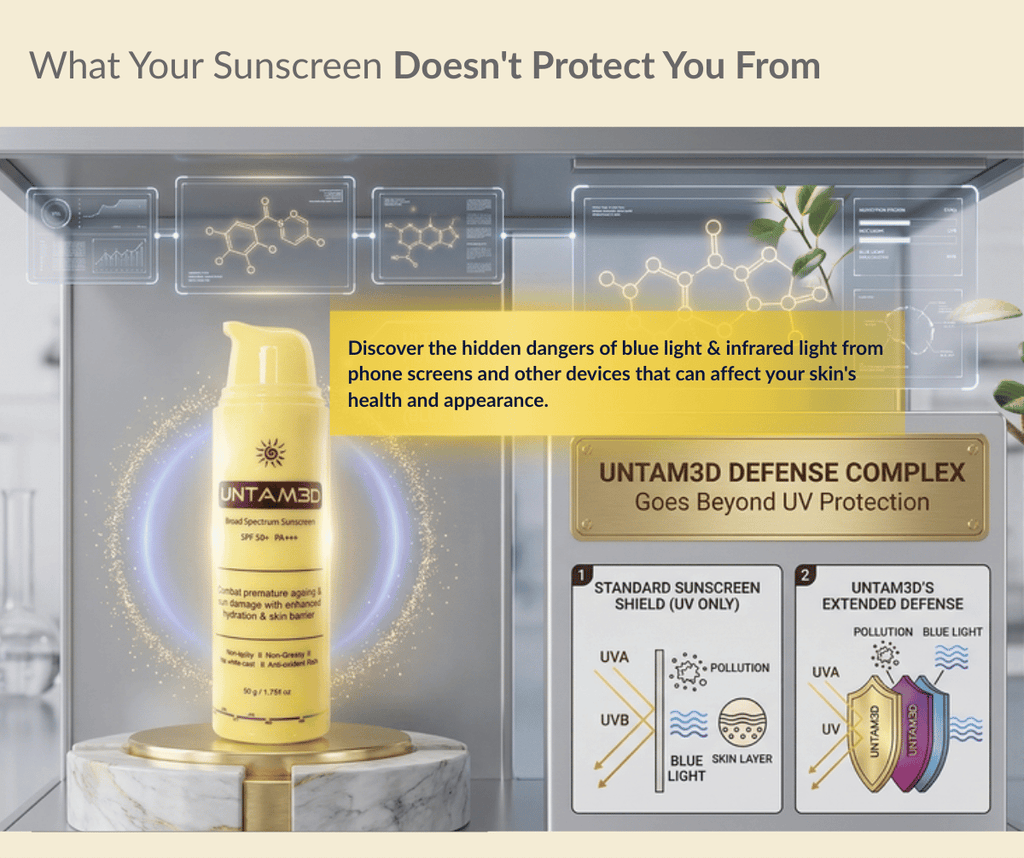
UNTAM3D's Broad Spectrum Sunscreen SPF 50+ PA+++ exists specifically because generic "all-skin-types" sunscreens designed for international markets often fail in India's climate. The formulation accounts for humidity, heat intensity, and the specific photodamage risks that define Indian skin.
Rather than choosing between mineral and chemical actives, UNTAM3D uses a balanced approach allowing lightweight texture without sacrificing protection. The addition of ceramides and phospholipids supports skin barrier health while blocking UV damage. At ₹999, it's positioned not as a luxury sunscreen but as essential infrastructure for skin health in India's environment.
Understanding the difference between SPF 30 and SPF 50, and grasping what PA+++ actually means, allows you to make informed choices that align with your skin's real needs. For most people in India, SPF 50+ PA+++ is the correct choice—not because higher is always better, but because this specific combination matches India's photodamage environment and the specific hyperpigmentation risks that Indian skin faces. Invest in a sunscreen formulated for your climate and your skin's specific needs.
Frequently Asked Questions: SPF, PA, and Indian Skin
Is SPF 50 worth the extra cost compared to SPF 30?
In India's climate, yes. The extra protection (98.3% vs 97% UVB blocking) compounds over decades, and the cost difference (₹200-₹400 per bottle) is negligible compared to treating melasma or advanced photoaging later. Dermatologists consistently recommend the investment because prevention through SPF 50+ costs exponentially less than treating photodamage after it develops.
What if a sunscreen is SPF 50 but only PA++? Is that better than SPF 30 PA+++?
For Indian skin specifically, SPF 30 PA+++ is preferable to SPF 50 PA++. PA rating matters as much as SPF number because UVA rays cause melasma and photoaging—the specific damage patterns affecting Indian skin. A sunscreen with lower SPF but stronger UVA protection provides better protection against the photodamage most relevant to Indian skin than higher SPF with inadequate UVA protection.
Can I use SPF 30 if I'm careful about reapplication?
Technically yes, but it's suboptimal strategy. Even with perfect reapplication every 2 hours, SPF 30 provides less total protection than SPF 50+ in India's intense UV environment. Since reapplication frequency doesn't change between SPF ratings, choosing SPF 50+ doesn't require behavior changes—it just provides better inherent protection for the same effort.
Does SPF 50 sunscreen protect for longer than SPF 30?
No. Both wear away at similar rates through friction, sweating, and water exposure. SPF rating indicates protection strength at time of application, not duration. Both require reapplication every 2-3 hours in India's climate. Higher SPF doesn't mean you can go longer between reapplications—it means the initial protection is stronger.
Why specifically PA+++? Can't PA++ be adequate?
PA++ filters 10-50% of UVA rays, leaving 50-90% to penetrate and cause melanin production and collagen breakdown. PA+++ filters 50-90%, providing substantially stronger defense against melasma and photoaging. In India where melasma affects 30-40% of women and hyperpigmentation is common, PA+++ represents the protection level that actually prevents these conditions rather than merely reducing their severity.
Sources and References
- Journal of the American Academy of Dermatology: SPF Numbers and Real-World Protection Efficacy
- International Journal of Dermatology: UV Index Intensity in Tropical Climates and Photoaging Risk
- Photodermatology, Photoimmunology & Photomedicine: UVA and UVB Penetration Depth and Melanin Production
- Indian Journal of Dermatology: Melasma Epidemiology and Prevention in South Asian Populations
- Archives of Dermatology: Cumulative UV Exposure and Long-Term Photodamage Development
- Association of Dermatologists of India: Annual Recommendations on Sunscreen Selection
RECENT POSTS