The Complete Guide to Broad Spectrum Sunscreen: UVA, UVB, Blue Light & Beyond
Broad spectrum sunscreen protects against both UVA and UVB rays, plus blue light damage—and it's the single most important step in your skincare routine. But most people don't understand what they're actually protecting against, and sunscreen choice matters far more than serum choice when it comes to preventing aging, skin cancer, and environmental damage.
This guide breaks down exactly what sunscreen does, why SPF and PA ratings matter, and what to look for in an Indian climate.
UV Radiation: The Two Types Your Skin Faces
The sun emits three types of ultraviolet radiation: UVA, UVB, and UVC. UVC is blocked by the ozone layer, so we're concerned with UVA and UVB. They're different and they cause different damage.
UVB: The Burning Ray
UVB is shorter wavelength radiation that doesn't penetrate deeply into the skin. It causes immediate, visible sunburn—the redness and peeling you see within hours of sun exposure. This is the ray that triggers skin cancer risk directly.
SPF (Sun Protection Factor) measures protection against UVB. SPF 50 means it takes 50 times longer for your skin to burn than without protection. So if your skin naturally burns in 10 minutes, SPF 50 gives you 500 minutes (roughly 8 hours) before burning occurs—assuming you apply enough sunscreen and reapply every 2 hours.
Important caveat: Most people apply 1/2 to 1/4 the recommended amount of sunscreen, which means SPF 50 functions more like SPF 15-20 in real life. You need roughly 1/4 teaspoon for your face and neck combined.
UVA: The Aging Ray
UVA has longer wavelengths. It penetrates deeper into the skin, reaches the dermis where collagen lives, and causes cumulative damage over time. UVA doesn't cause immediate sunburn—you can be damaged without realizing it.
UVA damage manifests as:
- Fine lines and wrinkles
- Sagging and loss of elasticity
- Hyperpigmentation and dark spots
- Skin texture changes
- Collagen breakdown
The PA (Protection Grade of UVA) system measures UVA protection. In India and most Asian countries:
- PA+ = some UVA protection
- PA++ = moderate UVA protection
- PA+++ = high UVA protection
- PA++++ = extremely high UVA protection
PA+++ is considered the gold standard. It means the sunscreen delays UVA damage by 8-16 times longer than unprotected skin.
Blue Light: The Often-Ignored Ray
Blue light (high-energy visible light, or HEV) comes from the sun AND from screens—your phone, laptop, and LED lights. Your eyes catch most of it, but some reaches your skin.
Research on blue light skin damage is newer than UV research, but studies show:
- Blue light generates free radicals in skin
- It can trigger inflammation similar to UV damage
- It may worsen hyperpigmentation, especially in darker skin tones
- It contributes to premature aging over time
Blue light protection comes from specific ingredients like antioxidants (EGCG, vitamin E) rather than traditional filters. Not all sunscreens protect against blue light—this is where ingredient selection matters.
Chemical vs Physical Sunscreen: Which Is Better?
There are two sunscreen mechanisms, and the debate between them misses the actual point.
Physical (Mineral) Sunscreen
Contains zinc oxide and/or titanium dioxide. These sit on top of skin and physically block UV rays like a mirror, deflecting them away.
Pros:
- Effective immediately (no need to wait 15 minutes)
- Works for sensitive skin and in pregnancy
- Unlikely to cause irritation
- Stable and doesn't degrade in sunlight
Cons:
- Leaves a white cast on brown/dark skin
- Can feel thick and heavy
- Doesn't blend well into skin
- Higher concentration needed for effective protection
Chemical Sunscreen
Contains organic compounds (oxybenzone, avobenzone, octinoxate, homosalate) that absorb UV radiation, convert it to heat, and release it from the skin.
Pros:
- Lightweight and blends seamlessly
- No white cast
- Easier to apply evenly
- Feels more like a serum
Cons:
- Takes 15 minutes to be effective
- Can irritate sensitive skin
- Some older filters have raised safety concerns (though modern formulations use them at safe, regulated concentrations)
- Degrades in sunlight (needs reapplication every 2 hours)
The Hybrid Approach
Many modern sunscreens use both chemical and physical filters. This gives you the blendability of chemical with more stability and skin-safety of physical. For Indian climate and skin tones, hybrid formulas are often the sweet spot—you get protection without the white cast or heavy feeling.
The best hybrid sunscreens use:
- Advanced chemical filters (stable, less irritating)
- Minimal physical filters (no white cast)
- Antioxidants (for extra protection and anti-aging)
- Barrier-repair ingredients (ceramides, phospholipids)
SPF 30 vs SPF 50 vs SPF 100: Does More SPF Matter?
This is where marketing gets deceptive. The jump from SPF 30 to SPF 50 sounds like you're getting much more protection, but you're actually not.
- SPF 30 blocks ~97% of UVB rays
- SPF 50 blocks ~98% of UVB rays
- SPF 100 blocks ~99% of UVB rays
You're getting 1% more protection with each jump. SPF 50 is genuinely more practical than SPF 30 because people underapply, and that extra 1% margin helps. But SPF 100 is marketing theater.
The real variables that matter more than SPF number:
- How much you apply (most people apply 50% of the recommended amount)
- How often you reapply (should be every 2 hours or immediately after sweating)
- How long you're in direct sun
- Your skin's natural protection (darker skin has more melanin, which is natural SPF)
SPF 50 with correct application and reapplication beats SPF 100 with lazy application every time.
PA+++ vs PA++++: Understanding UVA Protection Ratings
PA+++ is considered protective and research-backed. It provides high protection against the long-wavelength UVA that causes aging.
PA++++ is extremely protective and less commonly found (mostly in Japanese and Korean sunscreens). For most people and most situations, PA+++ is sufficient.
For Indian conditions:
- If you're mostly indoors and use sunscreen as part of skincare: PA+++ is adequate
- If you're outdoors regularly or do sports: PA++++ is worth the investment
- If you're in direct sun for 6+ hours: no sunscreen replaces physical sun avoidance—wear a hat and UV-protective clothing
The Ingredients That Actually Matter in Broad Spectrum Sunscreen
Not all broad spectrum sunscreens are created equal. Beyond SPF and PA, these ingredients determine whether your sunscreen is just protective or genuinely anti-aging.
Antioxidants (EGCG, Vitamin E, Niacinamide)
UV exposure generates free radicals that damage skin even beyond the direct UV damage. Antioxidants neutralize these free radicals, preventing secondary damage.
EGCG (catechin from green tea) and vitamin E are particularly effective. Niacinamide also has antioxidant properties plus anti-inflammatory benefits.
Barrier Repair Ingredients (Ceramides, Phospholipids)
Sun exposure damages your skin barrier. A sunscreen that includes ceramides and phospholipids actually repairs while protecting—instead of leaving your barrier compromised by the end of the day.
Blue Light Protection
If the sunscreen includes antioxidants like EGCG, you're getting blue light protection. If it doesn't explicitly mention blue light protection but has strong antioxidant content, you're still covered.
How to Actually Use Sunscreen Correctly
Most sunscreen failure is application failure, not product failure. Here's how to use it correctly:
Amount
Use 1/4 teaspoon for face and neck combined. This is roughly the size of a pea. Most people use half that amount, which cuts protection in half.
Timing
For chemical sunscreen: Apply 15 minutes before sun exposure so it absorbs fully.
For physical sunscreen: Apply immediately before sun exposure; it works instantly.
For hybrid: Apply 5-10 minutes before sun exposure as a compromise.
Layering
Apply sunscreen as your final step after serums and moisturizers. Wait 2-3 minutes for previous products to set, then apply sunscreen. Don't mix it into your moisturizer—this dilutes it and reduces effectiveness.
Reapplication
Reapply every 2 hours if you're in direct sun. If you're mostly indoors (UV exposure through windows is reduced), you can go longer, but true reapplication is ideal. Powder sunscreens or setting sprays with UV filters can help with midday reapplication over makeup.
Water and Sweat
Even "water-resistant" sunscreens degrade with sweating and swimming. If you're exercising or swimming, reapply immediately after. If you're just in normal conditions, reapply every 2-3 hours.
Why Sunscreen Matters More Than Every Other Product Combined
Here's the uncomfortable truth: sunscreen prevents premature aging more effectively than retinol, vitamin C, or any serum. The most expensive, advanced serums can't undo UV damage, but consistent sunscreen prevents that damage from happening.
A person using SPF 50+ daily from age 20-50 will have demonstrably less aging, fewer dark spots, better skin texture, and lower skin cancer risk than someone using 10 expensive serums without sun protection.
This is why minimalist skincare works. Your routine needs sunscreen more than it needs anything else. Everything else is optimization on top of that foundation.
Choosing the Right Sunscreen for Indian Skin and Climate
Indian climate presents specific challenges: heat, humidity, pollution, and varied skin tones. Here's what to prioritize:
For Oily/Combination Skin
Look for:
- Lightweight, non-greasy formula
- Matte finish
- Silicone-based (spreads easily without feeling sticky)
- Avoid heavy oils—they'll feel suffocating in humidity
For Dry Skin
Look for:
- Hydrating ingredients like hyaluronic acid and glycerin
- Ceramides and phospholipids for barrier repair
- Avoid alcohol-based formulas
For Brown/Dark Skin Tones
Look for:
- No white cast or minimal white cast
- Hybrid formulas (chemical + minimal physical)
- Avoid heavy physical sunscreens—they're nearly impossible to blend without whitecast
For Sensitive Skin
Look for:
- Physical sunscreen (zinc oxide/titanium dioxide) for fewer irritants
- Minimal fragrance
- Antioxidants to reduce post-sun inflammation
- Minimal chemical filters if possible
The Reality of Sunscreen and Anti-Aging
Every anti-aging skincare routine starts with sun protection. Not after sun protection. With it. Your sunscreen is your primary anti-aging product, and every other product builds on top of that foundation.
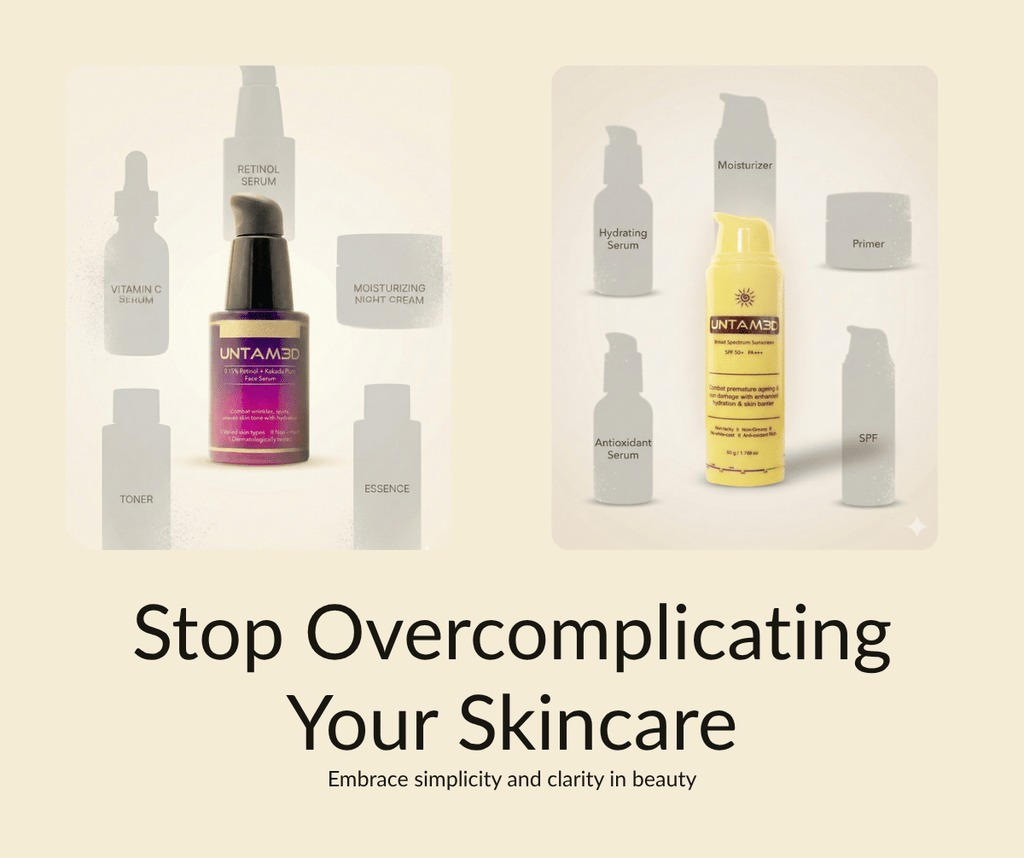
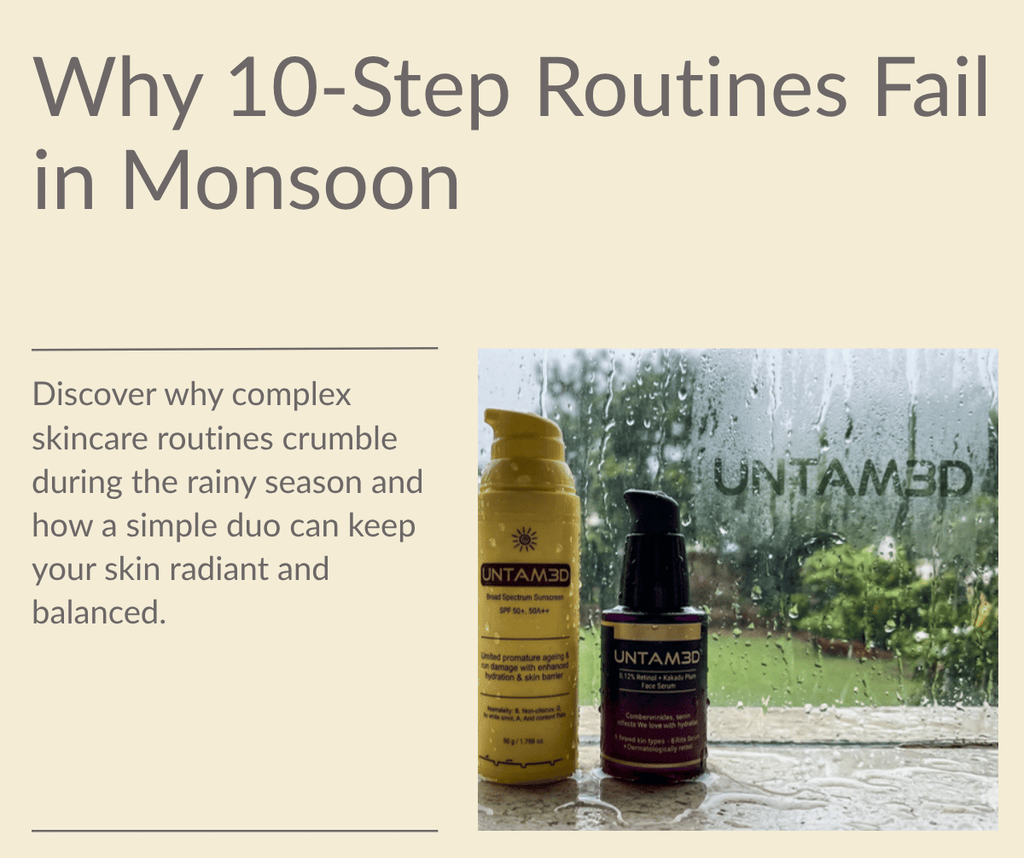
The Broad Spectrum Sunscreen SPF 50+ PA+++ consolidates what should be your morning routine's core—it combines high-level UV protection with barrier-repair ingredients (ceramides and phospholipids) and antioxidants. You're not using sunscreen plus a separate hydration serum. One product handles protection and barrier maintenance.
This is why minimalist skincare works. You use your sunscreen as your primary morning treatment, not as an afterthought. Your evening treatment might be a retinol serum for collagen production and cell turnover. That's your routine. Simple. Effective. Consistent.
The difference between good skin and compromised skin often comes down to one thing: did you use sunscreen today? And will you use it again tomorrow?
FAQ: Broad Spectrum Sunscreen & UV Protection
Q: Can I get enough Vitamin D if I wear SPF 50 sunscreen daily?
A: Yes, but not from sun exposure. Sunscreen does reduce vitamin D synthesis, but you're getting adequate vitamin D from food (fortified milk, fatty fish, eggs, mushrooms) and even small amounts of incidental sun exposure on days you're not specifically applying sunscreen. If you're concerned, a vitamin D supplement (1000-2000 IU daily) is more reliable than depending on sun exposure, especially in India where sun exposure carries higher skin cancer and aging risks.
Q: Does sunscreen prevent vitamin D production completely?
A: No. SPF 50 blocks roughly 98% of UVB (the radiation that triggers vitamin D synthesis), but some UVB still gets through. Additionally, you get vitamin D from food and from incidental sun exposure when you're not wearing sunscreen. Medical organizations globally recommend using sunscreen for cancer prevention while addressing vitamin D through diet and supplementation if needed—the skin cancer and aging risk from sun exposure far outweighs theoretical vitamin D benefits.
Q: I'm mostly indoors. Do I still need broad spectrum sunscreen every day?
A: Yes, but you have more flexibility. UV rays pass through windows (though UVA penetrates more than UVB). If you're near windows, you're getting some UVA exposure. If you're completely away from windows, UVA exposure is minimal but not zero (it scatters in from outside). For skin health, SPF 30+ is adequate for indoors. For outdoors or near windows frequently, SPF 50+ PA+++ is better. Either way, daily sunscreen is foundational for preventing premature aging.
Q: What's the difference between "reef-safe" and regular sunscreen?
A: Reef-safe sunscreens avoid oxybenzone and octinoxate, which damage coral. Reef-safe sunscreens use other UV filters instead. For your skin, reef-safe isn't inherently better or worse—it's an environmental preference. Choose based on your skin type and efficacy first, then look for reef-safe options within that category if you want to reduce environmental impact.
Q: Can I layer two different sunscreens for more protection?
A: No. Layering sunscreens doesn't multiply protection—it just creates inconsistencies in coverage and feels unpleasant. The only exception is if you use a sunscreen with your moisturizer (mixed together), then apply a sunscreen product on top—but this reduces the effectiveness of both by diluting them. Better approach: use one high-quality broad spectrum sunscreen at the correct amount, reapply every 2 hours, and rely on physical sun avoidance (hats, clothing) for extra protection in high-sun situations.
Q: How often should I replace my sunscreen?
A: Check the expiration date on the bottle. Chemical sunscreen expires because the UV filters degrade over time, especially with heat exposure. Most sunscreens last 3 years from manufacture, but if your bottle has been in heat (car, direct sun), it degrades faster. Physical sunscreen is more stable but still has an expiration date. Replace once expired or once a year if you use regularly, whichever comes first.