Why Your 10-Step Skincare Routine Is Doing More Harm Than Good
Your skin barrier is breaking down because you're using too many products, not too few. That elaborate 10-step routine you've been following? It's likely stripping away protective lipids, overwhelming your skin with conflicting actives, and creating a dependency cycle that leaves you with compromised skin. The solution isn't a 15-step routine. It's ruthless simplification.
Let's talk about what's actually happening when you apply 8-10 products to your face every morning and night.
The Skin Barrier: What You're Actually Damaging
Your skin barrier is a carefully balanced ecosystem. The outermost layer—the stratum corneum—is made of dead skin cells embedded in lipids like ceramides and cholesterol. These lipids act like mortar between bricks. When that barrier is intact, your skin stays hydrated, protected, and resilient.
When you use too many products, especially those with active ingredients, you're essentially sandblasting that mortar.
Why Layering So Many Products Backfires
Here's the chemistry: each product you add changes the pH of your skin. Most cleansers are slightly alkaline. Toners are acidic. Serums have different pH levels depending on their actives. Moisturizers are neutral. Sunscreens often have their own pH profile. Your skin spends the entire day fighting to maintain its natural pH of 4.5-5.5, which is where your protective acid mantle functions best.
When that pH keeps shifting, two things happen:
- Your skin's natural microbiome gets disrupted. The bacteria that keep harmful pathogens in check can't survive pH swings.
- Lipid production goes haywire. Your sebaceous glands either overproduce oil (trying to compensate) or underproduce (leaving skin dehydrated).
Add to this the fact that most 10-step routines include multiple actives—vitamin C, niacinamide, retinol, AHAs, BHAs, peptides—and you've got a recipe for sensitized skin.
The Active Ingredient Overload Problem
Retinol at night. Vitamin C in the morning. Niacinamide serum. AHA/BHA exfoliant. Peptide serum. All before sunscreen.
Your skin can only handle so much molecular work before it becomes irritated and inflamed. While UV damage remains the primary driver of extrinsic skin aging, chronic low-level inflammation from a sensitized barrier compounds that damage significantly—accelerating visible aging beyond what sun exposure alone would cause.
Studies show that when users switch from complex routines to minimal effective routines, they see improvements in:
- Redness and reactivity (within 2 weeks)
- Texture and roughness (within 4 weeks)
- Hydration levels (within 3 weeks)
- Acne and breakouts (within 6 weeks)
The catch? These improvements only happen if you actually commit to simplification. Most people don't. They're too attached to the ritual of complexity.
The Financial Trap Built Into Multi-Step Routines
There's a reason skincare brands recommend 10-step routines. Profit margins. A brand selling 10 products makes 10x the revenue of a brand selling 2. The marketing narrative around "targeted serums for each concern" serves brands more than it serves your skin.
The average Indian woman following a K-beauty-influenced routine is spending ₹3,000-8,000 monthly on skincare. Most of that goes to products she doesn't need.
Meanwhile, dermatologists have known for decades that effective skincare is simple:
- Cleanse (removes dirt and makeup)
- Treat (actives that actually address your concern)
- Protect (barrier repair and sun protection)
That's it. Everything else is nice-to-have, not need-to-have.
What Science Actually Says About Minimal Skincare
Dermatological consensus increasingly supports that patients using 3-5 carefully selected products often achieve better skin outcomes than those using 8+ products, even when the minimal routine is significantly less expensive.
Why? Compliance and barrier integrity. When your routine is simple, you actually stick to it. When your barrier isn't constantly overwhelmed, it can repair itself.
The most effective skincare routines share these characteristics:
- One active per time of day maximum. If you're using retinol at night, you shouldn't be using AHA at night too. If you're using vitamin C in the morning, skip the BHA.
- Emphasis on barrier repair. Products with ceramides, phospholipids, and niacinamide matter more than exotic actives.
- Non-negotiable sun protection. This is the one thing that shouldn't be skipped or simplified.
- Consistency over complexity. A simple routine you use every day beats a complex routine you do sporadically.
The Right Way to Audit Your Current Routine
Take everything off your shelf. Honest assessment time:
Ask yourself for each product:
- Has my skin visibly improved since I started using this? (Not "feels nice"—actually improved.)
- Would I miss this if it disappeared?
- Does this product do something unique that another product I own doesn't do?
- Am I using this because I need it or because I paid for it?
If you can't answer the first question with a clear yes, the product goes. This isn't about being wasteful—it's about preventing further skin damage.
Most people end up keeping 3-5 products maximum.
Building a Minimal Routine That Actually Works
A functional minimal routine looks like this:
Morning
A gentle cleanser (10 seconds, splash with water). One active treatment if needed (vitamin C, niacinamide). A broad-spectrum sunscreen. That's your morning. Most people spend 5 minutes on this.
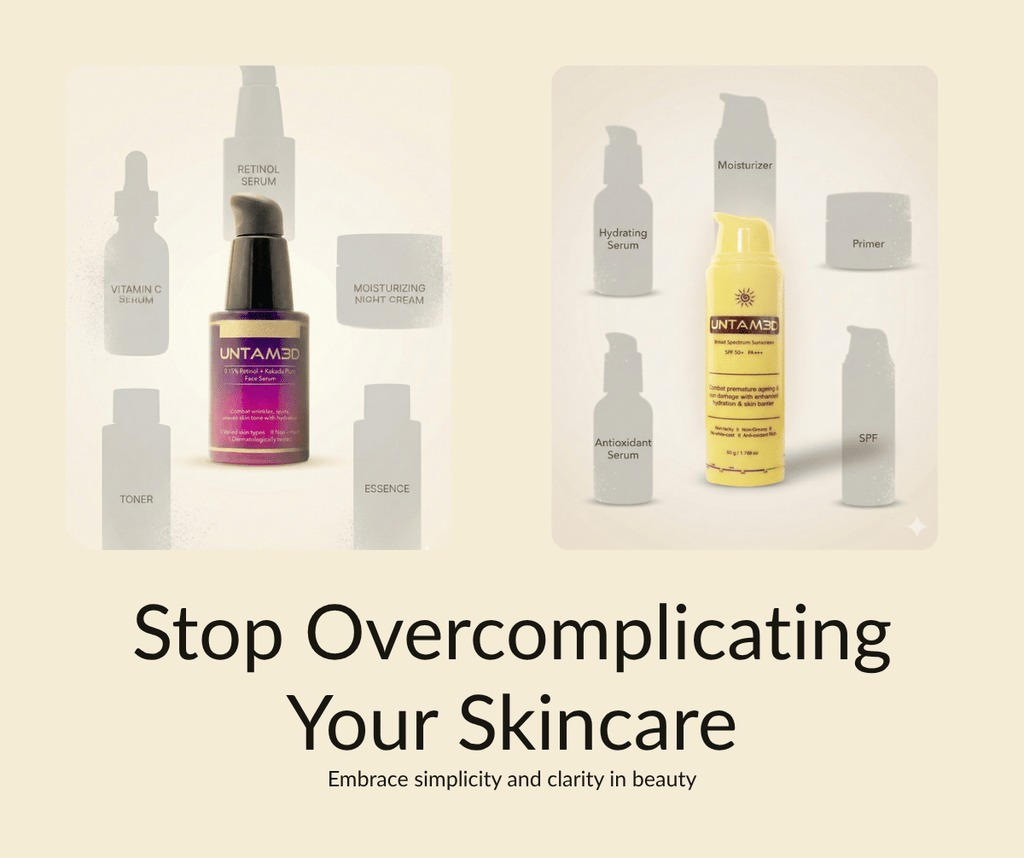
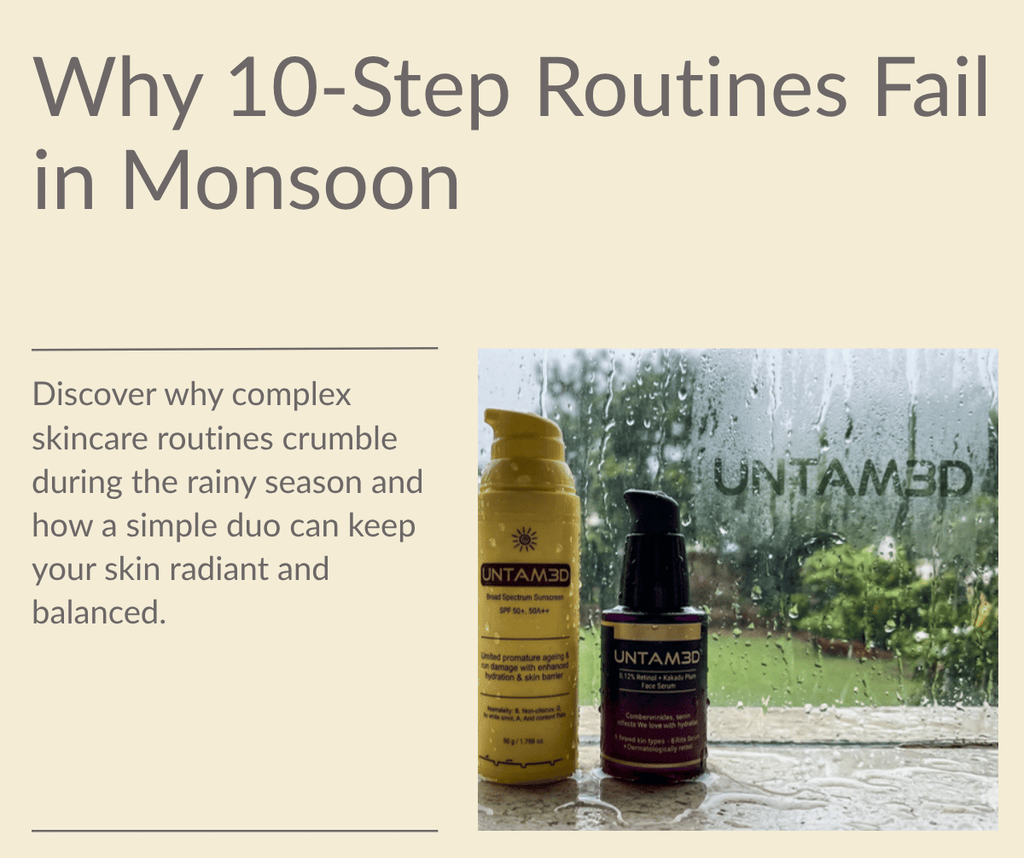
The Broad Spectrum Sunscreen SPF 50+ PA+++ consolidates what should be your morning routine's most important step. It's formulated with ceramides and phospholipids to protect your barrier while delivering comprehensive UV and blue light protection—which replaces the need for separate sun protection and hydration serums.
Evening
Cleanser. One active (retinol, AHA, or BHA—pick one for your primary concern). Moisturizer with barrier-repair ingredients.
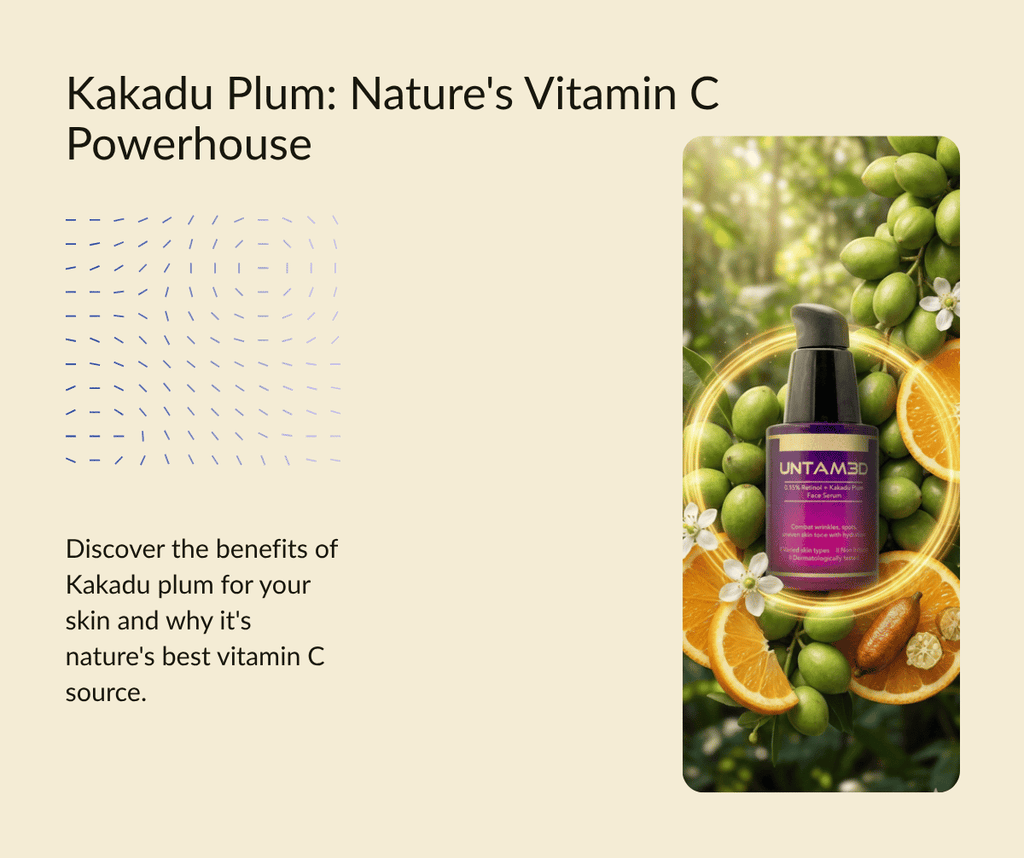
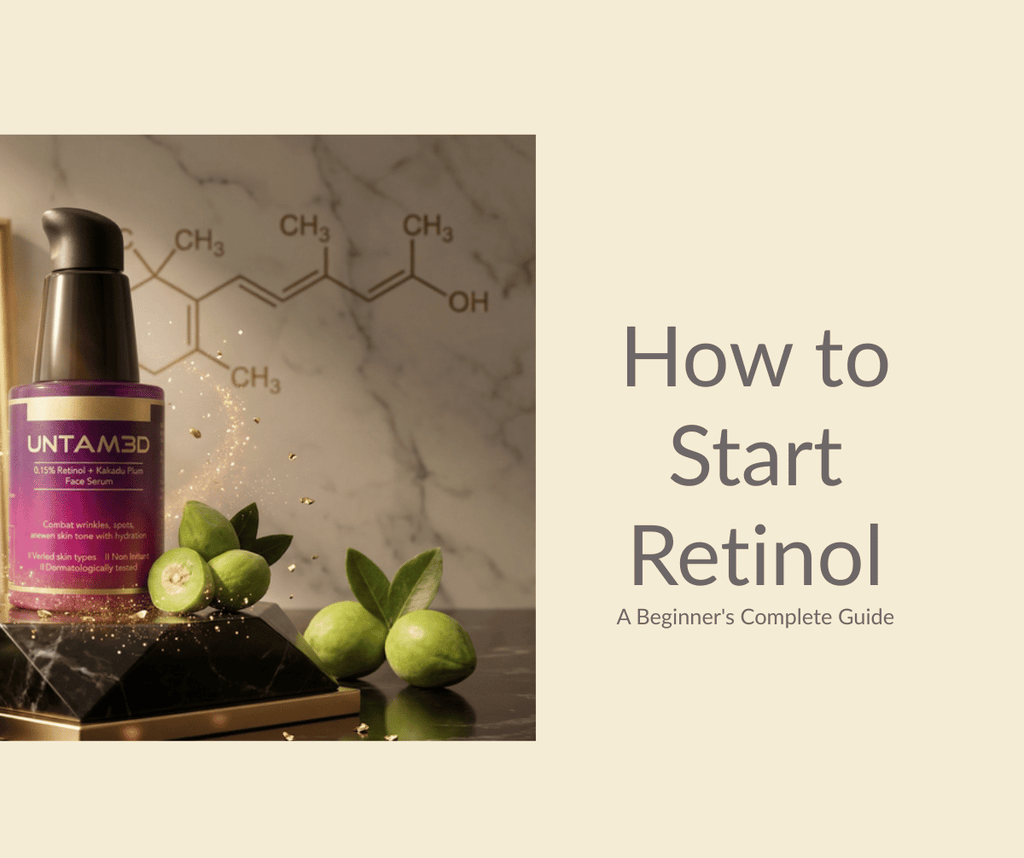
If you're using a retinol, your serum should be the star of your routine. The 0.15% Retinol + Kakadu Plum Face Serum is designed as your evening active—it handles cell turnover, collagen production, and antioxidant protection in one step. You don't need a separate retinol product plus three supporting serums. The Kakadu Plum provides antioxidant support; the retinol handles cellular renewal.
Optional
A lightweight moisturizer if your skin is dry. Skip if you have oily skin and your serum provides enough hydration.
That entire routine takes 3 minutes morning and night.
What Happens When You Actually Simplify
Week 1-2: Your skin might feel tight or look dull. This is adjustment. You're removing products that were masking problems, not solving them.
Week 3-4: You'll notice less redness. Your skin stops reacting to everything.
Week 5-8: Actual improvements appear. Texture gets smoother. Hydration improves. Any acne calms down.
Month 3+: You realize you were spending 30+ minutes a day on skincare that was actively harming you.
The longer you stay committed to minimal skincare, the better your skin performs. This isn't about deprivation. It's about optimization.
The Minimalist Skincare Philosophy
Here's what separates people with genuinely good skin from people with complicated skin: they treat skincare as a system, not a collection of isolated products.
You don't need more. You need better architecture.
A barrier-first approach—where every product is chosen to either protect, repair, or treat with a single, well-researched active—creates skin that doesn't need 10 steps because it's functioning optimally at a fundamental level.
Your skin doesn't want a 10-step routine. It wants a functioning barrier, consistent sun protection, and one targeted active for whatever specific concern you have. Everything else is noise.
Strip it down. Commit to minimal. Watch what actually happens to your skin when you stop suffocating it.
FAQ: Minimal Skincare & Skin Barrier Health
Q: If I simplify my routine, won't my skin get worse before it gets better?
A: Possibly, but it's temporary. Your skin will likely purge for 2-3 weeks as it adjusts to not being overwhelmed. This is different from a true negative reaction—redness calms down, texture stabilizes, and you see improvement by week 4. If you're still having issues after 6 weeks, you may need to adjust your specific products, not add more back.
Q: I have combination skin with oily T-zone and dry cheeks. Won't a minimal routine leave some areas unhappy?
A: No, because you're not using different routines for different zones—you're using smarter products that work across your entire face. A good moisturizer with ceramides hydrates dry areas without making oily zones worse. A retinol serum with the right formulation balances oil production while protecting the barrier. One active beats three products targeting the same concern.
Q: What if I really want to use multiple actives? Can I rotate them?
A: Rotation helps, but it's less effective than consistency. Your skin responds better to using one active consistently (retinol 3x weekly, for example) than cycling through four different actives. That said, if you want to use vitamin C in the morning and retinol at night, that's a manageable two-active routine—but don't add AHA, BHA, peptides, and niacinamide serums on top of it.
Q: How long should I give a minimal routine before deciding it's not working?
A: Minimum 8 weeks. Your skin barrier needs 4-6 weeks to repair itself. Real improvements in texture, hydration, and clarity take another 2-4 weeks. If you're jumping between routines every 2-3 weeks, your skin never gets a chance to reset.
Q: Is sunscreen the only non-negotiable in a minimal routine?
A: Yes. Sunscreen is the only product with decades of clinical evidence showing it prevents premature aging, skin cancer, and texture damage. Everything else—serums, moisturizers, actives—is customizable based on your specific skin needs. But sun protection is non-negotiable for everyone.